Introduction
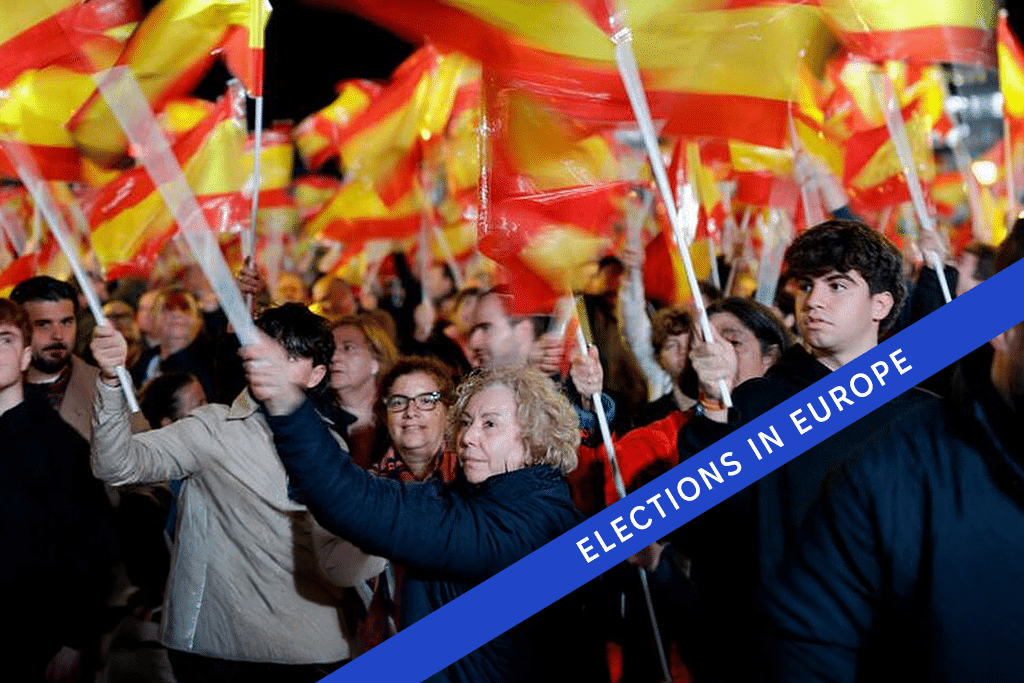
Spain heads into its 29 November general election, with polls suggesting a possible change of government: the conservatives could return to power in a coalition with the far right. Ukraine is barely discussed in the campaign, as there is a broad support for Kyiv among Spanish voters. Both major parties – the conservative People’s Party (PP) and the Socialist Party (PSOE) – back military assistance to Ukraine. But the positions of their potential junior coalition partners – right-wing Vox and left-wing Frente Amplio – are less clearly defined.
The Parties & Ukraine
For all the divisions in Spanish politics, support for Ukraine has remained remarkably strong. Three out of four Spaniards believe Europe should continue providing military assistance to Kyiv, according to a survey by the Elcano Royal Institute published in July 2025. Since Russia’s full-scale invasion, Pedro Sánchez’s government has supplied weapons and financial assistance, initially in relatively modest quantities compared with other European partners. Madrid has committed €1 billion in military assistance for 2026, an amount similar to that pledged in each of the previous two years. Spain now hosts nearly 360,000 Ukrainians.
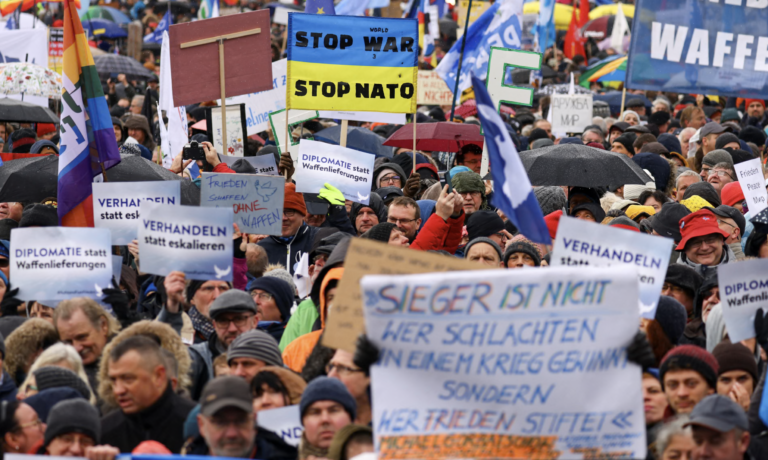
Sánchez has led Spain since 2018. In 2020, he formed a coalition government with the far-left Podemos party. When Russia launched its full-scale invasion of Ukraine in 2022, the Socialist Party, the senior partner in the coalition, faced strong resistance from Podemos over military assistance to Kyiv. Podemos opposed sending weapons, arguing that the conflict should be resolved through diplomacy rather than military assistance. That opposition continued even after the party left the government. “The Spanish Prime Minister, Pedro Sánchez, is making a mistake. He will go down in history as a ‘warlord’,” declared Ione Belarra, a leading figure in Podemos, in March 2025.
The government nevertheless went ahead with the arms shipments. Podemos is no longer in the government and current junior partner Sumar does align with the support for Ukraine. The good news for Ukraine’s interests is that Podemos, once a major force in Spanish politics (it reached one in five seats in the lower house) is now on the verge of disappearing from Parliament: Polls now project between zero and two seats for the party.
Opinion polls now suggest a shift to the right in government anyway, with a coalition between the conservative People’s Party and the far-right Vox as the most likely outcome. The PP has consistently supported Ukraine and would be expected to follow the line set by Brussels. Vox, however, is highly critical of the EU and has abstained on European Parliament resolutions calling for greater support for Kyiv, raising questions about its position if it enters government.
Ukraine in party manifestos
Ukraine has barely been mentioned in the election debates or interviews, largely because there is a broad consensus among the major parties on supporting the country, while other issues have dominated the campaign: the migration crisis in Ceuta, relations with Morocco, the cost of housing and, on the international front, defence spending and war in the Middle East.
In this scenario, the best way to assess what the parties might do if they enter government is therefore to examine their election manifestos.
Vox. Vox left Ukraine out of both its manifesto for the 2024 European elections and its current manifesto for the Spanish general elections. The latter contains no explicit references to Ukraine, Russia or Putin, although it does address other foreign-policy issues, including Morocco and Gibraltar.
Vox is led by Santiago Abascal. He is running for prime minister, although opinion polls place his party third. He could join a government led by PP leader Alberto Núñez Feijóo as deputy prime minister. Abascal immediately condemned Russia’s full-scale invasion in 2022 and backed financial and military assistance to Ukraine as well as possible sanctions against Russia. Since then, however, he has placed greater emphasis on peace negotiations and become more critical of Europe’s strategy, although in February 2025 he insisted that Putin had started the war.
Vox belongs to the far-right Patriots for Europe group in the European Parliament, alongside Orbán’s Fidesz and Marine Le Pen’s National Rally. The group has no unified position on Ukraine: Le Pen supports limited military assistance, while Orbán’s party opposes sending weapons and has repeatedly obstructed EU aid to Kyiv. Both favour negotiations over increased military involvement. In February 2026, Vox MEPs abstained from a European Parliament resolution reaffirming military and financial support for Ukraine.
The relationship with Orbán’s circle is not merely political but also financial: Vox received €13.5 million in election campaign loans from the Hungarian bank MBH between 2023 and 2024. Spanish media investigations have raised suspicions about possible Russian links to that Hungarian bank. One investigation found that its predecessor, MKB, had handled transactions linked to a suspected Russian money-laundering network.
People’s Party. The PP promises in its manifesto for the November general election that they “will always stand with Ukraine against Russia”. It adds:
“Ukraine is resisting an aggression that affects all of Europe. We will maintain political, economic, military and humanitarian support for Ukraine, as well as sanctions against Russia, for as long as its aggression continues”.
PP leader Alberto Núñez Feijóo has also repeatedly expressed his support for Ukraine and defended the need for a just and lasting peace. Feijóo has, though, shown little interest in international affairs overall, and he can be expected to follow the position established in Brussels or that of the European People’s Party, to which his party belongs and which advocates continued political and military assistance to Kyiv.
Spanish Socialist Workers’ Party. References to Ukraine are more extensive in the Socialist Party’s manifesto. The party highlights its record of supporting Ukraine since the beginning of the invasion. It states that Spain was the fifth-largest provider of military assistance to Ukraine among EU member states in 2025 and emphasises the protection Spain has offered to people displaced by the war.
In one of the 500 pledges included in its government programme, the party reiterates its commitment.
“We will promote a European foreign policy committed to peace, international law and democracy, supporting Ukraine’s sovereignty, the rights of the Palestinian people and the defence of the rule of law against external interference.”
As prime minister, Pedro Sánchez, who also leads the PSOE and the Socialist International, has maintained a close relationship with Ukrainian President Volodymyr Zelenskyy, whom he has hosted in Spain on five occasions, most recently at the Ibero-American summit.
Frente Amplio (successor to Sumar). The manifesto of this left-wing alliance, which could renew its role in a PSOE-led coalition government, is much more general in its references to Ukraine:
“Solidarity with the Ukrainian people: We will continue to show our solidarity with Ukraine in pursuit of a just and lasting peace through diplomatic means, in accordance with the resolutions of the United Nations General Assembly”.
The alliance brings together different positions on the conflict, including that of Izquierda Unida (United Left), a party with an anti-imperialist tradition and a longstanding opposition to NATO. It opposes supplying weapons to Ukraine.
Conclusion
Support for Ukraine continues to enjoy a relatively broad consensus in Spanish society, and Madrid can be expected to continue providing economic, political and military assistance to Kyiv. However, the November election could mark a turning point. Vox’s ambiguous position on the war raises uncertainty about how firmly a new coalition government would uphold those commitments.
Beyond party politics, the future of Spanish support will depend on the course of the war, the willingness of European allies to sustain military and financial assistance, and the resources Madrid is prepared to commit amid competing domestic priorities. Much will also depend on Donald Trump’s approach to the conflict and how Vox aligns with it. It will also depend on the extent to which Europe wants to compensate for any reduction in American assistance and the commensurate burden for Spanish taxpayers. For Ukraine, the crucial issue is not simply whether Spain remains supportive, but whether that support translates into sustained and predictable commitments in the years ahead.