Executive summary
The decision by the European Union to reopen membership negotiations with Ukraine was the result of Russia’s 2022 full-scale invasion and the realisation that grey zones in Europe’s Eastern Neighbourhood would undermine European security. Different political cultures and a lack of understanding among Ukraine’s leadership of how EU enlargement works, however, are leading to alienation. While President Volodymyr Zelenskyy wants to bargain over progress, Brussels sees the process as a merit-based one in which institutions in the candidate country must implement step-by-step reforms. To prevent further backsliding, the EU will have to build bridges for a longer process and maintain pressure on Ukraine to undertake reforms. At the same time, Zelenskyy and key Ukrainian institutions must do their homework on reforms.
Introduction
Russia’s war against Ukraine is now in its fifth year, with no end in sight. One major consequence has been that the European Union has accepted Ukraine, Moldova and Georgia as EU membership candidates, largely to push back on Russian influence and prevent grey zones in its Eastern Neighbourhood. The full-scale invasion of Ukraine fundamentally changed the nature of EU policy on Russia. Russia is now recognised as the biggest threat to European security and EU member states no longer consider Russia’s interests in the common neighbourhood. Ukraine’s integration into the EU is progressing despite the war. The December 2025 Kos-Kachka plan provides a framework for the reform process. It contains milestones on the EU accession track as preconditions for EU integration, including key steps on the rule of law. The first two negotiation clusters were opened in June and July 2026. Two more were begun in October the same year. Ukraine has advocated opening the remaining clusters in 2026 to accelerate the process but plans stalled during the summer due to the resistance of key EU member states and a lack of progress on reforms by the Ukrainian side. President of Ukraine Volodymyr Zelenskyy initially announced an ambitious goal of joining the EU in 2027 but this is no longer on the table.
Becoming part of the EU and finally leaving Russia’s sphere of influence is of the utmost importance to Ukrainian society. There is no attractive alternative. Returning to Russia’s embrace or neutrality are no longer acceptable or functional for either the political elites or wider society.
The EU has never attempted such an enlargement before. Even with around 20 percent of its territory occupied by Russia, Ukraine is a much bigger country than any of the other candidates in the Western Balkans or the Eastern Neighbourhood. The fact that Ukraine is also at war makes this no normal EU integration; it requires special conditions. Brussels and Kyiv have a different understanding of how to go about integrating and what the process really entails. Kyiv wants to integrate as soon as possible as part of a bargaining process but for Brussels it is all about reform as a step-by-step process. There is a risk of alienation between the two sides, with consequences for European security, the credibility of the enlargement process and Ukraine’s future as a democracy in Europe. The more Ukraine achieves agency in its war through the production of its own drones and weapons, the more this will affect its willingness and ability to bargain.
This paper examines the domestic risks of Ukraine not joining the EU and asks whether and how both sides can avoid alienating each other. While there is no viable alternative, there is a risk that a too long process or unrealistic expectations among the Ukrainian people might undermine support for membership.
Domestic trends in Ukraine
Due to the war, there have been no presidential or parliamentary elections in Ukraine since 2019, which risks undermining Ukraine’s democracy. President Zelenskyy and many parliamentarians appear exhausted. Relationships between president, parliament and government are becoming increasingly fraught. According to a recent KIIS poll, 67 percent of Ukrainians want to replace the president after the war, 74 percent want to change the government and . The president regularly changes key personnel in the government and has a tendency to ignore parliament. The presidential administration’s attempts to bypass parliament undermine progress with the EU accession process, since all new laws must be adopted by parliament.
Civil society has been key to Ukraine’s survival throughout the war, pushing reforms linked to EU integration and filling the gaps left by a partly dysfunctional state – including gaps at the frontline. The relationship between civil society and the president is also deteriorating. Zelenskyy does not engage in dialogue with civil society, even though it provides crucial checks and balances and contributes where the state is weak. Civil society actors have no illusions about the government’s anti-democratic behaviour or the inclination of the president to . According to reports by TI-Ukraine and other NGOs, the Kos-Kachka plan stalled after no progress was made in its first months. There is strong demand from civil society representatives for the EU institutions to be more proactive about enforcing conditionality with the president and the government regarding the rule of law, the judiciary and anti-corruption reform – and to use the €90 billion loan Brussels is providing to put key Ukrainian institutions under pressure to commence implementation of structural reforms. Wartime leniency or too gentle communication with Zelenskyy, especially by the European Commission, will lead to fewer reforms and little substantial change. It might even encourage the president to continue to undermine the reform process. Zelenskyy’s dismissal without explanation of the popular minister of defence, Mykhailo Fedorov, in July, which led to mass demonstrations, is another example of the atrophying of legitimacy and the centralisation of power. Fedorov had disagreed with the Commander-in-Chief of the armed forces, Oleksandr Syrskyi, on fundamental questions of modernising warfare, procurement and mobilisation. In reaction to the demonstrations, Zelenskyy then dismissed Syrskyi, as previously demanded by Fedorov, but made no move to reinstate Fedorov.
The EU was crucial in preventing a law signed by Zelenskyy in July 2025 from entering into force. It would have given the prosecutor general control over the National Anti-Corruption Bureau (NABU) and the Specialised Anti-Corruption Prosecutor’s Office (SAPO), weakening key anti-corruption institutions and undermining their authority. Demonstrations by civil society and the intervention of Brussels, which suspended all financial aid to Ukraine, were crucial to reversing the president’s decision. In the meantime, new cases have emerged of the anti-corruption bodies acting against government officials, demonstrating the structural depth of corruption and the importance of independent anti-corruption institutions. However, the focus on NABU and SAPO will have only limited effect, since public administration reform can bring about a systemic change that removes the incentives for corruption.
Sometimes the focus on fighting corruption can even undermine the quality of governance. The transparency law for public servants is one of the strictest in the world. The result is that many people do not want to work in public administration because they would have to make public too much private information. This exacerbates the existing shortage of talent in the public sector. Overall, the political environment is not supportive of reforms in the context of EU integration.
In Ukraine, it is increasingly the case that different institutions are working against each other, even though most of them share the common goal of EU integration. This offers entry points for Russia to foment further polarisation in Ukraine, and to undermine trust in the EU and the EU integration process. Support for fighting on until total victory has been declining since 2022. A majority now wish for a negotiated settlement. However, this is not without major caveats. A poll conducted by the in June to August 2026 found that 61 percent of Ukrainians would endure the war for as long as is necessary. Despite the growing wish to end the war, many Ukrainians are not ready to make concessions on key issues such as territory (48 percent) or . An end to the war would need to be sustainable, which is only possible with security guarantees from Ukraine’s western partners. This makes the role of EU integration in any security guarantees – but also the lack of political will or inability of European partner countries or the United States to provide such guarantees – crucial.
EU integration as a security guarantee
In the two EU enlargement waves of 2004 and 2007, EU integration took place in combination with NATO integration, which provided security guarantees. However, US President Donald J. Trump has made clear that he will not support Ukraine joining NATO, and several European NATO members, including Germany, are cautious about provoking Russia, as a nuclear power, with such a step. Moscow has played the nuclear card to increase fears in Europe, and this seems to be working with some states. Security is key to Ukraine agreeing to a ceasefire, however, and for it to move forward with its reforms and EU integration processes. EU integration therefore now forms part of the debate about security guarantees, but Ukraine and the EU understand the concept differently. For Kyiv, EU membership is part of security guarantees against Russia; for the EU member states, it is rather about domestic reforms as a precondition for institutional change and domestic resilience.
The topic of EU integration and security guarantees was raised following Ukraine’s application for EU membership in 2022. It is gaining renewed attention with the buzz around the negotiations. The idea on the Ukrainian side is that with EU membership secured, it would be more acceptable for the country to give up part of its territory, at least for a time. In addition, it would be more difficult for Russia to attack an EU member state, even if Article 42(7) of the Treaty on European Union does not really provide security guarantees and . In contrast, European states discuss security guarantees within the framework of a “coalition of the willing”, deploying troops to Ukraine and arming Ukraine in such a way that would make it too costly for Russia to attack the country again following a ceasefire. The EU would not provide any security guarantees because the member states would refuse to do so in the case of an attack, and many EU member states would agree that this is NATO’s role, not the EU’s.
In Ukraine, EU integration is seen as a key element of leaving Russia’s sphere of influence for good. Both the Orange Revolution in 2004–2005 and the Revolution of Dignity in 2013–2014 were expressions by Ukrainians of the fact that they belong in Europe and are no longer in Russia’s orbit. Ukrainians also see this as a reward for their suffering, and for the many who lost their lives at the Euromaidan and in Russia’s war of aggression since 2014. It is also about “returning to Europe”, where Ukraine has always seen itself historically, before the Soviet Union isolated the country. Ultimately, Ukrainians feel that since they are defending Europe, they have a right to join it politically.
For the EU and its member states, the decision to open the accession process to Ukraine was geopolitical. The process itself, however, is first and foremost about the reforms that must be implemented by any candidate country to meet the criteria to become part of the club. The process, as directed by the European Commission, is also highly bureaucratic. From the Commission’s legalistic point of view, it does not matter what Ukraine deserves – the merit-based process is all about institutional reforms and translating European norms into national legislation. In addition, from the domestic perspective of the EU member states, it is crucial to stick to the merit-based process due to the importance of the rules for joining the club and to increase the legitimacy of Ukraine’s accession among their populations. From a security perspective, however, this time-consuming process undermines the EU’s role as a geopolitical actor. It slows down the integration process and gives external actors such as Russia opportunities to disrupt it.
The two competing principles of security and legitimacy are currently working against each other. Most EU member states do not back the Commission speeding up the integration process with ideas such as reversed integration, meaning that candidate countries would be given formal EU membership first and then gradually carry out deep regulatory integration in order to gain full voting rights. They prefer to stick to the traditional merit-based policy. Many populations in the EU member states are critical of rapid and traditional full enlargement, especially for a country as large as Ukraine, even if it were not at war. In addition, support for Ukraine’s EU accession among the EU member states decreased from 66 percent in 2022 to 52 percent in 2025. While support is over 80 percent in the Nordic countries, in Bulgaria, Czechia and Hungary its accession is supported by just one-third of the population.
Institutional reforms, not bargaining
All the above leads on to a second challenge: the gap between the ability to negotiate and the will to reform, especially among the political leadership. President Zelenskyy has in the past promised Ukrainian society that the country will join the EU by 2027. In doing so, Zelenskyy seemed to believe that by means of tough negotiations, he could get what Ukraine “deserves” sooner rather than later. This, however, is a misunderstanding of how the EU integration process works, which is less about hard bargaining than about concrete reforms that must be implemented by the national bureaucracy in order to adopt EU legislation. This will be impossible to achieve by 2027. A more realistic timetable is 2030, or even 2035. Zelenskyy has raised expectations in Ukrainian society that are impossible to meet. Although the key people in the Ukrainian government working on enlargement understand the process, the Ukrainian president ignores realities with his approach, expecting integration to happen soon without implementing reforms.
When President Zelenskyy met German Chancellor Friedrich Merz in Berlin in mid-April 2026, he requested EU membership for Ukraine by 2027. Merz rejected this as “unrealistic”, pointing out that it would be technically impossible. However, Merz offered a new format, Associate Membership, to build a bridge between a merit-based process that will take years and the need for rapid integration into the EU, at least symbolically. This would mean a pre-accession process that could bring the country closer to the EU than any other candidate has ever been at this stage, potentially including participation in European Council meetings, sending members to the European Parliament and having officials in the European Commission, albeit without voting rights. Ukraine would sit at the EU table with the member states but would not have a say in decision making.
From the perspective of the Ukrainian leadership, however, this is unacceptable. The country wants to become a fully fledged EU member state as soon as possible, and is afraid that this new status might reduce the pressure to move forward with enlargement or could become a “downscaled membership”. Associate Membership also implies something that Ukraine already has through its Association Agreement, which entered into force in 2017. The example of the Western Balkans, which have been in the waiting room for enlargement for several decades, makes Kyiv sceptical. Furthermore, such a “symbolic membership”, as it is seen in Kyiv, would not deter Russia from seeking to reclaim Ukraine as part of its “sphere of influence”.
From a German point of view, Associate Membership is an innovation that would give a candidate country access to key EU institutions and a chance to participate in internal discussions, thereby gaining an opportunity to better understand internal processes and better prepare for future membership. Ukraine could also have an impact on internal discussions in the EU and on agenda setting. Approval of this new status would require a majority vote by member states and a change in the procedural rules of the European Council. For Merz, this is a major concession to Ukraine that would also have to be offered to other candidate countries, especially in the Western Balkans. The German Chancellor has argued that the EU member states do not need unanimity for this decision, do not need to ask national parliaments and do not need to change the treaties.
Nonetheless, this proposal seems to be off the table since neither Ukraine nor a majority of the EU member states supports it. The integration of Ukraine is a priority for the German government, but it also sees it as important not to leave the countries of the Western Balkans behind. At the same time, given that Berlin is Ukraine’s largest supplier of military, financial and development aid, a merit-based integration process is crucial to justify spending so much money, especially since Ukraine is lagging behind on reform of the judiciary, the rule of law and public administration. Fighting corruption, changing the judicial system and strengthening decentralisation are key for Berlin. They are also crucial if Berlin is to be able to sell Ukraine’s EU membership to German society, which is divided on Ukraine’s EU integration. In a poll published in July 2026, only 41 percent of the German people supported Ukraine’s EU integration while 47 percent opposed it. Associate Membership is part of the German step-by-step approach to integration which Berlin supports in the context of staged accession. A staged accession is also supported by a majority of the EU member states and offers candidate countries some of the benefits of EU membership before accession. Ideas such as single market access before accession, however, are contested among the member states. Access to the single market and its economic benefits is connected to reforms on good governance and functional public administration. It stands at the heart of accession negotiations and should be handled rigorously so as not to damage EU cohesion and political stability.
Institutions are key
In addition to unrealistic expectations and the need for security guarantees, there is a third obstacle to Ukraine’s EU accession: the concentration of power in the president’s hands and the circumvention of parliament. A growing concentration of power in the executive in the context of a war is to some extent understandable. However, distributing resources according to loyalty weakens not only the quality of the reform process, but also the resilience of the Ukrainian state against Russia’s aggression and hybrid warfare. The dismissal of Fedorov as Minister of Defence in mid-July was linked to a conflict between different interest groups over a reform of the military that would have made corruption more difficult and weakened the position of the old elites.
Many changes of government personnel are linked to loyalty to the president. Those, such as the former military chief of staff Valerii Zaluzhnyi, who act more independently or dare to criticise the president have been forced to leave their positions. Presidential policy has also undermined previously successful decentralisation reforms, which proved crucial when Russia attacked the country and will be important in the reconstruction of Ukraine. Strong local and regional self-governance will be crucial for EU reform and as a guarantee against too much concentration of power.
Ukrainians are understandably sceptical about the integrity of state institutions and the policies of the president. There is no or low trust in political institutions, such as parliament (-58.2), the government (-49.8), political parties (-60.8) and the president (12.5), while trust in the armed forces is high, at nearly 90 percent. It is therefore conceivable that the next president might come from the army or security sector. Security is more important to most Ukrainians than welfare. When it comes to EU integration, however, everything is about institutions. The core of the issue is the institutional capacity of a state to introduce and implement complex legislation. Without the support, know-how and resources of Ukrainian civil society, however, EU integration will not work. Civil society is a crucial resource for Ukraine in this complex and difficult reform process, in terms of expertise on implementation, monitoring of success or failure and communication with wider society.
Ukraine’s growing agency and the EU’s limited adaptability
How the war ends, and how Ukraine and Russia come out of it, will determine the shape of the future European security order. While Ukraine’s agency is increasing through ongoing innovation on drones, air defence and missiles, support for Ukraine is declining in European countries, even in close neighbours such as Poland. Since Trump regained the presidency, Europe has become the largest financial and military supporter of Ukraine. Ukraine is fully dependent on European financial support and will remain so for a long time. This provides an even greater rationale for Ukraine to join the EU. Membership could be the difference between thriving as a sovereign state and becoming a failed state.
European countries have often failed to appreciate the dynamics of the war and lagged in providing the support Ukraine needs. The US role during Trump’s second term has been contrary to European and Ukrainian interests, providing little or no support for Ukraine and taking a business-oriented normalisation approach to Russia. The latest developments over sanctions relief for Russian products such as diesel – done as a short-term interest of the Trump administration ahead of the mid-terms – further demonstrate the lack of US commitment in supporting Ukraine in this war. All this has led to the conclusion in Kyiv that it cannot fully rely on its partners. If Ukraine wants to react quickly to changes in the war, it needs increasingly to act alone. Germany, for example, has consistently – across multiple chancellors – refused to supply Ukraine with its long-range Taurus missiles. Ukraine has therefore resolved to develop its own long-range drones and missiles, albeit not of the same quality as Taurus.
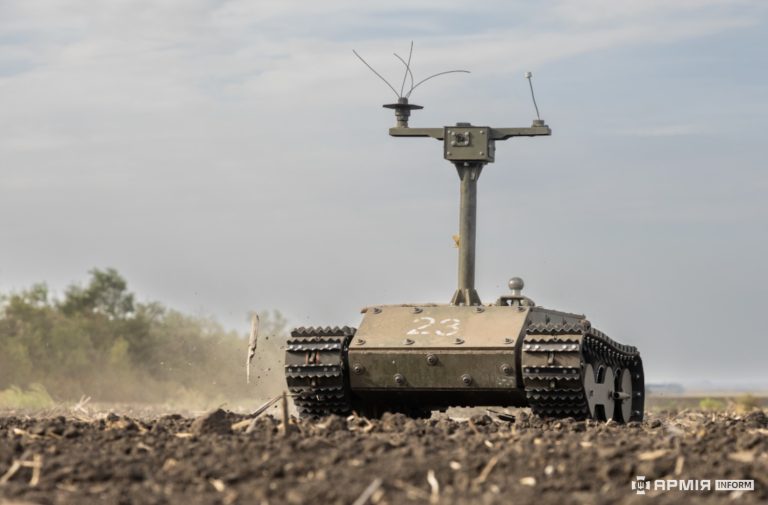
Ukraine has developed autonomous weapon systems to compensate for manpower shortages and mid- and long-range drones to be able to attack Russian territory without the permission of its partners. This gave Ukraine a technological advantage for a short period, enabling it to undermine Russia’s military supply logistics and to reduce its income by destroying refinery and transport infrastructure. Ukraine has continuously and rapidly innovated in its arms and technology race with Russia. In doing so, it has become not just an assistance recipient, but an actor that can change the dynamics of the war and a key developer of modern warfare with know-how that European countries can learn from. Fedorov was responsible for digitalisation in the government and introduced innovations in the ordering and production of drones closer to the front. This has continued under his successors. It takes many years for European companies to test and produce new weapons. Ukraine does this in weeks.
These crucial developments could lead to more conflict with the EU when bargaining about the nature and speed of enlargement. On the other hand, Ukraine as a security provider and innovation partner could integrate with the EU member states on security and defence while it moves forward on enlargement, making it a more equal partnership.
The speed with which the Ukrainian military has changed is incomparable with the slow way European countries have adapted their military production and strategies in the context of the war. There is a growing gap between a flexible and rapidly transforming Ukraine with increasing military capability in a brutal war for its survival and EU member states that have to deal with their domestic political and economic crises while maintaining support for Ukraine and investing in security and defence.
Conclusions
Domestic constraints and attitudes in Ukraine stand contrary to EU practice and norms on how an enlargement process should work. This could undermine Ukraine’s EU integration and there is a danger that structural and institutional constraints on both sides might increase misunderstandings and alienation. It is highly unlikely that a rapid integration of Ukraine can take place. This is contrary to the security and development needs of Ukraine. The German government will continue to advocate for Associate Membership despite the limited appetite for it in Kyiv and the lack of support among EU member states on building a bridge during this intermediate phase. There is no positive narrative on Ukraine’s membership in many EU member states and little political will to reform the EU treaties or the enlargement process. The economic and political crises in and around Europe are likely to further undermine the EU’s ability to act. Europe has been slow to resolve its security challenges. The European Commission proposes preparing a pre-enlargement policy for a Wider European Union by moving from unanimity to qualified majority voting in key areas, including the opening of negotiating clusters, as well as the possible suspension of some voting rights, gradual integration in some areas and sectoral and institutional safeguards. This would be a positive step to make the EU better prepared for enlargement and better able to act. However, these proposals do not go far enough to prepare the EU for a constantly evolving geopolitical environment and would need concrete political steps supported by member states, which lack consensus.
Despite the ongoing war, Ukraine’s leadership needs to change the reform dynamic. While there is considerable support for EU integration in Ukrainian society, anti-European and anti-western sentiments are growing due to the apparent foot-dragging. Regular elections are still not possible, which puts Ukrainian democracy under pressure. Zelenskyy’s wartime leadership and tireless advocacy for more western support will be his legacy. At the same time, it is the president’s role to improve cooperation and coordination between key state institutions, which he is undermining. Ukraine’s reform process has stalled and this lack of progress calls into question the usefulness of opening more clusters. Ukrainian civil society is crucial in all this but while it can compensate for its many deficits, it cannot take on key tasks of the Ukrainian state. EU integration would help to embed Ukraine more firmly in a political culture of pluralist institutions and strengthen societal trust in institutions linked to the most difficult reforms. Reform of public administration, the judiciary and the rule of law is linked to the systemic change needed to overcome Soviet legacies. However, political consensus and leadership are needed to move forward with enlargement. Bargaining is not the right strategy for becoming a member of the EU.
The future poses many risks for both sides. If the war continues indefinitely and EU integration stalls, the Ukrainian leadership might leverage its security sector to compensate for its lack of reforms in a bargaining process with the EU. Ukraine’s growing agency linked to innovations in military technology could even improve its bargaining position in areas other than security, as it becomes more independent of European and US technology. This might make the Ukrainian leadership more demanding regarding support and EU integration in such a way that it might try to obtain benefits without undertaking the necessary reforms. This would still not work in the integration process but could increasingly strengthen those groups in Ukraine whose vested interests mean that they have no interest in EU integration.
In the absence of functioning security guarantees or rapid integration into European security structures, nuclear rearmament would again become part of the discussion in Ukraine, as it would be the only reliable security guarantee against Russia. From a European perspective, the integration of the Ukrainian security sector is as important as EU enlargement and a precondition for creating an environment that can provide security guarantees. In the final analysis, security integration and EU integration will have to happen at the same time. This is even more important for Ukraine than it was for the Central and Eastern European EU member states in the 2004 enlargement. Ukraine’s EU integration will only work with security guarantees and with Ukraine becoming a key actor in European security.
Recommendations
Ukraine and the EU need each other and there is no good alternative to integrating Ukraine into the EU. Both sides will need to improve their mutual understanding and work on a process that ensures that Ukraine’s EU accession takes place in a realistic and timely manner. In the meantime, Brussels and the EU member states must build a bridge for Ukraine with a staged accession.
In the current difficult domestic circumstances facing the EU, and with limited support for its membership among key member state societies, Ukraine should consider a halfway step such as Associate Membership as something that can lock the country into the EU and socialise Ukrainian officials in EU institutions, especially ahead of difficult elections in EU member states like France and Poland in 2027. Credible delivery of reform by Ukraine should be linked to predictable integration benefits by the EU when agreed conditions are met. This would serve the transactional political culture of the country. The EU’s integration of Ukraine could only work in the foreseeable future if all Ukrainian institutions work together to achieve this goal.
While the idea of single market access was focused on the countries of the Western Balkans, in theory it could also be beneficial for Ukraine. Deeper regulatory integration, recognition of conformity assessments and further access to the market for services would bring meaningful benefits; but it will also need exemptions in, for example, the agricultural sector considering the size of the country. Institutional participation and economic integration should therefore be seen as mutually beneficial, while a clear path to full membership would avoid it becoming a permanent substitute. But it remains to be seen whether the EU can force the political elites of the accession countries to accept the conditions necessary for gradual integration.
Given the absence of NATO membership for the foreseeable future, Kyiv should prepare for new forms of military alliances with coalitions of the willing, which, as Valerii Zaluzhnyi has pointed out, would provide greater security within the framework of modern warfare. It is crucial that the European defence industry gradually replaces the US defence industry in cooperation with Ukrainian companies and helps to scale up production to counter Russia’s ability to mass-produce.
In future, the military sector and the army will play a bigger role in the post-war Ukrainian state and politics. It is likely that the next president will come from the military, which might make relations with the EU more difficult and undermine the willingness of Ukraine to undertake all the reforms necessary for EU integration. Here again, gradual EU integration could help to bring Ukraine into an institutional framework that would guide the country’s reform path, strengthen institutions and help to rebuild the Ukrainian state. This would have a long-term impact on changing the political culture in a way that makes democracy and a functional state the final goal.
EU member states will have to rethink the enlargement process in such a way that understands it not merely as a burden, but as an asset – but also makes it functional through reforms. Ukraine will bring a lot of know-how, integrated and highly educated people, a huge agricultural sector, resources and huge potential on energy to the EU, in addition to its key role in European security. Furthermore, member state governments must promote these benefits in their own societies to increase the public support for Ukraine’s accession. In parallel with the “traditional” integration process, Ukraine will have to be integrated into the European security system as a key asset with one of the biggest armies in Europe and enormous potential for technological innovation in the defence sector. EU member states are already expanding their cooperation with the Ukrainian defence sector, including testing new weapons at the front. EU integration will only be successful once Ukraine has been integrated into the European defence and security system.