Categories
Trending Searches
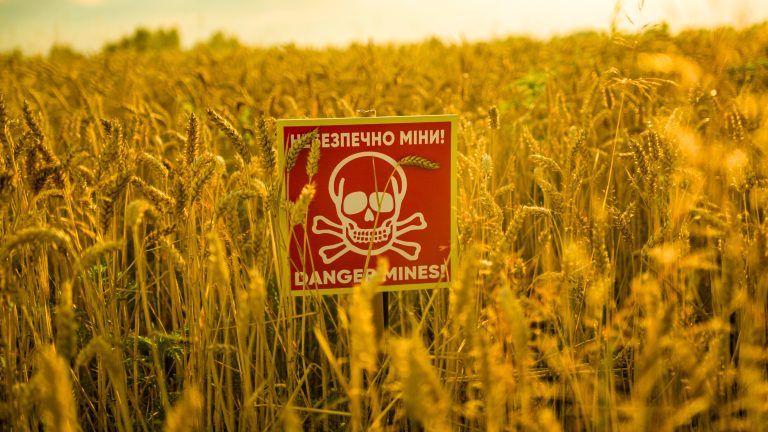

The day after: Six post-war challenges for Ukraine
A ceasefire is nowhere in sight. Putin sees no interest in ending his war. Even so, the EU should start preparing for the many post-war challenges Ukraine will face.



Membership First or Accession Treaty First? How to revive EU enlargement
The European Union’s accession promise loses credibility if it continues to keep the most significant benefits of accession until the end of the process. Its two political options for bringing membership forward – Membership First and Accession Treaty First – must both pass the same four tests.

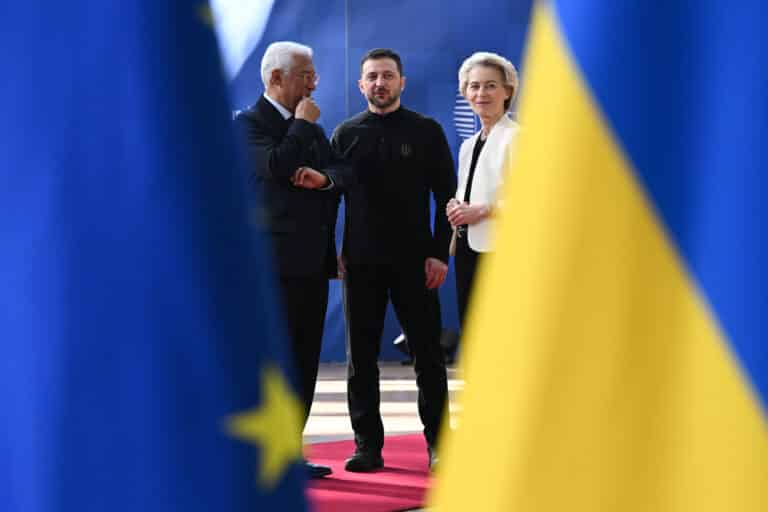
Failure is not an option: the EU’s essential role in securing Ukraine’s future
Four scenarios for Ukraine’s future after 2027: from continued war to a lasting peace deal, and what role the EU must play in each

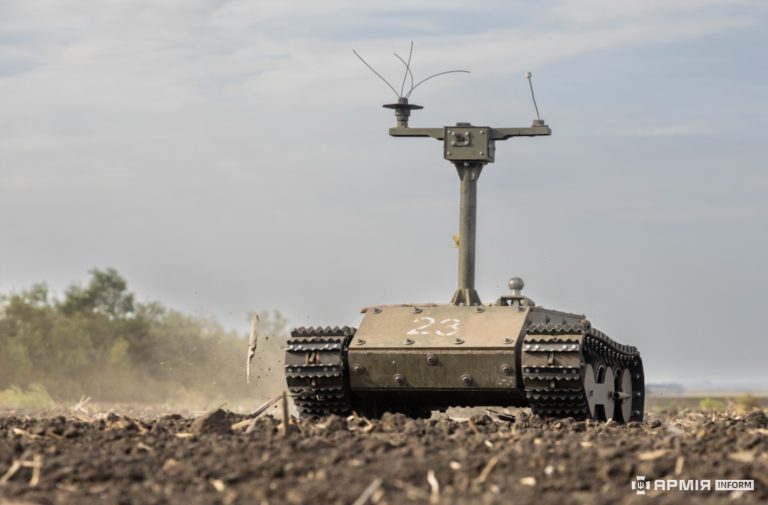
Robots take the risk: Ukraine’s UGV ecosystem and what Europe should learn from it
Ukraine has systematically removed humans from roles that don’t require human judgment, letting machines absorb the danger soldiers would otherwise face. What UGVs can and can’t do, and what lessons European institutions can draw from Ukraine’s experience.



Team members






No Results Found
Matteo Mecacci
Director
Contact
mm@epik.eu
Follows
Matteo Mecacci is Director of the European Policy Institute in Kyiv (EPIK) and Scientific Advisor at the Istituto Affari Internazionali (IAI) in Rome.
He is an international policy and diplomacy expert with more than twenty years of high-level executive experience in geopolitics, democracy, human rights, rule of law, elections, and multilateral affairs. His work has focused on European security, transatlantic relations, Eurasia, democratic governance, and EU integration processes, with particular attention to Ukraine and the wider OSCE region.
From 2020 to 2024, Mecacci served as Director of the OSCE Office for Democratic Institutions and Human Rights (ODIHR), where he led one of Europe’s principal institutions for democracy and human rights. During his tenure, he strengthened ODIHR’s overall work on Ukraine following Russia’s full-scale invasion, including its human rights, democratic governance, election-related, and accountability efforts. He also oversaw ODIHR’s election observation work across the OSCE region and represented the institution in high-level engagement with governments, international organizations, parliaments, and civil society.
Previously, he served as President of the International Campaign for Tibet in Washington, D.C., directing international advocacy with U.S. and European policymakers. He was also a Member of the Italian Parliament, where he served on the Foreign Affairs Committee and the Italian delegation to the OSCE Parliamentary Assembly.
Earlier in his career, Mecacci worked in New York with international civil society organizations on human rights, democracy, and international justice advocacy, including initiatives related to the International Criminal Court and the UN moratorium on the death penalty.
He has been a frequent speaker at international conferences and policy forums and a regular commentator in international media on democracy, human rights, European security, transatlantic affairs, and geopolitical developments.
He holds a Law Degree in International Law from the University of Florence.
Languages: Italian, English, French.


Thank you!
You will now receive EPIK’s latest analysis, publications, event invitations, and other updates directly in your inbox.
Thank you!
You will now receive EPIK’s latest analysis, publications, event invitations, and other updates directly in your inbox.
Go Home Page
Thank you!
The form has been successfully submitted. We value your time, so please expect a call or email from our manager shortly.
Go Home Page
Thank you!
You will now receive EPIK’s latest analysis, publications, event invitations, and other updates directly in your inbox.
Thank you!
You will now receive EPIK’s latest analysis, publications, event invitations, and other updates directly in your inbox.
Thank you for subscribing
You will now receive EPIK’s latest analysis, publications, and event updates directly in your email.
Go Home Page