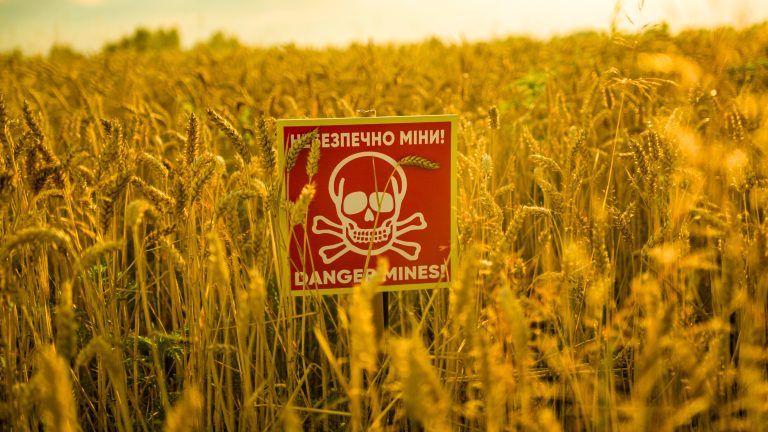
The day after: Six post-war challenges for Ukraine
A ceasefire is nowhere in sight. Putin sees no interest in ending his war. Even so, the EU should start preparing for the many post-war challenges Ukraine will face.
Oleksandr Kraiev
Andreas Umland
Policy briefs
Membership First or Accession Treaty First? How to revive EU enlargement
The European Union’s accession promise loses credibility if it continues to keep the most significant benefits of accession until the end of the process. Its two political options for bringing membership forward – Membership First and Accession Treaty First – must both pass the same four tests.
Alexander Sicheneder
Policy briefs
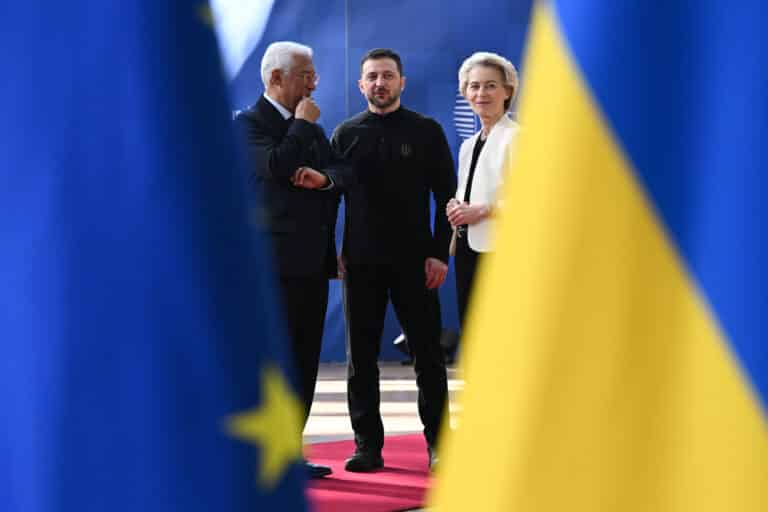
Failure is not an option: the EU’s essential role in securing Ukraine’s future
Four scenarios for Ukraine’s future after 2027: from continued war to a lasting peace deal, and what role the EU must play in each
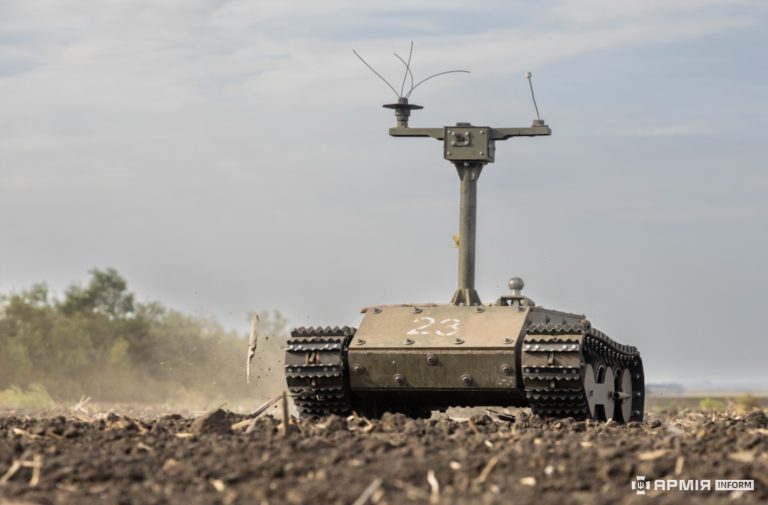
Robots take the risk: Ukraine’s UGV ecosystem and what Europe should learn from it
Ukraine has systematically removed humans from roles that don’t require human judgment, letting machines absorb the danger soldiers would otherwise face. What UGVs can and can’t do, and what lessons European institutions can draw from Ukraine’s experience.
In 2025, the European Union overtook the US as the main provider of financial support to Ukraine. With the newly approved Ukraine Support Loan, the EU made a transition from distributing aid from several different pots, to streamlining it through one large package tied to reform benchmarks. The EU will also pay to support Ukraine’s defence industrial capacity, and procurement of defence products.
But the urgent need for defence assistance, to keep the Ukrainian economy running, and to increase reconstruction tasks, all demand a more stable yet flexible vehicle for EU support. This could be achieved with the inclusion of EU aid for Ukraine into the Multiannual Financial Framework (MFF), the design of new support schemes (using the Ukraine Support Loan as a model), and leveraging frozen Russian assets.
Over the next four years, gradual integration with the EU and progress in reforms should be made separate from support related to the war. If the war continues, the EU should support Ukraine to achieve a decisive battlefield advantage. If a peace deal is achieved, the EU needs to offer substantial security guarantees and a clear framework to follow, for a guaranteed accession by 2030.
Introduction
The EU views financial and military assistance to Ukraine as an investment in European security and prosperity. EU aid currently prevents Ukraine from defaulting on its obligations and from a battlefield collapse – but it falls short of engendering a decisive breakthrough. The European Commission has a good track record of ambitious proposals to support Ukraine: seizing immobilized Russian assets or various ways of stretching EU internal rules on military spending and supporting Ukraine on the battlefield. But the institutional limitations that require time and diplomacy to build consensus around these solutions are an obstacle to responding effectively to Ukraine’s needs.
The EU is moving toward increasing and extending aid packages, to provide Ukraine with funds for several years and to thereby limit the political and legislative processes that delay this assistance. Setting up the Ukraine Facility was the first step to predictable, streamlined funding, paired with clear benchmarks for Ukraine, to advance the accession process. The €90 billion Ukraine Support Loan will provide a steady funding flow all the way through 2028. With the ongoing negotiations on the new Multiannual Financial Framework (MFF) for 2028-2034, this creates an opportunity to secure guaranteed funding for Ukraine’s future. Precisely where the support goes will be largely dictated by the security situation, Ukraine’s progress on reforms, and the EU’s political flexibility.
The Ukraine Facility was not specifically designed to fund defence, although Ukraine was able to spend the money that goes directly into its state budget on some military-related expenditure such as military salaries. Previously, the limited EU military support was funded from a dedicated extra-budgetary instrument: the European Peace Facility (EPF), used to refinance the arms and military equipment transferred to Ukraine by member states, the urgent purchase of 155mm ammunition through the ASAP programme, or the training of Ukrainian soldiers as part of the EU Military Assistance Mission for Ukraine (EUMAM). The Ukraine Support Loan, with a dedicated €60bn for defence, provides a significant element in the EU’s role in funding Ukraine’s military expenses.
As of summer 2026, a permanent ceasefire between Russia and Ukraine looks unlikely. However, American pressure on Ukraine to accept a bad deal has dissipated, at least for now, due to the war in Iran and Ukraine’s own military successes. It is therefore the right time to think strategically about the most effective long-term support to Ukraine – with or without a peace deal. This brief will provide an overview of current and planned EU assistance to Ukraine and will explore its support beyond 2027 in two scenarios: if there is a ceasefire that holds, and if there is not.
Ukraine’s needs
When Russia’s full-scale invasion started in 2022, Ukraine’s military spending increased nearly tenfold compared to 2021, and has continued to grow year on year since. Despite Ukraine’s growing state revenues thanks to new wartime taxes, the country cannot cover all of its military expenditure. Ukraine has thus relied on its partners to keep fighting and sustain the functioning of the state, making it vulnerable to cut-offs, shortfalls or delays.
With all the support from Western partners, Ukraine still faces a state budget deficit of 12.1% of GDP in 2026 (a reduction of 6.4 percentage points following the confirmation of Ukraine Support Loan). This is only if the full amount of earmarked EU and IMF assistance is delivered, which will depend on Ukraine fulfilling the required reforms from this year (many of which have been delayed). If this happens, Ukraine’s financial situation will be largely secure for 2026. Predictions for 2027 are less optimistic. IMF multi-year funding is now being frontloaded for 2026, making the tranche available for 2027 smaller. Additionally, the G7 Extraordinary Revenue Acceleration (ERA) loan, which frontloaded immobilized Russian Asset revenues to Ukraine, runs out next year.
Ukraine’s own allocation to its defence and security budget was significantly increased in a May 2026 draft amendment, following approval of the EU’s Ukraine Support Loan: it now includes approximately €85 billion, up nearly €30 billion from the original budget. Beyond financial help, Ukraine also relies on a constant flow of material help from its partners. This comes in the form of military equipment donations or by partners procuring armaments on Ukraine’s behalf, either through the NATO-brokered Prioritized Ukraine Requirements List (PURL) initiative, or the so-called ‘Danish model’. With Ukraine now facing severe shortages of Patriot missiles due to the impact of the war in Iran, the future of the PURL scheme is unknown.
However, the current level of aid only allows for maintenance of the status quo on the battlefield. What Ukraine needs is a military advantage – in best case scenario, leading to unequivocal victory, but failing that, a stronger negotiating position. Outcomes of previous negotiations following the 2014 war show thatUkraine is not safe even in the event of a peace treaty. Russia’s goal is full political subjugation and, eventually, the absorption of the state. Thus, beyond material help, Ukraine needs solid security guarantees – any peace process will hinge on whether Russia can be deterred.
The EU’s assistance to Ukraine
In 2025, the EU overtook the US as the main provider of financial and military assistance for Ukraine. The newly approved Ukraine Support Loan (USL) is the largest single support package offered by the EU to Ukraine yet. Of the €90 billion in total, €30 billion will go towards budgetary support through two channels: the Ukraine Facility and macro-financial assistance. The funds are disbursed in tranches, each conditional on timely fulfilment of reform indicators outlined in the Ukraine Plan or the IMF reform plan.
The remaining €60 billion from the Ukraine Support Loan is earmarked for defence and will be overseen by the European Commission’s relatively new Directorate-General for Defence Industry and Space (DG DEFIS). This comes with a requirement: it must be spent on European- or Ukrainian-produced systems, if possible. Any derogations, including those allowing purchase of equipment with over a 35% share of Chinese components, must be approved by the Commission. This way, the loan to Ukraine is an investment in the European defence industry.
The EU perceives Ukraine as a key partner for expanding and strengthening the European Defence Technological and Industrial Base (EDTIB). Concrete steps have been made: the inclusion of the dedicated €300 million Ukraine Support Instrument in the European Defence Industry Program (EDIP), granting Ukraine partner status in the European Defence Fund and the SAFE programme of loans for defence procurement. This will allow for Ukraine’s participation in EU defence research projects and procurement, thus integrating with European militaries. It is part of a greater trend where procurement from Ukraine’s defence industry (either for its own use or for member states) helps channel additional external financing.
The EU also seeks to involve European defence companies directly in Ukraine and secure a stake in future reconstruction by attracting private capital. The third pillar of the Ukraine Facility focused on attracting private capital for the Ukrainian economy is the Ukraine Investment Framework (UIF). The announcement of the new €1.5 billion package through the UIF in March 2026 marked a shift in EU’s approach: for the first time, framework funds will allocate resources for dual-use technologies and strategic industries, marking a careful move into a previously forbidden sphere. Further European private investment into Ukrainian defence industry will come from the European Flagship Fund for the Reconstruction of Ukraine, announced during the Ukraine Recovery Conference in June 2026.
In summary, for 2026-2027, the EU claims to be set to cover two-thirds of Ukraine’s budget gap through the Ukraine Support Loan (USL). This estimate, according to a letter from Ursula von der Leyen circulated during negotiations surrounding EU financial support to Ukraine, assumes that the war will end in 2026, which would significantly lower military expenditure for Kyiv in 2027. However, with no end to the war in sight, before the end of 2027, Ukraine will face a significant shortfall, and EU aid will need to be revised once again. This should come with a defined objective for that money: to ensure Ukraine’s victory.
Obstacles to effective support
The requirement for unanimity in the EU is a vulnerability and puts the continuity of EU’s funding in question. On numerous occasions, when a swift response was needed, support was susceptible to political hijacking. In 2023, Hungary’s veto blocking EU aid to Ukraine came just as US aid was also being withheld by Congress. While a change of Hungarian leader at the ballot box eventually removed that particular obstacle, the fundamental problem remains and could be seen again with the altercation between Poland and Ukraine over the naming of a military unit after the controversial WWII-era Ukrainian Insurgent Army (UPA), which threatened the opening of the remaining clusters. The European Commission may put the opening of the remaining clusters. The European Commission may put forward credible and ambitious proposals, but the EU’s political and institutional structure can still delay or obstruct their adoption.
This weakness is, of course, exploited by Russia. Its campaign of sabotage and disinformation across the EU is designed to chip away at public support. Russia has determined that it can outlast the EU’s support to Ukraine and win. President von der Leyen explicitly stated in her letter to EU leaders: “[Putin] still believes he can outlast Ukraine and all of Europe. The message we send now must be crystal clear: Europe is standing strong with Ukraine.” With the rise of Russia-friendly, far-right challengers across Europe who reject the EU’s role in supporting Ukraine or funding European defence, Brussels needs to ensure that European security and Ukraine’s survival are not hostage to infighting.
There are also problems on Ukraine’s side. In 2025 progress on completing reforms outlined in the Ukraine Plan (tied to disbursement of funding from the Ukraine Facility) has slowed down: it failed to implement 27% of indicators scheduled for the year. Despite the clear incentive structure for reforms from the European Commission, Ukraine continued to fail to pass the necessary laws for receiving funding due to aparliamentary crisis. This has been attributed to the diminishing number of deputies due to the impossibility of holding elections in wartime, a decline in discipline and tensions between the presidential office and the legislature.
Explained as an attempt to improve government efficiency, Zelenskyy’s July 2026 ministerial reshuffle involved the appointment of Serhii Koretsky as prime minister, with support of majority party Sluha Narodu. Although Zelenskyy declared that European integration will continue to be a priority for the new government, some staffing decisions raise questions about the stability of the reform path. The dismissal of popular defence minister, Mykhailo Fedorov, who challenged opaque defence procurement policies, came as a surprise to Brussels. His close relationship with the European Commission dates back to his time as Minister for Digital Transformation, beginning in 2019.
The replacement of Deputy Prime Minister for European and Euro-Atlantic integration Taras Kachka with Vsevolod Chentsov, previously Ukraine’s ambassador to the EU was similarly unexpected. But Chentsov experience in Brussels should help bridge the gap between EU’s expectations and political ambitions in Kyiv.
His first test will be implementing the ten priorities of the Kachka-Kos Plan personally agreed by the previous minister; particularly in judicial and anti-corruption reforms. The plan thus far has made limited progress, and the reform agenda is much broader: accession negotiations will require hundreds of legislative and sectoral measures included in the National Programme of Adoption of Acquis (NPAA). With Clusters 1 and 6 now open, tangible results will be crucial.Most importantly of all, despite the sizable financial package from the EU to keep Ukraine afloat for the next two years, it is simply nowhere near what is required for Ukraine to achieve a decisive military advantage. The current level of funding only maintains the status quo. In practice, lack of investment and material support will translate into mounting costs for Ukraine’s partners as the war drags on.
Scenarios beyond 2027
A note on the assumptions:
By 2027, the Ukraine Facility and the Ukraine Support Loan will expire and the new EU seven-year budget and Multiannual Financial Framework will kick in. Depending on what is agreed by member states, it envisions up to, or even over €100 billion for Ukraine (funded from either the ‘Ukraine Reserve’ in the budget, or joint borrowing against the budget headroom).
None of the scenarios envisions Ukraine’s full EU membership, given that an accelerated process is unlikely, and the standard accession process takes 4-5 years, at the very minimum. Instead, this paper considers scenarios in which Ukraine receives ‘special status’ allowing for sectoral integration into the EU – be it through partial integration into the single market, increased political participation in EU bodies, or security guarantees from Europe.
Scenario 1: War continues past 2027, Ukraine doesn’t receive ‘special status’
Scenario 3: War continues past 2027, Ukraine receives ‘special status’
Scenario 4: Peace deal by 2027, Ukraine receives ‘special status’
Scenario 1: War continues past 2027, Ukraine does not receive ‘special status’ in the EU
Lack of prospects for accelerated EU accession leads to societal disappointment with the integration process. But despite simmering Eurosceptic sentiments, a majority retains a positive view of the EU due to continued financial and political support. The incentive to press for reforms both in Zelenskyy’s office and in the government is diminished, and thus stalled. This results in increased tension between Ukraine, Brussels and EU capitals.
Failure to obtain a negotiated solution acceptable to Ukraine, becomes a clear sign to the EU that it needs to boost Ukraine’s position on the battlefield and provide it with a military advantage. The collapse of talks highlights the threat that Russia poses to Europe and causes a new wave of support for Ukraine. Despite tensions over the accession progress, financial and military support continues through multi-year instruments, rather than Ukraine’s inclusion into EU structures. The EU supports Ukraine from its budget, frontloading the funds and topped up by unfrozen Russian assets and mixed support schemes from ‘coalition of the willing’ European capitals. Funding from the European Peace Facility money goes towards training Ukrainian soldiers in Ukraine.
Scenario 2: There is a peace deal by 2027, Ukraine does not receive ‘special status’ in the EU
After the peace deal, but assuming an absence of security guarantees from the EU, Ukraine’s goal is to safeguard itself from future attacks by Russia. The militarisation of Ukrainian society progresses. With technological progress and ramped-up peacetime defence production, Ukraine perceives itself as self-sufficient. The sense of betrayal stemming from the scale of sacrifice in the war results in the radicalisation of political life (‘we fought, and we get nothing for it’). Ukraine turns to exporting its military experience and weapons to fund recovery, contributing to a destabilisation of the global geopolitical situation.
The EU’s credibility is weakened due to its inability to resolve a crisis on its doorstep or anchor Ukraine in post-war Europe. With the war over, continued support for Ukraine and its accession does not feel urgent to Brussels. Tensions with Ukraine and its sense of betrayal translate into decreased support from member states for Ukraine’s future integration. Funds for Ukraine’s recovery start coming from the MFF, but many member states refuse to top up the funds available in the Ukraine Reserve through common borrowing. This means support is way smaller than €100 bn envisioned in the European Commission’s proposal. The US takes a leading role in investing in Ukraine’s reconstruction, creating further tensions over the exclusion of European capitals.
Scenario 3: War continues past 2027, Ukraine receives ‘special status’ in the EU
An award of ‘special status’ to Ukraine reinforces President Zelenskyy’s belief that integration with the EU is a political decision, rather than one anchored only in fulfilment of the accession criteria. Disillusionment in the Verkhovna Rada, where MPs are serving their eighth year, means Ukraine’s legislative processes remain stalled. The inability of the legislature to complete the anti-corruption and judicial reforms in the cluster benchmarks triggers the conditionality clause leading to suspension of membership benefits. Ukraine does not progress in sectoral integration and is suspended from participation in EU bodies. The question of Ukraine’s membership poses significant challenges for European capitals, which are divided into those who stand firmly by the country at war, and those who don’t. The EU is forced to disburse remaining funding despite Ukraine lagging. This translates into diminishing Brussels support for the use of budgetary funds for Ukraine, leading countries to donate funds directly or through multilateral schemes between supporters.
Scenario 4: There is a peace deal by 2027, Ukraine receives ‘special status’ in the EU
Ukraine’s first post-war elections pose a challenge to EU integration as a new political class of veterans and military leaders emerge. They don’t have a strong understanding of the EU and the accession process, nor do they possess relations with the European political class. To avoid the risk of democratic backsliding and to anchor Ukraine firmly in Europe, the EU proposes a ‘special status’ tying membership benefits to Ukraine’s reform progress. Adoption of the acquis now progresses steadily, given a functioning and fully staffed Rada. As part of the security guarantees in the peace deal, the EU provides Ukraine with a mutual defence clause, which allows for the de-militarisation of the country while retaining a large, professional army.
Ukraine’s recovery is funded from the MFF, topped up with unfrozen Russian assets, seized following a ruling on war reparations owed by Russia. European states are leading Ukraine’s reconstruction and integration of Ukraine into the EU single market, which aids its recovering economy. To assuage member states’ concerns about Ukraine’s agricultural exports, during the transition period compensation is provided to the countries most affected. Ukraine’s military experience is used to reinforce European security and technological sovereignty from the US (including joint development of anti-ballistic missile interceptors). Ukraine follows the usual route for accession, negotiating clusters and chapters one by one, but now that the war is over there is less urgency.
Conclusions
The EU will need to help sustain Ukraine in any of the scenarios outlined above. The key moving parts in EU support beyond 2027 will be: financial support, EU integration, and security guarantees.
In terms of financial support, the lengthy political process behind the Ukraine Support Loan shows that though there is political determination, urgently needed aid can remain in limbo for a long time. The EU is, in fact, able to invest much more in Ukraine and in its own security. The emergency COVID fund amounted to over €800 billion – almost four times greater than the total EU aid provided thus far to Ukraine. With the projected increase in European military expenditure towards the NATO goal of 5% of GDP by 2035, some of that funding could be redirected to Ukraine.
The larger question of Ukraine’s membership will persist. But support for a country at war should be separate from the process of EU accession. This will be dependent on maintaining the political appetite for enlargement in Europe and allowing for a realistic pace of reform. Considering the lack of political will to fast-track membership and other enlargement concerns such as Ukraine’s access to the single market for agricultural products, membership cannot be offered as part of any peace settlement. Instead, the future of Ukraine’s integration will hinge on a strong security guarantee – ideally with Ukraine receiving protection akin to article 42.7 in the EU Treaty.
Figure cited by Captain Oleksandr Yabchanka, Commander of the Robotic Systems Service of the ‘Da Vinci Wolves’ Battalion, 59th Separate Motorized Infantry Brigade. He does not specify an explicit timeframe . Based on the attrition rates of two to five platforms per day cited in the same interview, 140,000 units is consistent with a one-year sustaining requirement across the full force, although this inference is the author’s own.
Policy recommendations
To safely anchor Ukraine in Europe, any peace settlement should be done with the EU’s participation. As part of a deal, the EU should offer Ukraine tangible security guarantees (for example, by extending a mutual security clause under Article 42.7 of the TEU), separate from the accession process. A deal should also grant Ukraine a ‘special status’ in EU bodies, sectoral integration into the single market, and a clear timeline for accession by 2030, subject to completion of reforms.
In the event of a collapse of the peace deal, the EU needs to state the goal clearly: the aim of the support is to ensure Ukraine’s victory, thus safeguarding Europe from future threat.
For that, an honest conversation with European societies is needed about the threat and about the costs they were to bear.
The Ukraine Support Loan, which is financed through common borrowing between European states and has not caused any significant opposition across Europe, provides a model.
Europe needs to anchor itself in Ukraine’s reconstruction and make sure that ‘building back better’ means integrating Ukraine into the European economy – not letting it be overrun by American financial interests.
Funding for Ukraine must be included in the next Multi-annual Financial Framework. Simultaneously, the EU should continue to look for alternative sources of financing. Examples include:
‘Coalition-of-the-willing’-type schemes to top up the European Peace Facility (EPF), the EU extrabudgetary instrument that allows for military spending. This could be done on top of the percentage contributions through which the EPF is currently funded.
Immobilized Russian assets should be unfrozen and used in either scenario – either for reparations and reconstruction or, if negotiations collapse, to boost Ukraine’s defences.
Wartime EU integration could focus on single market access through gradual integration under the Deep and Comprehensive Free Trade Agreement. This way, tensions with Brussels, or political opposition from EU member states over potential non-fulfilment reforms can be averted.
Ukraine will also need a revamped and re-energised political system – with new elections after the war – to implement the more difficult reforms necessary for full EU integration, and to grow into a mature European democracy.
Glossary of terms
MFF – Multiannual Financial Framework The EU’s 7-year budget. Negotiations are currently underway for the budget covering the years 2028–2034.
ASAP – Act in Support of Ammunition Production A 2023 EU regulation adopted to boost EU ammunition and missile production capacity to address the shortages caused by the war.
EPF – European Peace Facility An off-budget EU instrument for funding military support. In 2023 it was used for reimbursements to member states supplying weapons to Ukraine. It is financed by member state contributions.
USL – Ukraine Support Loan A loan financed by common borrowing amongst EU member states (excluding Czechia, Hungary and Slovakia), guaranteed by the EU budget headroom. Through this loan, the EU will provide €90 billion of economic and military support over the years 2026-2027.
G7 ERA – Extraordinary Revenue Acceleration A 2024 G7 initiative to provide Ukraine with €45 billion in loans, to be repaid using the future windfall profits generated by confiscated Russian assets. Funds will continue to be disbursed until the end of 2027.
Chief Specialist in European Security at the Institute for Innovation and Technology (ITECH) in Poland. She covers European defence-industrial strategy and Europe’s support to Ukraine.
Membership First or Accession Treaty First? How to revive EU enlargement
The European Union’s accession promise loses credibility if it continues to keep the most significant benefits of accession until the end of the process. Its two political options for bringing membership forward – Membership First and Accession Treaty First – must both pass the same four tests.
Alexander Sicheneder
Policy briefs
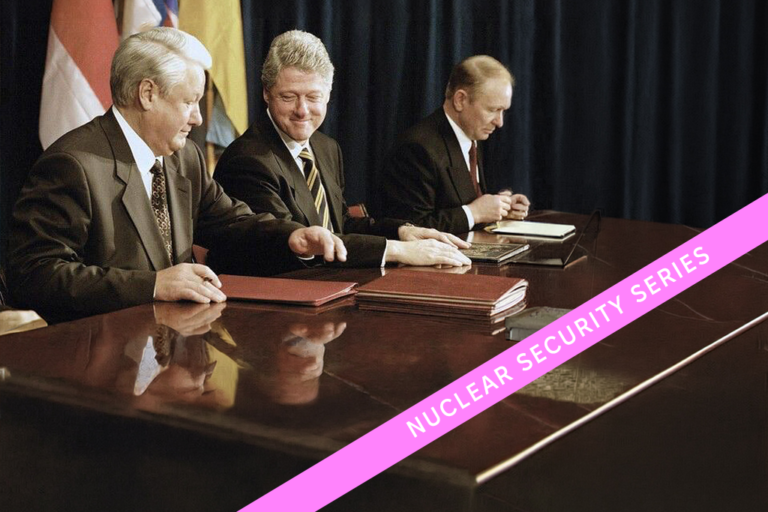
Promises undelivered: the Budapest Memorandum reappraised
{"forms.error.required":"{field} is required.","forms.error.required_generic":"This field is required.","forms.error.email_invalid":"Please enter a valid email address.","forms.error.email_no_cyrillic":"Email address cannot contain Cyrillic characters.","forms.error.phone_invalid":"Please enter a valid phone number.","forms.error.min_length":"Must be at least {min} characters long.","forms.error.max_length":"Must not exceed {max} characters.","forms.error.invalid_chars":"Contains invalid characters.","forms.error.emoji":"Emoji are not allowed.","forms.error.html_tags":"HTML tags are not allowed.","forms.error.control_chars":"Contains invalid control characters.","forms.error.no_digits":"Numbers are not allowed.","forms.error.digits_only":"Only numbers are allowed.","forms.error.digits":"Numbers are not allowed.","forms.error.username_spaces":"Username cannot contain spaces.","forms.error.username_invalid_chars":"Username contains invalid characters.","forms.error.password_obvious":"Password is too simple. Please choose a stronger password.","forms.error.password_matches_email":"Password cannot be the same as the email.","forms.error.password_matches_username":"Password cannot be the same as the username.","forms.error.server_error":"Server error. Please try again later.","forms.error.file_type_invalid":"Failed to upload the file due to an unsupported format. Please upload a file in one of the following formats: {formats}.","forms.error.file_too_large":"Failed to upload the file because it exceeds the maximum allowed size. Please select a smaller file.","forms.error.file_duplicate":"This file has already been added.","forms.error.file_max_count":"You can upload no more than {max} files.","forms.ui.max_chars_reached":"Maximum number of characters reached ({max}).","forms.ui.min_chars":"At least {min} characters required.","forms.ui.fix_errors":"Please fix the errors in the form first.","forms.ui.loading":"Submitting…","forms.ui.success":"Submission successful."}
Thank you!
You will now receive EPIK’s latest analysis, publications, event invitations, and other updates directly in your inbox.
Thank you!
You will now receive EPIK’s latest analysis, publications, event invitations, and other updates directly in your inbox.