Categories
Trending Searches


The plateauing of Russia’s military strategy in Ukraine
Russia’s battlefield strategy in Ukraine has plateaued and, if nothing radically changes, Russia cannot expect any significant progress on the battlefield in 2026.


Robots take the risk: Ukraine’s UGV ecosystem and what Europe should learn from it
Ukraine has systematically removed humans from roles that don’t require human judgment, letting machines absorb the danger soldiers would otherwise face. What UGVs can and can’t do, and what lessons European institutions can draw from Ukraine’s experience.


The day after: Six post-war challenges for Ukraine
A ceasefire is nowhere in sight. Putin sees no interest in ending his war. Even so, the EU should start preparing for the many post-war challenges Ukraine will face.


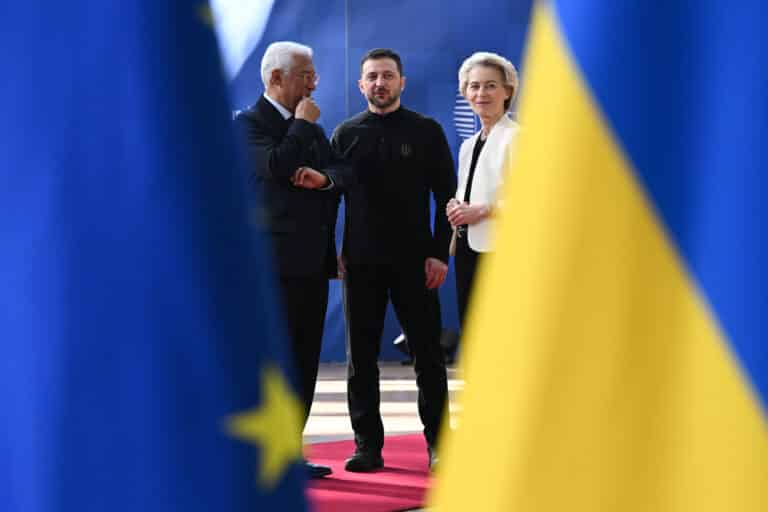
Failure is not an option: the EU’s essential role in securing Ukraine’s future
Four scenarios for Ukraine’s future after 2027: from continued war to a lasting peace deal, and what role the EU must play in each

Membership First or Accession Treaty First? How to revive EU enlargement
The European Union’s accession promise loses credibility if it continues to keep the most significant benefits of accession until the end of the process. Its two political options for bringing membership forward – Membership First and Accession Treaty First – must both pass the same four tests.

Team members






No Results Found
Membership First or Accession Treaty First? How to revive EU enlargement
The European Union’s accession promise loses credibility if it continues to keep the most significant benefits of accession until the end of the process. Its two political options for bringing membership forward – Membership First and Accession Treaty First – must both pass the same four tests.
Alexander Sicheneder
2 October 2026
25 min
Photo credit: brunocoelho, Shutterstock
Text size:
The European Union’s enlargement policy has a credibility problem. Croatia joined the EU in 2013 but no country has joined since. Georgia has left the queue. In the Western Balkans, Moscow, Beijing and the Gulf states fund today what Brussels promises for tomorrow. At the same time, however, the EU has expanded the political significance of enlargement. In response to Russia’s war of aggression against Ukraine, Ukraine and Moldova were awarded candidate status in 2022. They formally opened accession negotiations in 2024.
If the EU wants to stay geopolitically relevant, the old model of accession politics is no longer tenable. The problem is not simply that the accession promise has lost credibility. In the Western Balkans, the promise of EU accession is too distant. In Ukraine, by contrast, the EU’s growing strategic stake in the country’s European integration makes it difficult to credibly withhold membership in the long term if accession conditions are not fully met. In both cases, the traditional sequence – full compliance first, integration at the end – struggles to perform its core functions of making the prospect of membership both politically credible and conditional on merit.
Gradual integration can offer a way forward. It can front-load meaningful benefits of European integration while keeping further rights and stages of membership conditional on progress with integration. In this way, it preserves conditionality as the mechanism that determines how far and how fast integration proceeds.
Gradual integration can be institutionalised either within the existing EU treaties or through a reform that requires Treaty change. “Membership First” offers one option for the latter route, whereby the EU admits the country and completes full integration at a later date. “Accession Treaty First” offers a possible route within the current treaty framework. Here, the Accession Treaty is signed early on, giving the candidate an acceding country’s seat at the table, and integration is completed before the treaty enters into force. The first is the bolder signal and the harder law; the second fits the current treaties and has precedents from 2005 and 2011. However, the political and legal consequences of an early signature would have to be strong enough to make the latter model meaningful.
1. The problems of EU enlargement politics
The logic of traditional EU accession conditionality rests on a strongly asymmetrical relationship. The candidate country seeks a benefit controlled by the EU, while the EU can credibly withhold that benefit if the candidate country fails to comply with the EU’s terms.
This asymmetry has narrowed since the EU tied its own credibility to Ukraine’s membership. By granting Ukraine candidate status in June 2022, it now treats accession as a strategic commitment. As a result, the political costs for the EU of a prolonged failure to deliver could be greater than under previous enlargement rounds. At the same time, candidates have alternative options that did not exist in 2004: Russian, Chinese and Gulf state investment and political support in the Western Balkans, and a peace settlement in Ukraine negotiated largely outside EU structures. In the case of Ukraine, the result is a version of the Samaritan’s Dilemma: the stronger the EU’s interest in anchoring Ukraine, the less credible its threat to withhold support becomes.
Thus, Ukraine’s EU accession process faces the challenge of reconciling three objectives that operate on different timelines: geopolitical anchoring now, domestic transformation over time and full integration at the end. A solution for how to combine these functions has not yet been found. Simply prescribing a date for Ukraine’s accession, as the peace proposal associated with US President Donald J. Trump did in the winter of 2025/26, is neither credible nor aligned with the EU’s existing merit-based rules. Retaining the existing sequence of full compliance first and integration only at the end, however, is no longer an adequate response to the geopolitical urgency of Ukraine’s EU accession.
2. Gradual integration: the middle ground
Gradual integration offers one way to reconcile these objectives. It would bring forward meaningful elements of political anchoring and integration, while keeping further rights and the full benefits of membership conditional on progress with reform.
The principle is already partly apparent in the EU’s past enlargement practice. The 2020 methodology envisaged “phasing” candidate countries into individual EU policies, markets and programmes, alongside stronger positive and negative conditionality. Similarly, the European Parliament has called for the gradual integration of accession countries into EU processes, sectoral policies and programmes before accession. What is missing is a sufficiently coherent institutional framework that connects these individual measures to a credible new enlargement politics.
The debate in 2026 has already produced different versions of this idea. The European Commission’s unpublished concept of “reverse enlargement” envisages admitting candidate countries before they have completed all accession reforms and the progressive activation of substantive components of membership thereafter. German Chancellor Friedrich Merz, by contrast, has proposed a status of “associate membership” for Ukraine that would grant some of the benefits of integration without formal membership. The different reactions to these proposals reveal the political constraints that any reform of the EU accession process must address.
First and foremost, an arrangement designed exclusively for Ukraine, such as the Merz proposal, would be difficult to reconcile with the expectations of other candidate countries, as well as with concern in Ukraine that such an arrangement would make it a second-class member of the EU. This worry was expressed in the reaction of Ukrainian President Volodymyr Zelenskyy to Merz’s associate member proposal: “It would be unfair for Ukraine to be present in the European Union but remain voiceless”.
On the other hand, admitting a country before it has completed essential reforms might undermine the merit-based character of enlargement and raise concerns among existing member states about the EU’s institutional cohesion. Thus, the institutional mechanisms for implementing gradual integration while maintaining the goal of full membership are still unclear.
3. Two institutional routes
This paper distinguishes between two broad institutional routes: a Membership First model, which would require substantial changes to the EU’s existing legal and institutional framework, potentially including Treaty amendment; and an Accession Treaty First model, which would seek to use the existing accession architecture as far as possible.
- Membership First
Choosing a Membership First approach would mean that all EU member states were ready to accept new members even if all the necessary reforms had not been implemented at the time of membership. In this context, granting membership would indicate that EU member states had internalised and endorsed the geopolitical and security functions of the enlargement process. Politically, this option would be extremely challenging as admitting a country before it has completed all internal reforms would result in an unequal integration of member states into the EU. Treaty change would probably be needed to deal with the resulting legal and institutional questions, while Ukraine and the remaining candidate states would need to accept transitional arrangements. As the remaining candidate countries would also be affected by this reform, these transitional arrangements should not be seen as second-class membership but as a normal part of a reformed integration process leading to full membership.
- Accession Treaty First
The Accession Treaty First model would be less disruptive of the EU’s existing legal and institutional order as it could happen within the boundaries of the current treaties. The idea is that a political decision could be made to bring forward signature of the Accession Treaty, granting the candidate country “acceding country status”. This status would not reproduce all the effects of membership but could advance the point at which accession becomes a legally and politically settled destination. In addition, acceding country status would not in itself extend the security guarantees associated with membership, including Article 42(7) of the Treaty on European Union. Thus, its capacity to provide credible geopolitical anchoring would depend on the legal and political consequences attached to early treaty signature, as well as on complementary security arrangements. Final accession resulting in full membership would only take place on completion of all the remaining conditions and ratification by the current member states.
4. Principles to follow
Neither approach offers a perfect solution. Membership First provides stronger anchoring but risks institutionalising unequal membership and weakening post-accession conditionality. Accession Treaty First fits more readily within the existing accession sequence but might fail to make the membership promise linked to signature of an Accession Treaty sufficiently credible.
Whichever route the EU ultimately pursues, reforming enlargement through gradual integration should not be understood as abandoning the merit-based approach. On the contrary, it should make that approach credible under changed geopolitical conditions.
To make gradual integration work for both existing EU member states and current candidate countries, any movement towards gradual integration should follow four principles. First, it must restore the credibility of the accession promise in foreseeable and politically meaningful stages. Second, it must limit the ability of individual member states to obstruct intermediate progress for reasons unrelated to the agreed conditions while preserving the EU’s capacity to act after enlargement. Third, opportunities for political participation must increase alongside substantive integration, and full institutional equality must apply once transitional arrangements have ended. Fourth, conditionality must remain credible through proportionate and functionally linked reversibility, without making membership itself casually reversible.
Together, these principles provide the criteria against which both Membership First and Accession Treaty First should be assessed. They also define the boundary of gradual integration, which should be neither unconditional accession by another name nor a permanent intermediate status, but a structured pathway in which deeper integration remains linked to demonstrable progress towards full membership.
- Principle 1: Restore the credibility of the accession promise
The credibility of the EU’s enlargement policy has been slowly but visibly eroded. The EU has not admitted a new member state since Croatia in 2013, while several Western Balkan candidates have spent well over a decade in a process in which the end is still uncertain. The economic literature suggests that actors devalue benefits that lie in the far future. In addition, the rewards offered by Russia and China, among others, are for many candidate countries (currently especially in the Western Balkans) realistically available now, which means that they can directly compete with the EU’s offer of future accession.
The effectiveness of conditionality therefore increases and declines with the proximity of accession. When accession appears indefinitely distant, governments have weaker incentives to incur the immediate political and economic costs of difficult domestic reforms. As accession approaches, however, the reward becomes more tangible and the use of conditionality can be considerably more effective. A credible accession horizon is therefore not simply a reward for candidate countries, but an instrument of European geopolitical influence.
Gradual integration would partly reproduce this proximity effect by replacing one distant reward with a sequence of nearer, more predictable steps. It could also strengthen reform-minded governments domestically. Externally agreed requirements would allow them to present politically costly reforms as necessary steps towards an important European objective. However, it will be impossible to make any legal commitment to an accession date because all EU member states must unanimously agree the accession of a candidate country.
Nonetheless, there will be a need for at least a political commitment that is not dependent on the agreement of all existing member states. Even the mere announcement of such a timeline would force the EU to evaluate its enlargement policies based on this benchmark. This would flip the current situation. Rather than candidates lacking guarantees that reforms will ensure accession, the EU would need to justify why a country that fulfils the core criteria still cannot join.
Delaying enlargement indefinitely could severely undermine the EU’s credibility. The Membership First model and the Accession Treaty First model would build the required credibility in different ways. Membership First would provide a stronger commitment by delivering formal membership immediately, but its credibility would depend on how membership is institutionalised. Accession Treaty First would offer a weaker but potentially more legally and politically feasible commitment, the credibility of which would depend on the consequences of signing the Accession Treaty.
- Principle 2: Limit political obstruction before accession and preserve the EU’s capacity to act
Maintaining a credible accession horizon will remain a challenge for as long as individual member states are able to consistently block intermediate steps. Unanimity enables bilateral disputes and unrelated political issues to influence what should be a merit-based review of a candidate’s performance. Consequently, a country might satisfy all the technical criteria but still be prevented from progressing for reasons beyond its control.
North Macedonia illustrates this problem particularly clearly. It was blocked first by Greece over its country name, until the Prespa Agreement of 2018, then by Bulgaria for reasons of history and language, and is yet to implement a constitutional amendment demanded by Sofia. Whatever the merits of each dispute, none concerned the accession criteria. Ukraine’s own experience is more recent. Opening its first negotiating cluster waited not on Kyiv’s benchmarks, but on a change of government in Budapest.
The revised enlargement methodology introduced in 2020 was intended to increase political ownership, but it also opened up new avenues for national governments to intervene in intermediate decisions. When each procedural step can become subject to renewed political bargaining, fulfilling technical conditions no longer reliably produces the expected reward. This weakens the credibility of conditionality as candidate countries have less reason to incur the domestic costs of reform if they cannot be confident that compliance will lead to progress.
This problem affects the two models differently. Accession Treaty First would need to ensure that compliance with predefined benchmarks results in the corresponding act of integration between treaty signature and its entry into force. Final accession would remain subject to the consent and ratification of all member states under Article 49 TEU. Membership First would consolidate this decisive act of unanimity at an earlier stage. Once accession has been ratified, the subsequent activation of specific rights or benefits should be governed by an assessment procedure that limits the scope for renewed unilateral vetoes.
It should be noted that in both models, the unanimity problem does not end completely with accession. As the EU is currently organised, each successful accession of a candidate country will bring in another potential veto player to an EU where capacity to act is already constrained in fields that require unanimity. This is particularly problematic in foreign and security policy. Enlargement will not strengthen European security if it makes common decisions more difficult. Institutional preparations must therefore accompany enlargement, including for greater use of qualified-majority voting and of mechanisms that prevent individual governments from indefinitely blocking decisions supported by the overwhelming majority.
Reforming the accession process and reforming internal EU decision-making are distinct but not entirely separate tasks. A gradual and merit-based accession process will require protection against arbitrary political obstruction while a further enlarged EU will require institutions capable of action once new members have joined.
- Principle 3: No rule-taking without rule-shaping
The EU’s institutions largely continue to distinguish between non-members with no formal role in shaping EU decisions and members with the full set of institutional rights. The key risk of gradual accession highlighted by President Zelenskyy above, that “It would be unfair for Ukraine to be present but … voiceless”, suggests a broader principle that should underpin any model of gradual integration – that deeper integration should be accompanied by greater opportunities to participate in shaping the rules that a country is expected to implement.
A Membership First approach would address this concern by granting a new EU member state immediate access to the EU institutions. At the same time, however, it would introduce a third, temporary situation: formal membership combined with incomplete integration in particular policy areas. However, as any new members that go through this enlargement model will be integrated in a qualitatively different way to the old members, the old members could insist on temporary limits on certain EU rights. Such post-accession differentiation should be limited to clearly specified policy areas, proportionate to the remaining degree of substantive integration and subject to objectively verifiable conditions for its termination. The path to full institutional equality should be agreed before accession and operate automatically once the relevant conditions have been met.
Accession Treaty First avoids this tension by expanding participation before membership. After signature, the acceding country could be given observer and speaking rights in the relevant Council bodies, sit on committees and working groups, gain systematic access to legislative documents, be consulted on initiatives affecting the acquis it already applies and take part in the informal coordination that precedes decisions in the policy areas it is joining. Formal pre-accession observer status in the European Parliament would complete the picture. The distinction would remain institutionally clear: before accession, increasingly extensive rule-shaping rights would accompany substantive integration; once the Accession Treaty entered into force, the country would acquire the institutional rights associated with membership.
The two models would therefore manage the relationship between integration and participation differently. Accession Treaty First would expand participation before membership without granting formal voting rights. Its central risk would be that an acceding country might implement EU rules for an extended period without having an equal role in negotiating them. Membership First would grant formal membership earlier but might require temporary limitations on particular decision-making rights to secure the consent of existing member states. Its central risk would be the creation of a category of member with incomplete political rights. Neither model can eliminate this trade-off entirely. Gradual integration should therefore ensure that political participation increases alongside substantive integration and that any differentiation leads to full institutional equality.
- Principle 4: Ensure the credibility of conditionalities through reversibility
Conditionalities in the traditional enlargement process are strongest before accession. After accession, leverage becomes fragmented and politically costly to use: infringement proceedings, financial conditionality and Article 7 TEU cannot reproduce the concentrated leverage of a membership that can still be withheld. The record confirms it: The mechanism was triggered against Poland in 2017 and Hungary in 2018 but never progressed beyond its first stage.
A Membership First model therefore risks weakening transformation incentives precisely because it delivers the largest political reward at an earlier stage. Governments might become satisfied with partial integration or backslide after acquiring formal membership. Graduality cannot therefore operate only in one direction.
Thus, it will be preferable to treat individual elements of integration as reversible if a government backslides on the reforms that granted them. This could be achieved by establishing automatic “reverse conditionalities”. However, such reverse conditionalities must not make membership easily reversible, as that would undermine its role as a source of security and political stability, which initially made it so valuable. In addition, a broadly defined expulsion process could be exploited by member states, turning policy disagreements into existential disputes over membership.
Thus, the suspension of rights or benefits should be proportionate to the seriousness and persistence of the violation and, wherever possible, functionally linked to the obligation broken. Failure to meet a benchmark could prevent the activation of an additional right, while backsliding on an already completed reform could justify temporary suspension of the corresponding benefit. However, formal membership should remain secure for as long as is feasible.
Implementing such reversibility would be equally important for an Accession Treaty First model, as this approach would also need to address the declining power of EU conditionalities after accession.
5. Implementation in the next 15 months
The next 15 months will provide an important opportunity to connect the debate on reforming the enlargement process with two broader EU decisions: negotiations on the 2028–2034 Multiannual Financial Framework, which will either budget for new members or postpone them de facto to the mid-2030s; and the pre-enlargement reviews of the EU’s policies and institutions.
If gradual integration is not written into these decisions, the old sequence of full compliance first and integration at the end will continue by default. The upcoming EU summit in October 2026 should therefore provide clear political direction on gradual integration, ensure that this is reflected in all three processes and start to develop its institutional and legal architecture.
Conclusion
Ukraine is the most urgent test case for gradual integration, but not an exception to which a bespoke and potentially inferior status should be assigned. Thus, none of these principles should be applied only to an exceptional arrangement designed exclusively for Ukraine.
Instead, they must form the basis for a general reform of EU enlargement policy. After all, the asymmetry between candidate countries and the EU has also diminished in the accession processes of other countries. While each candidate country’s situation should be analysed individually, it is apparent that these countries, particularly in the Western Balkans but also Georgia, no longer have to choose between integration with the EU and political isolation. Here, external actors such as China, the Gulf states and Russia offer investment, political support or security cooperation without requiring comparable reforms to those which the European Union requires in its accession process.
For these reasons alone, the EU should bring forward some of the benefits of EU accession in order to succeed in a world that is becoming increasingly transactional.
Authors
Alexander Sicheneder
Policy Adviser at Green Deal Ukraina, Helmholtz-Zentrum Berlin





Thank you!
You will now receive EPIK’s latest analysis, publications, event invitations, and other updates directly in your inbox.
Thank you!
You will now receive EPIK’s latest analysis, publications, event invitations, and other updates directly in your inbox.
Go Home Page
Thank you!
The form has been successfully submitted. We value your time, so please expect a call or email from our manager shortly.
Go Home Page
Thank you!
You will now receive EPIK’s latest analysis, publications, event invitations, and other updates directly in your inbox.
Thank you!
You will now receive EPIK’s latest analysis, publications, event invitations, and other updates directly in your inbox.
Thank you for subscribing
You will now receive EPIK’s latest analysis, publications, and event updates directly in your email.
Go Home Page