Peace plan or pipe dream? Washington’s gas gambit misreads the Kremlin
While Kyiv might be content with renewed transit of Russian gas to the European Union through Ukrainian pipelines as part of a ceasefire deal, Moscow is unlikely to trade its war aims for such an outcome.
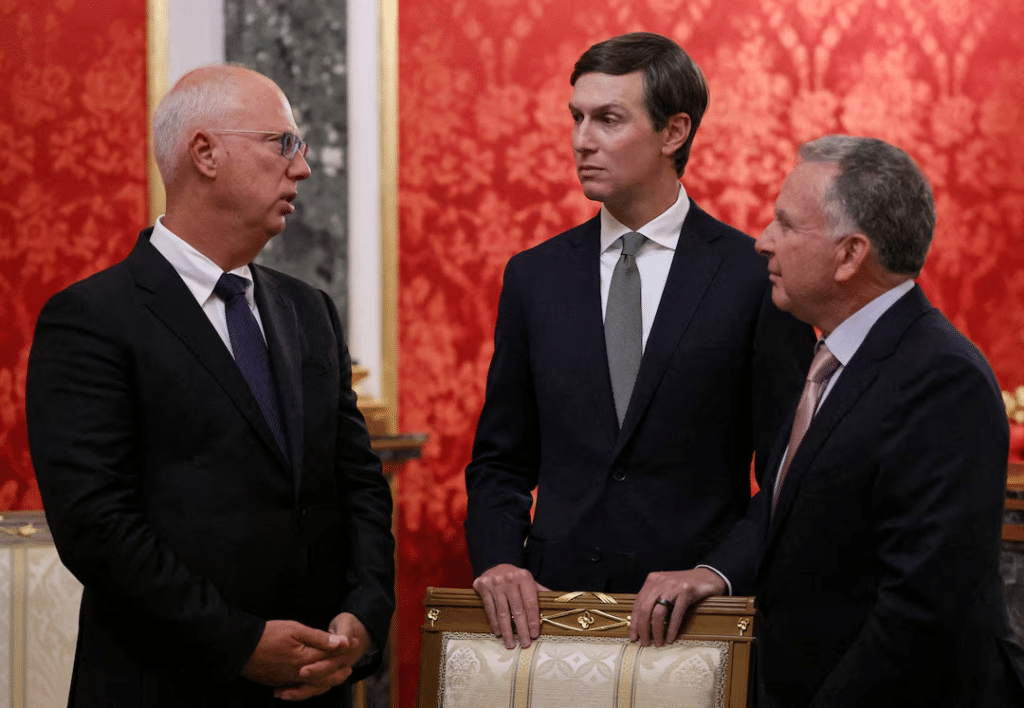
Jared Kushner, U.S. President Donald Trump's son-in-law, U.S. Special Envoy Steve Witkoff and Russian presidential envoy Kirill Dmitriev wait before a meeting with Russian President Vladimir Putin at the Kremlin, September 5, 2026. Credit: Sputnik / Mikhail Metzel / Pool via REUTERS
On 17 October 2026, the New York Times reported that Donald Trump’s envoys, Jared Kushner and Steve Witkoff, had urged Kyiv and European capitals to consider resuming Russian gas flows through Ukraine’s extensive pipeline network as part of a peace settlement. The assumption behind the US proposal seems to be that, as both Moscow and Kyiv would benefit commercially from such an arrangement, cooperation might lead to a ceasefire. According to the report, US and Russian representatives have also discussed the activation of the surviving string of the underwater Nord Stream 2 pipeline between Russia and Germany – something the White House denies has been the subject of recent negotiations.
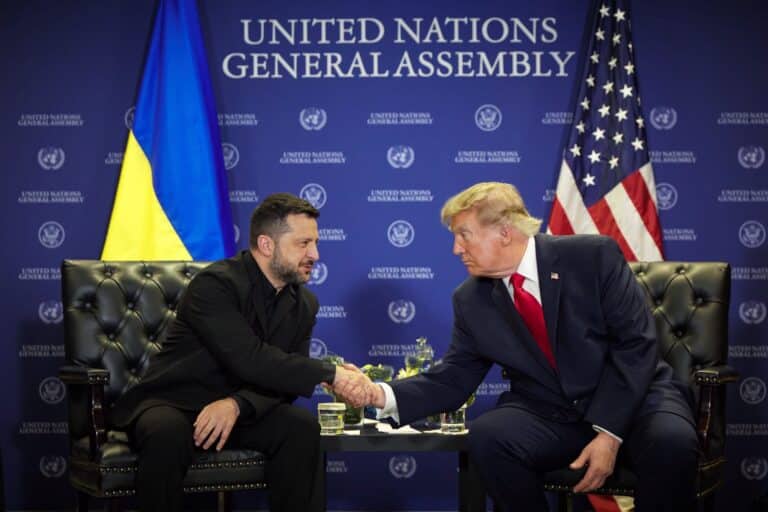
If an economic arrangement of this kind could indeed help to bring about a ceasefire, Kyiv may agree to resume Russian gas transit through Ukrainian territory. Since 2025, President Volodymyr Zelensky has repeatedly proposed both a comprehensive ceasefire and a partial moratorium on attacks on the two countries’ energy infrastructure and on shipping in the Black Sea. In Jeddah on 11 March 2025, for instance, Ukraine accepted a US proposal for an immediate 30-day truce, which Russia effectively rejected. In June 2026, Zelensky proposed freezing the current front line in the combat zones of eastern and southern Ukraine as the “quickest way” to stop the war.
Ukraine’s interest in an immediate end to the fighting has become so strong in the past two years that Kyiv has dropped any preconditions for a full or partial truce. It has stated that it would accept the current front course as the line of contact in a ceasefire agreement. Kyiv might also tolerate a new form of economic cooperation with Russia on gas transportation – if such an agreement could indeed help to achieve a truce.
Russian transit fees to Ukraine would obviously be welcome, but they are only of secondary relevance. Under the 2019–2024 transit contract, Naftogaz earned roughly $1 billion a year. This is a meaningful sum, but modest relative to the assumed annual cost of Ukraine’s post-war reconstruction and the size of Western budget support.
In fact, Kyiv allowed Russian gas transit through its territory even under conditions of total war – i. e. not only after the start of Moscow’s expansion into Ukraine in 2014, but also after Russia began its full-scale invasion in February 2022. Russian gas kept flowing to the EU and Moldova through Ukrainian land pipelines until 1 January 2025 – about 15 billion cubic metres in 2024 alone. A financially battered Ukraine urgently needed the income, and halting transit would have done little more than divert Russian exports to the EU to other routes, such as TurkStream through the Black Sea and Turkey.
It was not only the escalation of the war that ended transit almost three years into the full-scale invasion, but a combination of direct repercussions of the conflict and additional circumstances, such as the expiry of the five-year transit contract between Kyiv and Moscow, disputes over Gazprom’s ship-or-pay transit payments, Kyiv’s insistence that any gas be non-Russian, for instance from Azerbaijan, and the EU’s own phase-out policy in reaction to Russia’s escalating belligerence. If Ukraine permitted Russian gas transit in times of all-out war, it would be all the more likely to do so during a ceasefire.
In principle, the deal proposed by Kushner and Witkoff should be even more lucrative for Moscow than for Kyiv. Fast, large-scale and relatively cheap pipeline gas exports westward would pour fresh money into the strained Russian state budget. Russia’s oil and gas revenues fell by 23.8 per cent in 2025 to 8.48 trillion roubles – the lowest level since 2020 – and, at under 23 per cent of federal income, a record-low share – while the deficit reached 5.6 trillion roubles. This slide has continued in 2026, with oil and gas revenues down a further 17.2 per cent year on year in January–September. The end of Ukrainian transit alone cost Gazprom some 16 per cent of its planned 2025 export volume, worth up to $4.5 billion a year.
Nonetheless, the US plan is futile, as it fundamentally misreads the geopolitical strategy and ideology, as well as the internal logic of the Putin regime. Russia’s conduct in Ukraine is guided only partly by economic interests. It is fundamentally driven by historical myths, political resentment and pan-Russian ultranationalism, as well as fantasies of great power status and territorial expansion. The Russian president is therefore likely to reject any such economic proposals as instruments to end the war. For Putin, a gas deal would at most be the icing on the cake of a partial or, better still, a total capitulation of Ukraine.
Russia’s recent foreign economic history illustrates this point. Russian gas exports to the EU via Nord Stream were not interrupted in 2022 by a – presumably, Ukrainian – attack on the undersea pipeline, as is often claimed. Moscow itself had halted them weeks before, at the end of August 2022, sacrificing its largest European customer for political leverage. When the already inactive pipelines were blown up on 26 September 2022 – an attack that German prosecutors attribute to a Ukrainian team, whose alleged leader went on trial in Hamburg on 14 October 2026 – one of the two pipelines’ four strings remained intact. This still operational part of Nord Stream 2 – which was completed but not certified in 2021 – has never been used. That no agreement could be found to use this string was a result of the fact that Russia is not ready to moderate its genocidal aims in Ukraine in order to restore economic cooperation with Germany. Significant revenue from gas exports to the EU has been a possibility ever since 2022, but for the Kremlin such economic opportunities and the resulting revenues are a secondary issue.
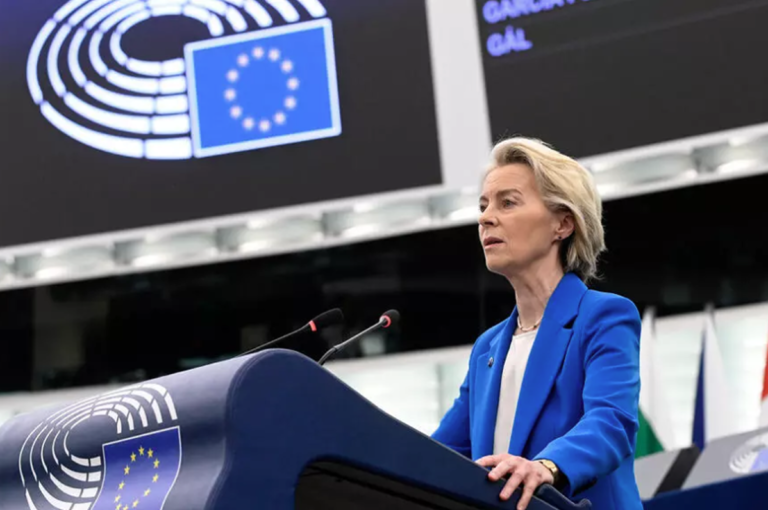
In the meantime, a highly practical obstacle has arisen to either the activation of the remaining intact Nord Stream 2 pipe or any other way of importing Russian gas into the EU. On 26 January 2026, the Council of the European Union adopted a regulation on a gradual phase-out of all Russian gas deliveries. Liquefied natural gas imports are to be banned from early 2027 and pipeline gas arrivals from Russia from the autumn of 2027. Reviving such imports would therefore require a fundamental revision of existing EU law.
The idea of bringing peace to Eastern Europe through renewed energy cooperation is naive and based on false assumptions. To be sure, Ukraine may, in principle, be no obstacle to such a plan. It is possible that Kyiv would accept renewed Russian gas transportation to the EU and Moldova through Ukrainian territory if that could indeed lead to a genuine ceasefire agreement, just as it allowed Russian transit during the first phase of the Russo-Ukrainian War in 2014–21 and in the first three years following the full-scale invasion in 2022–24.
However, to use a popular Kremlin construct, the “root cause” of Eastern Europe’s insecurity is not economic, but Russia’s integral imperialism, expansionist fervour and virulent Ukrainophobia. When it comes to moderating such pathological impulses, even the most profitable business projects are useless. Instead, the lesson from both Tsarist and Soviet history is that defeat on the battlefield, rather than diplomatic victories, as well as economic sanctions and their consequences, rather than commercial successes, will be essential to cool Moscow’s foreign policy adventurism and redirect Russian attention to internal matters.
History shows that the most impactful results can be expected when military failure and economic hardship coincide. In the late 1980s, the Soviet Union had to withdraw from Afghanistan, lost the Cold War and entered a deep socio-economic crisis. In 1991, the Soviet Union broke apart, and the resulting Russian state became a temporary proto-democracy with relatively restrained foreign ambitions. While times and conditions have changed, Russia’s current foreign adventure, too, will end for good only when the Kremlin perceives that the economic, military and geopolitical price is too high to pay.
At best, the flaw in Kushner and Witkoff’s new approach could be interpreted as one of sequencing. Enacted before a stable truce, renewed gas trade amounts to sanctions relief that rewards aggression. It cannot buy what Moscow does not want to sell. Germany has already tested this strategy with its abortive Wandel durch Handel (“change through trade”) approach and above all with its two Nord Stream projects, which contributed to the escalations of 2014 and 2022.
If energy cooperation is to play a role in a settlement, it could come after rather than before a verified and durable ceasefire that is backed by credible security guarantees for Ukraine is in place. Russian gas transit through Ukraine might, in the future, help to consolidate peace. It cannot create it.