Categories
Trending Searches
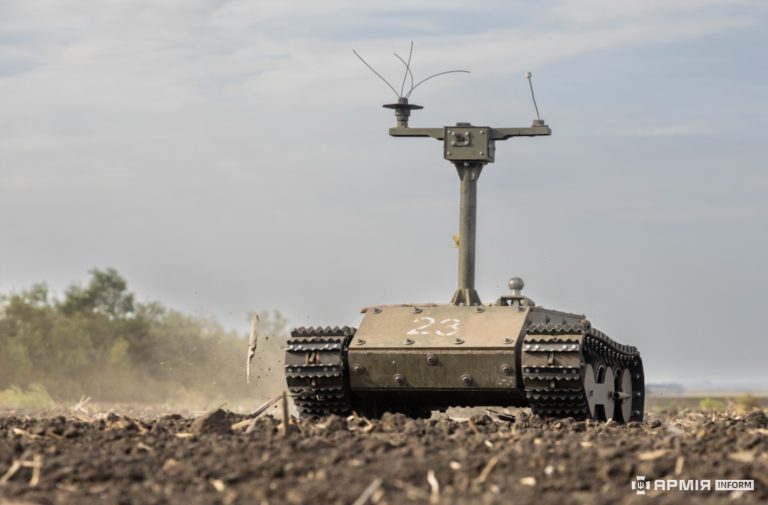

Robots take the risk: Ukraine’s UGV ecosystem and what Europe should learn from it
Ukraine has systematically removed humans from roles that don’t require human judgment, letting machines absorb the danger soldiers would otherwise face. What UGVs can and can’t do, and what lessons European institutions can draw from Ukraine’s experience.

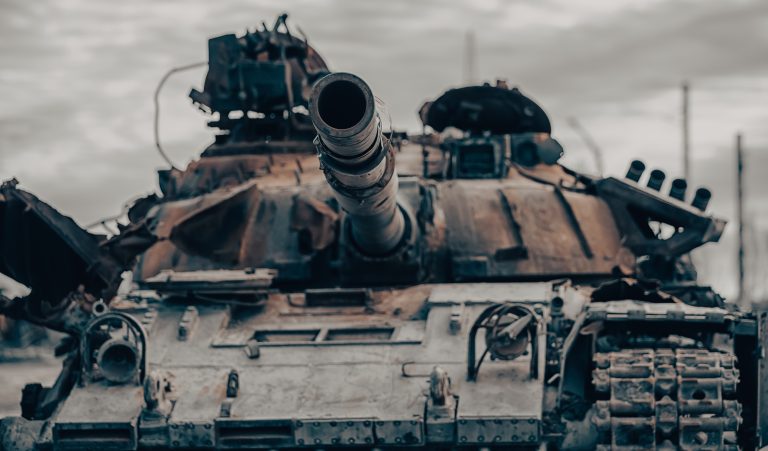
The plateauing of Russia’s military strategy in Ukraine
Russia’s battlefield strategy in Ukraine has plateaued and, if nothing radically changes, Russia cannot expect any significant progress on the battlefield in 2026.

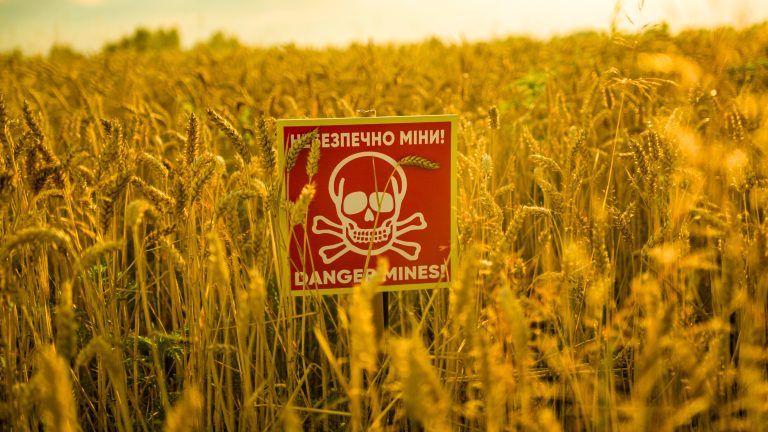
The day after: Six post-war challenges for Ukraine
A ceasefire is nowhere in sight. Putin sees no interest in ending his war. Even so, the EU should start preparing for the many post-war challenges Ukraine will face.




Team members





No Results Found
The EU’s preparations for a wider Union: reflections from Kyiv
In June 2022 the EU acknowledged that enlargement would require preparation on its own side. The Commission’s first systemic answer is solid, but still unfinished in places. One issue in particular is conspicuous by its absence: reconstruction.
7 October 2026
10 min read
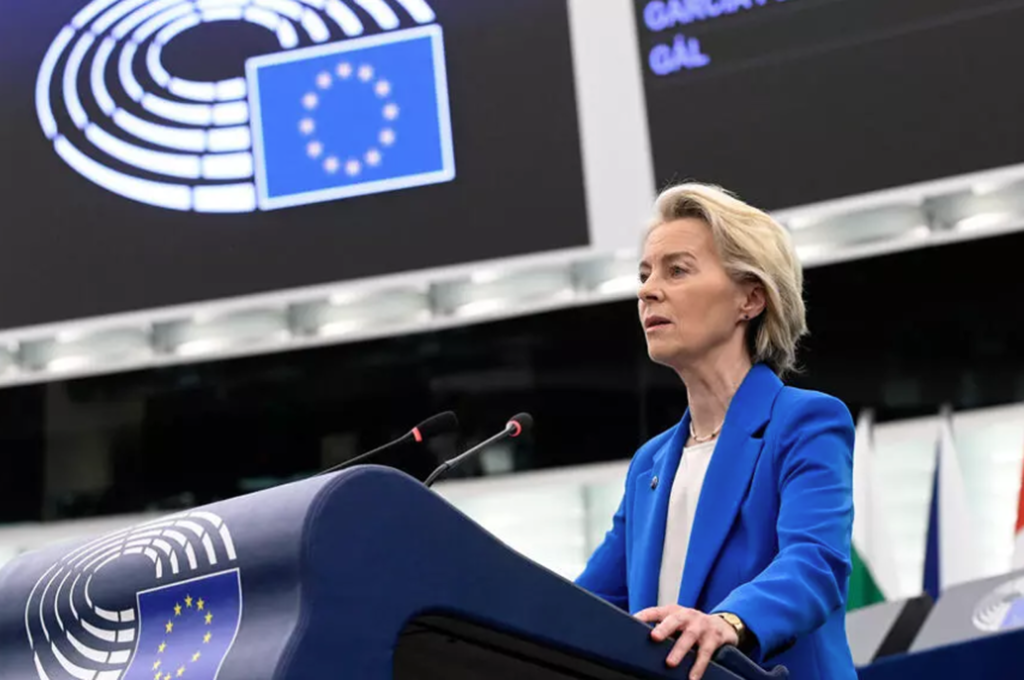
European Commission President Ursula von der Leyen speaking on 6 October 2025 at the European Parliament in Strasbourg. Credit: Pascal Bastien, Associated Press
Text size:
Most of the attention in Ukraine’s accession process is focussed on Ukraine’s obligations: aligning its laws and institutions with EU norms. But Brussels is not simply the recipient of an application, rubber stamp in hand. The EU has work of its own to do before it can take in a member of Ukraine’s size and complexity. On 6 October the European Commission published ‘Preparing for a wider Union’ a so-called ‘Communication’ and, alongside it, a separate staff working document that examines every EU policy through the lens of enlargement. A full assessment of the proposals will take time, but some early conclusions can already be drawn.
A step the EU announced in 2022
When the European Council granted Ukraine candidate status, its conclusions (the formal written outcome of an EU summit) noted the EU’s “capacity to absorb new members”. The EU would have to be prepared too. Ukraine’s answer at the time was simple: let the EU’s preparations and the accession negotiations run in parallel, and do not let the first slow down the second. Four years later, two negotiating ‘clusters’ (the thematic groups of chapters in which the talks are organised) are open, and two more, the Internal Market (cluster 2) and Competitiveness and Inclusive Growth (cluster 3), could open as early as mid-October. This parallel approach has worked so far, and the EU side is now catching up.
The context has changed too. Enlargement is no longer a distant horizon but a project for this decade. In May 2026 German Chancellor Friedrich Merz wrote to the Council presidency and the presidents of the Commission and the European Council to propose an ‘associated membership’ for Ukraine: a seat in the institutions without voting rights. Kyiv rejected it as a substitute for membership, and EU legal scholars found no basis for it in the EU’s founding Treaties. The Commission, for its part, explored its own options. Earlier this year, according to media reports, it tested three with the Member States: keep the current method, with Montenegro and Albania joining first and the others following at their own pace; build gradual integration into the accession process; or admit countries first and let them finish reforms later, so-called ‘reverse accession’. Most EU capitals pushed back against the third. The package of 6 October is the second of these options, written out across every policy.
Systemic thinking
The scale of the exercise is daunting. The staff working document runs to almost 150 pages and broadly follows the structure of the accession negotiations: six parts that correspond to the six negotiating clusters, from justice and home affairs to the Internal Market, competitiveness, climate and energy, agriculture and cohesion, and external relations, plus a seventh on the EU’s own administration, from its language regime to statistics and anti-fraud. More than thirty policy areas are examined one by one. Together they touch on almost everything that shapes the economic and social life of EU citizens. In effect, it is an audit of the Union’s own readiness.
The Commission first promised such a policy-by-policy review in March 2024. The documents of 6 October deliver it, and three things make them the first truly systemic attempt.
- Depth: in each of the areas mentioned above, the Commission asked whether the policy can work with thirty or more Member States. In most cases the answer was yes, provided there are targeted adjustments rather than a fundamental rewrite of EU legislation.
- Focus: the volume of analysis devoted to Ukraine’s economy, agriculture and energy leaves no doubt that it is Ukraine’s accession, above all, that the EU is preparing for.
- Consequences: the Commission’s proposals will be reflected in the EU’s Draft Common Positions, the documents in which the Member States set out their negotiating stance for each cluster. Montenegro will be the first country to see them reflected in an accession treaty. The drafting of that treaty now matters to Kyiv as well.
What are the key implications for Ukraine?
Several proposals work in Ukraine’s favour: qualified majority voting for opening clusters and for the smaller procedural steps along the way, which have been the most frequent blocking points of recent years; observer arrangements in the Council after the signature of the accession treaty; a country-specific financial package on the Montenegro model, designed to bridge pre-accession and membership funding; and gradual integration in energy, transport, digital and defence.
- Safeguards: a mirror for the Union, not a verdict on candidates
Headlines about a fifteen-year “probation period” have captured most of the attention, not helped by EU Enlargement Commissioner Marta Kos’s own summary of its purpose in an interview with the Guardian: “No more Viktor Orbán.” The fifteen years should not become the centre of the debate. A long window during which safeguards can be used is the EU’s insurance policy. The safeguard, however, is narrower than the headlines suggest: it targets serious breaches of the EU’s founding values and of “sincere cooperation”, the Treaty duty to work loyally with the other Member States. It is temporary and reversible.
What matters more than the number of years is the mechanism. Today the Treaty’s only tool against a Member State that breaks the EU’s values is Article 7, which can strip a government of its vote but needs the unanimous consent of all the other Member States. It has never gone beyond its first stage: the procedure was opened against Poland in 2017 and Hungary in 2018, and the two governments shielded each other. The EU’s real leverage came from elsewhere: the freezing of EU funds under budget rules. This bit hard and arguably contributed to the political change in Warsaw and later in Budapest. The new safeguard reverses the Article 7 logic: measures proposed by the Commission would take effect unless the Council rejected them by qualified majority. Objective criteria and effective judicial review, not the calendar, are the questions Kyiv should press.
Had the rule of law held everywhere inside the EU over the past decade, these safeguards would probably not exist. They are a reflection of the EU’s past experience, not the record of the candidates. Analysts such as Corina Stratulat of the European Policy Centre still warn of “one set of obligations, two levels of enforcement”: that is to say, the same rules for all, but tougher enforcement against the newcomers. For Ukraine, the practical meaning is clear: the best response to a safeguard is a judicial system in Ukraine that nobody feels the need to safeguard against. Ukraine’s credibility on the rule of law will decide how far the Member States go on everything else, from the Internal Market to money.
- Agriculture: the hardest file
The Commission proposes “targeted arrangements that would significantly limit financial support and market access for sensitive agricultural products”, combined with support for Ukraine “in regaining access to its historic third-country export markets”. Kos confirmed that Ukrainian grain producers would face both limits at once.
Kyiv’s first reaction was on point. In a written statement to Politico, Agriculture Minister Taras Vysotskyi said there is a fundamental difference between a transitional period and a permanent restriction: Ukraine is prepared for the first, while the second would contradict the logic of full membership. He also outlined what Ukraine wants to bring into the Union: not only grain, but feed, basic ingredients, processed products and biofuels.
The official texts leave room for this. The Communication never says “permanent”. The arrangements apply “where objective circumstances warrant and the candidate country agrees”, they are “subject to regular review”, and the staff working document adds that “transitional measures and periods may have to be considered”. The absence of the word “permanent” does not settle the matter, though. The Communication allows arrangements beyond the standard transitional period where the candidate country agrees, so the real question for Kyiv is the exit point from ‘transition’: which conditions and which procedures bring them to an end?
Transitional periods are also in Ukraine’s own interest. The Ministry of Economy estimates that plant protection products no longer authorised in the EU are used on about 10 million hectares, 40 per cent of Ukraine’s farmland, and that switching would cost around €2 billion a year. Vysotskyi has called this a condition for long-term market access and said the length of transitional periods will be negotiated; farm associations asked for ten years. So the third-markets argument cuts both ways: if Ukraine is expected to sell more outside the EU, it needs time to adapt its standards. If the EU insists on a longer limit on access to its market, Kyiv’s answer should be to propose a longer transition on standards and a credible programme for third markets, negotiated as one package.
- The missing issue: reconstruction as a European project
The staff working document mentions Ukraine’s reconstruction only in passing: a transport corridor here, a digital twin or a New European Bauhaus programme there. Nowhere does it treat reconstruction as the largest single project that will shape Ukraine’s membership and change the EU itself.
The fifth Rapid Damage and Needs Assessment by the World Bank, the Government of Ukraine, the European Commission and the UN puts recovery needs at $588 billion as of the end of 2025, with housing, transport and energy the most affected sectors and about 40 per cent of the financing expected from private sources. The EU will be the main public partner. But reconstruction will also be the largest market in Europe for the next decade, for Ukrainian companies and workers first of all, and for European builders, utilities, energy and renewables firms and the suppliers behind them. Ukraine is the one place in Europe where entire cities and energy systems must be rebuilt, and where European technologies and standards will be applied at scale from the ground up.
Two objections are predictable. The first is climate: rebuilding means cement and steel, and therefore emissions. Yet Ukraine’s emissions today are , and a modern rebuild locks in lower emissions for decades. The second is cost, and here one hypothesis deserves testing: reconstruction need not be a burden on the EU economy. It can become a source of demand and applied innovation for the Union, and a visible demonstration of what European values produce in practice. Future needs are not yet current demand, however: turning them into orders requires risk insurance, blended finance and joint Ukrainian-European production. A chapter on this should be incorporated into the next version of the Commission’s analysis.
What’s next
On 15 and 16 October, the European Council will show how much of these preparations survive contact with the Member States. The milestone after that is also already fixed: on 28 October the Commission intends to present the 2026 Enlargement Package together with indicative roadmaps for Montenegro, Albania, Moldova and Ukraine. Commissioner Kos has said they will set indicative timelines for the opening and closing of clusters and the benchmarks in between, and that Ukraine’s will differ from the other three because of the war. The roadmap is actually the document where Kyiv should look for the first concrete answers on access to the Internal Market before accession – still the least defined part of this package. Montenegro’s accession treaty and the Draft Common Positions for Ukraine will then show how the safeguards and the agricultural formula look in legal language.
For now, the main point stands. The Commission is no longer afraid of hard problems, including those for the Member States themselves: majority voting on sanctions and taxation, and a Commission that may no longer have one member per country – a smaller College that the EU Treaty already allows for and that would make a Union of thirty or more easier to run. The EU is looking for systemic solutions rather than offering excuses. Ukraine’s part of the bargain has not changed either: reforms, above all on the rule of law, that make every safeguard unnecessary. And the chapter the Commission has not yet written – reconstruction as a European project – is where Ukraine has the most to offer in return.
Authors

Ivan Nagornyak
Policy Fellow



Thank you!
You will now receive EPIK’s latest analysis, publications, event invitations, and other updates directly in your inbox.
Thank you!
You will now receive EPIK’s latest analysis, publications, event invitations, and other updates directly in your inbox.
Go Home Page
Thank you!
The form has been successfully submitted. We value your time, so please expect a call or email from our manager shortly.
Go Home Page
Thank you!
You will now receive EPIK’s latest analysis, publications, event invitations, and other updates directly in your inbox.
Thank you!
You will now receive EPIK’s latest analysis, publications, event invitations, and other updates directly in your inbox.
Thank you for subscribing
You will now receive EPIK’s latest analysis, publications, and event updates directly in your email.
Go Home Page