Categories
Trending Searches
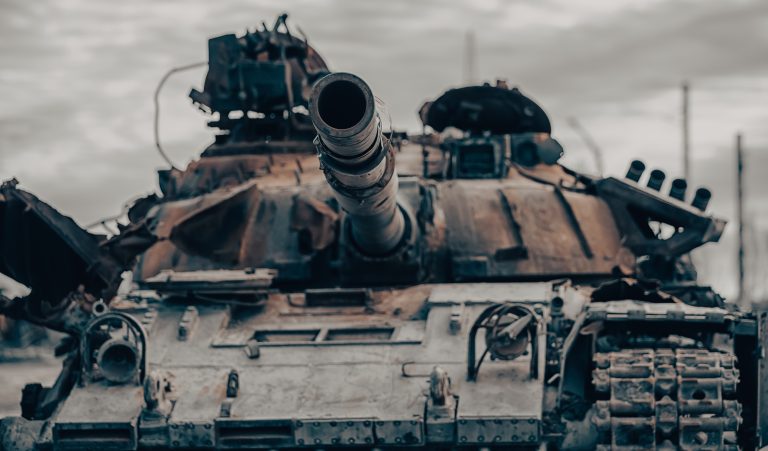

The plateauing of Russia’s military strategy in Ukraine
Russia’s battlefield strategy in Ukraine has plateaued and, if nothing radically changes, Russia cannot expect any significant progress on the battlefield in 2026.

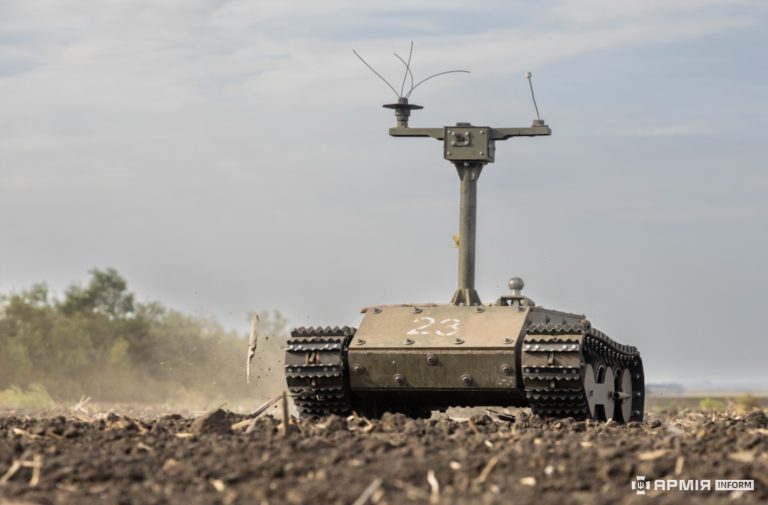
Robots take the risk: Ukraine’s UGV ecosystem and what Europe should learn from it
Ukraine has systematically removed humans from roles that don’t require human judgment, letting machines absorb the danger soldiers would otherwise face. What UGVs can and can’t do, and what lessons European institutions can draw from Ukraine’s experience.

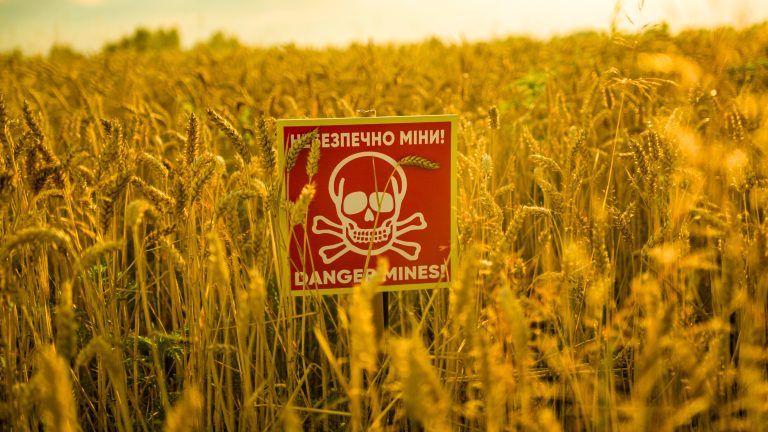
The day after: Six post-war challenges for Ukraine
A ceasefire is nowhere in sight. Putin sees no interest in ending his war. Even so, the EU should start preparing for the many post-war challenges Ukraine will face.




Team members






No Results Found
Reshaping Armenia–Ukraine relations
Once strategically indifferent to each other, Yerevan and Kyiv are now converging around shared goals: reducing dependence on Russia, deepening EU integration, and building resilience.
28 July 2026
6 min read
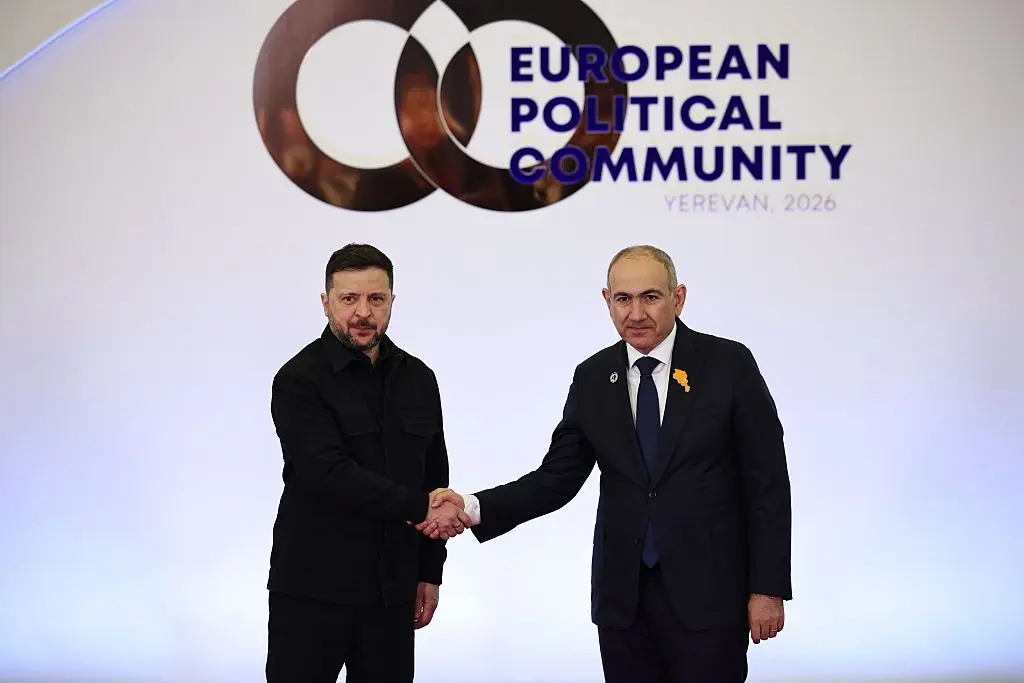
Armenia's Prime Minister Nikol Pashinyan welcomes President Volodymyr Zelensky during the 8th European Political Community (EPC) summit in Yerevan, Armenia on May 4, 2026. (EPC Armenia/Anadolu via Getty Images)
Text size:
The visit of President Volodymyr Zelensky to the European Political Community (EPC) summit in Yerevan in May, which culminated in a televised meeting with Prime Minister Nikol Pashinyan that was broadcast live in English, was one of the gathering’s defining political moments. The symbolism was unmistakable. While Russian President Vladimir Putin has avoided travelling to Armenia since Yerevan ratified the Rome Statute of the International Criminal Court, at least in principle exposing him to arrest, Zelensky was received publicly and warmly by the Armenian leadership.
This contrast reflects a profound shift in Armenia’s foreign policy. More than a diplomatic gesture, Zelensky’s presence illustrates Yerevan’s gradual emancipation from exclusive dependence on Moscow and its growing readiness to engage openly with Europe and with countries that Russia now regards as adversaries. While it would be premature to speak of a strategic alliance between Armenia and Ukraine, the visit underscores a broader geopolitical reality: the factors that long kept the two countries apart are rapidly disappearing.
Moving beyond the burden of history
For most of the post-Soviet period, Armenia and Ukraine have occupied opposite sides of Eurasia’s geopolitical divide. Armenia has been one of Russia’s closest military allies, hosted Russian forces, joined the Collective Security Treaty Organisation (CSTO) and was integrated into Moscow-led economic structures. Ukraine, by contrast, has consistently supported Azerbaijan’s territorial integrity, viewing the Nagorno-Karabakh conflict through the prism of international law – a position reinforced by Russia’s annexation of Crimea in 2014. Armenia often aligned with Russia in international forums, while Kyiv regarded Yerevan largely as an extension of Russia’s regional security architecture. This was a relationship marked less by hostility than by strategic indifference. Strategic distance persisted despite the presence in Ukraine of the world’s fourth-largest Armenian diaspora after those in Russia, the United States and France.
Russia’s full-scale invasion of Ukraine in 2022 and Azerbaijan’s reconquest of Nagorno-Karabakh in 2023 fundamentally altered this equation. The turning point was not Armenia’s growing sympathy for Ukraine, but its loss of confidence in Russia. Moscow’s inability, or unwillingness, to uphold its security commitments during the Karabakh crisis shattered long-held assumptions about the value of the Russian alliance. For Yerevan, the war in Ukraine exposed Russia‘s military overstretch and the limits of its role as Armenia’s security guarantor.
The first signs of a diplomatic thaw quickly followed. In December 2023, the Armenian Foreign Minister, Ararat Mirzoyan, met his Ukrainian counterpart, Dmytro Kuleba, in Brussels, marking the first substantive high-level political dialogue in many years. Since then, both countries have increasingly found themselves pursuing parallel strategic objectives: reducing dependence on Russia, deepening ties with the European Union and contributing to a regional order less dominated by Moscow.
This convergence remains cautious and constrained. Armenia has no interest in provoking direct confrontation with Russia, while Ukraine continues to maintain close relations with Azerbaijan. Nonetheless, the logic driving closer cooperation has become increasingly compelling. What is emerging is not a military alliance, but a pragmatic strategic convergence rooted in shared European aspirations, institutional reform and a common determination to preserve sovereignty in a region long shaped by Russian power.
Why Ukraine matters more to Armenia today
The decisive turning point in Armenia’s strategic reorientation was not simply Russia’s invasion of Ukraine, but Moscow’s inability to prevent Azerbaijan’s military victories in 2023. However, these two developments cannot be separated. Russia’s failure to uphold its traditional role as Armenia’s security guarantor was, to some extent, a consequence of its military and political overstretch in Ukraine. For three decades, Yerevan accepted Russia’s predominance because it offered security. Once that bargain collapsed, so too did the foundations of Armenia’s foreign policy.
Prime Minister Nikol Pashinyan publicly acknowledged this shift in 2023 when he declared that Armenia was “not an ally of Russia in the war in Ukraine”. Since then, his government has gradually distanced itself from Russian-led security structures, such as the CSTO, where Yerevan suspended its participation, while expanding defence cooperation with France, India, the European Union and the United States. This is more than a tactical adjustment. It reflects a fundamental reassessment of Armenia’s strategic identity and has inevitably brought Yerevan closer to Kyiv.
Ukraine now occupies an unusual place in Armenia’s evolving worldview. It has become both a warning and a source of inspiration. Even if Armenia’s capacity to resist is limited compared to Ukraine, the country is economically more intertwined with Russia, and consequently more cautious about an abrupt geopolitical rupture with Moscow, the war has demonstrated to Armenian policymakers that Russian military power is neither limitless nor reliable. They also understand that national resilience matters more than formal alliances and that European integration demands difficult political choices. These lessons do not make Armenia pro-Ukrainian, but they significantly reduce the geopolitical distance between the two countries.
The emerging logic of Armenia-Ukraine cooperation
This convergence is unlikely to produce a traditional alliance, at least until Russia’s war has reached a favourable conclusion for Ukraine and a durable peace has been established between Armenia and Azerbaijan. Military cooperation will therefore remain low-key and pragmatic. Armenia has yet to fully disengage from Russian security mechanisms and cannot afford a direct confrontation with Moscow, while Ukraine has every interest in preserving its strong partnership with Azerbaijan. Nonetheless, practical cooperation on defence reform, cybersecurity, military medicine, demining, digital command systems and counter-drone technologies would serve the interests of both countries. By the end of the war, Ukraine is likely to possess one of Europe’s most experienced militaries in modern warfare, expertise on which Armenia will have every reason to draw.
The most important transformation, however, lies elsewhere. The emerging relationship is no longer defined by the post-Soviet space but by a shared European horizon. Ukraine is a European Union candidate country, while Armenia has embarked on an ambitious process of political and institutional approximation with the EU. Governance reform, judicial independence, anti-corruption policies, digital transformation and regulatory convergence increasingly provide a common agenda. European integration could gradually become not merely a foreign policy objective, but the principal framework for Armenian-Ukrainian cooperation.
Both countries also share a broader strategic objective: reducing Russian influence, albeit by different means. Ukraine is seeking to defeat Russian aggression militarily; Armenia is aiming to regain strategic autonomy without provoking a direct rupture. This distinction is important. Unlike Ukraine, Armenia is still economically intertwined with Russia and continues to face closed borders with Turkey and Azerbaijan. Its transition will necessarily be gradual. Kyiv should therefore avoid viewing Armenia through the outdated prism of its former alliance with Moscow. Instead, it should encourage Yerevan’s incremental diversification by expanding economic ties, supporting institutional reform, promoting regional normalisation through Ukraine’s constructive relations with Azerbaijan and Türkiye, and facilitating Armenia’s integration into wider European networks. If Russia emerges from the war significantly weakened, this process could accelerate rapidly.
Regional connectivity offers another area of growing convergence. Armenia’s Crossroads of Peace initiative aligns closely with European efforts to develop transport corridors that link Europe with the South Caucasus and Central Asia while bypassing Russia. A normalisation of Armenian–Azerbaijani relations would transform the South Caucasus into an increasingly important component of this emerging Eurasian connectivity, creating opportunities for Ukraine to diversify its access to Central Asia and beyond.
Equally significant is the question of democratic resilience. Both Armenia and Ukraine now occupy the frontline of Russia’s hybrid confrontation with Europe and face the same strategic dilemma: how to defend democratic institutions against foreign interference without undermining the liberal principles they seek to protect. Cooperation on cybersecurity, electoral integrity, strategic communications and countering disinformation could naturally evolve into a broader dialogue on democratic self-defence, contributing to an emerging European understanding that the resilience of democratic institutions is itself a pillar of national security.
Politics is driving the relationship; economics is poised to follow
Economics has yet to catch up with politics. The level of bilateral trade is still modest – largely because the war has disrupted transport routes and sharply reduced commercial exchanges – but the long-term potential is considerable. Armenia’s rapidly growing technology sector, pharmaceutical industry and engineering expertise could complement Ukraine’s reconstruction needs, while reconstruction itself will generate demand for construction materials, specialised services and industrial cooperation. As transport links recover, trade is likely to become an increasingly important element of Armenia’s broader strategy to diversify away from excessive dependence on the Russian market.
Conclusion
The most plausible model for the relationship is therefore neither a military alliance nor a symbolic political partnership, but a process of pragmatic strategic convergence built on a gradual expansion of political trust, European integration, institutional cooperation and shared efforts to strengthen sovereignty. This reflects a profound geopolitical shift. Three decades after independence, Armenia and Ukraine may finally be discovering that their futures are shaped less by the legacy of the Soviet Union than by a common place in Europe’s emerging political and security order.
Authors

Thorniké Gordadze
Visiting Policy Fellow


Thank you!
You will now receive EPIK’s latest analysis, publications, event invitations, and other updates directly in your inbox.
Thank you!
You will now receive EPIK’s latest analysis, publications, event invitations, and other updates directly in your inbox.
Go Home Page
Thank you!
The form has been successfully submitted. We value your time, so please expect a call or email from our manager shortly.
Go Home Page
Thank you!
You will now receive EPIK’s latest analysis, publications, event invitations, and other updates directly in your inbox.
Thank you!
You will now receive EPIK’s latest analysis, publications, event invitations, and other updates directly in your inbox.
Thank you for subscribing
You will now receive EPIK’s latest analysis, publications, and event updates directly in your email.
Go Home Page