Ukraine has not given up on the goal of liberating Crimea from Russian occupation. Perhaps surprisingly, the full-scale invasion in 2022 briefly made that goal seem achievable. Currently, there is a functional deadlock. Russia is unable to secure Crimea but Ukraine cannot liberate it swiftly. However, the status of the peninsula is not static.
Between 2014 and 2022, Ukraine’s contest for Crimea was fought almost entirely by diplomatic means as military options were unavailable and not seriously contemplated. Western partners reinforced this approach through sanctions, maintaining the non-recognition framework as the primary instrument of pressure. The full-scale invasion changed the terms entirely. Ukrainian strikes on the peninsula now continue unabated — there have been at least 570 strikes since February 2022 — while ground operations, albeit limited, have also taken place. The most recent was a seaborne special forces landing on the Tarkhankut Peninsula in August 2023. Crimea is being contested not only diplomatically, but also militarily.
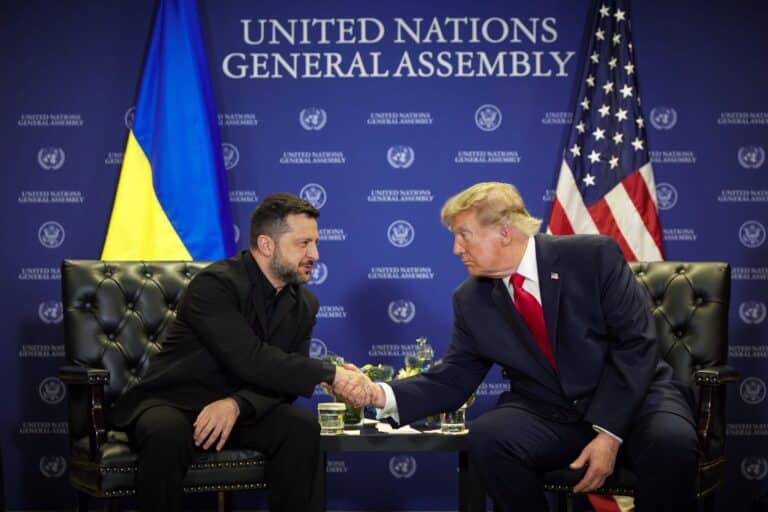
This sustained military pressure has not translated into a corresponding shift in diplomatic momentum. If anything, the reverse has occurred. The second administration of US President Donald J. Trump has considered formally recognising Russian sovereignty over Crimea as part of a ceasefire deal. It has also moved to any mention of Crimea and Ukrainian territorial integrity from UN documents. This has weakened the non-recognition stance held since 2014.
The ongoing Trump-moderated peace negotiations have concentrated on the Donbas. Crimea does not seem to be a priority for active military plans or serious diplomatic efforts. Instead, it sits between the two. This gap does not mean Crimea is beyond reach; it means the available tools are asymmetric. Crimea’s liberation is unlikely through a direct attack. However, continuous long-range strikes on military facilities, consistent disruption of the land corridor and a potential Ukrainian breakthrough in Zaporizhia would each significantly weaken Russia’s control. Maintaining military pressure keeps Crimea’s status visibly contested in practice, not just in legal terms.
The stakes in this contest are not Ukraine’s alone. The strategic logic of the de-occupation of Crimea extends beyond Ukraine. Trump has argued that NATO would be far more formidable with Greenland under US control. The same logic applies in the Black Sea. NATO’s southern flank is structurally weaker as long as Russia holds Crimea and can project force from Sevastopol. This is not solely Ukraine’s problem — it is a NATO problem.
Crimea is the Ukrainian territory that has been occupied the longest — and, paradoxically, the one where regular military engagement reached the civilian population last. Putin presented occupation as protection. Crimea was allegedly seized to avoid a similar situation to the Donbas. Since at least 2016, Russia’s standard messaging has held that there is no Ukrainian military threat and no attack on Crimea is plausible. On the first day of the full-scale invasion, Sergey Aksyonov, the Kremlin-installed head of the occupying administration, declared that no shell or bullet would reach Crimea and Russian forces were fully in control.
In the first hours of the invasion, Crimea served as a launch pad. Russian troops moved towards Kherson from the peninsula. Missiles and drones hit mainland Ukraine from Crimean airbases, such as Saky and Belbek, and drone sites at Cape Chauda, Balaklava and Gvardiyske near Simferopol. Warships and submarines in the Black and Azov seas fired on Ukrainian cities. At the same time, Russia conducted a military recruitment campaign on the peninsula, sending thousands of contract soldiers to the front.
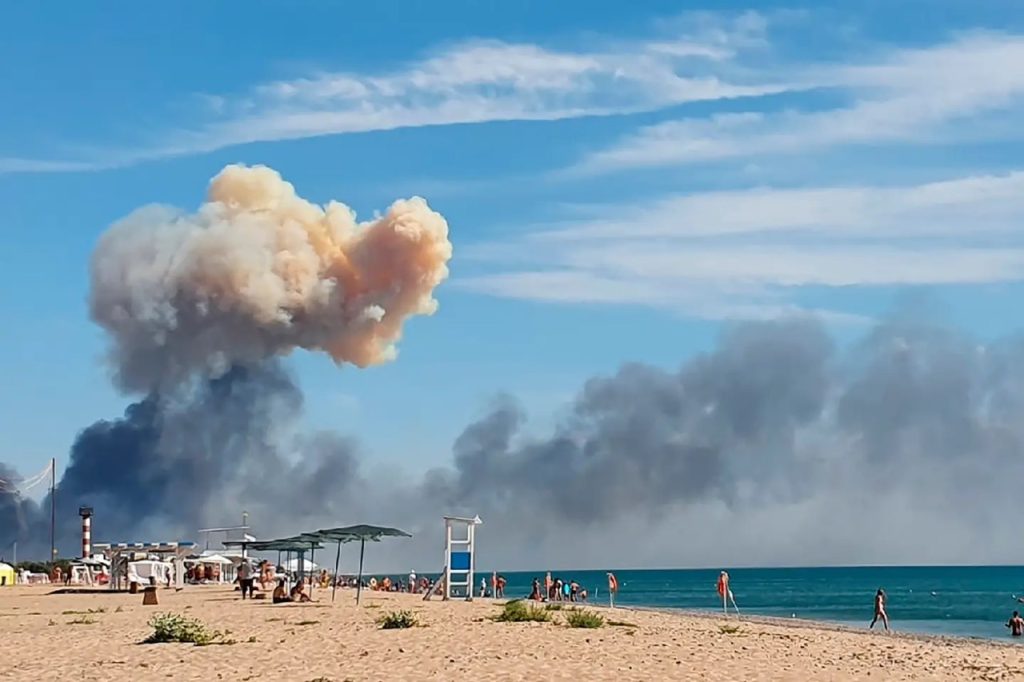
Russia’s heavy militarisation since 2014, which has included S-400 deployments, new submarines carrying cruise missiles and upgrades to the airbases at Saky and Belbek, did not bring security. Instead, it has provided a clear target. In June 2022, Ukraine attacked the Boyko Towers, the offshore drilling rigs that Russia illegally seized in 2014. In August 2022, Ukrainian forces targeted Saky airfield, destroying aircraft and munitions. The Russian authorities claimed the explosions were due to a fire safety accident but local residents did not believe this and began to leave the peninsula.
The military cost to Russia has been significant. The Black Sea Fleet has lost more than 30% of its ships – including its flagship, the cruiser Moskva – due to Ukrainian strikes, effectively becoming what could be called a submerged fleet. Air defence systems have faced serious losses: many S-300 and S-400 batteries have been destroyed, which means billions of dollars in losses. Replacing these systems presents a challenge that the Russian defence industry cannot quickly resolve, given the production timelines.
The actions of the occupying authorities have unintentionally highlighted this failure. Planning documents such as the Crimea Development Programme to 2036 recognise that the peninsula has not been truly integrated after more than a decade of occupation. Its infrastructure and economy still need significant federal support. At the same time, building defensive fortifications across Crimea reveals what official statements deny – the occupation authorities are aware of the possibility of de-occupation.
From a heavily armed but seemingly stable rear, Crimea became the main logistics centre for Russian forces operating in southern Ukraine. The civilian economy on the peninsula became secondary. The Crimea Bridge was completed in 2018 and became a symbol of ongoing integration. It acted as a military supply route until the spring of 2024, when damage from Ukrainian strikes made it unsafe for heavy loads. Port facilities in Sevastopol and Feodosiia increased their military capacity.
Russia’s takeover of territory in Kherson, Zaporizhia and Donetsk oblasts gave Moscow the overland corridor it had wanted since 2014. This land route bypasses the vulnerability of the bridge as a single chokepoint. The corridor stretches 200–300 kilometres and connects Crimea directly to Russia through occupied Ukrainian land. Plans were announced for improved rail connections, including direct services between Mariupol and Donetsk with a future extension to Crimea. As of the spring of 2026, these projects are still unfinished. They are frequently disrupted by Ukrainian strikes on the narrow Perekop and Chonhar routes and on rail infrastructure in the occupied oblasts. The Crimean Bridge suffered serious structural damage in attacks in October 2022 and July 2023, leading to long closures. The corridor is operational but vulnerable.
The 2022 Saky strike revealed something beyond a military opportunity. It showed that Crimea was reachable and that the narrative surrounding the occupation’s security was weak. Together with the Kharkiv and Kherson counteroffensives in 2022, it created genuine confidence among Ukrainians that the peninsula could be a target in the near future. In October 2022, Kyrylo Budanov, who was then head of the Main Intelligence Directorate, predicted that Ukrainian forces might enter Crimea by the end of spring 2023. President Zelensky has made the war’s logic clear: this Russian war against Ukraine began with Crimea and must end with Crimea. Ukraine developed a strategy for de-occupation and civil society groups commissioned studies on the informational and cultural reintegration of the peninsula. The scope of this work showed a genuine belief that reintegration was near.
However, the 2023 counteroffensive did not reach Crimea. Ukrainian forces achieved some gains in Zaporizhia oblast but could not breach Russian defensive lines at sufficient depth. The policy framework built around imminent liberation, which included de-occupation strategies, transitional governance research and reintegration frameworks, is now on hold. It is too important to discard but still too early to put into action.
What the record since 2022 does show is a strategic reversal in the balance of pressure. Russia is in a defensive posture over Crimea for the first time since 2014. It is paying a sustained and mounting price — in ships, air defence systems, infrastructure and resources — to hold a peninsula it can no longer protect. Ukraine is attacking. Liberation may not be imminent, but the erosion of Crimea’s fortress status is real and cumulative. The question is whether this military reality can be matched by a synchronised political and diplomatic effort. This has not been the case thus far. A cumulative and coordinated approach is needed across three tracks — and western partners must share responsibility for each of these. Three priorities therefore arise:
1) Improve the diplomatic position. Insist on clear inclusion of Crimea in any US-brokered security guarantees or ceasefire framework. Reject any statements that treat the peninsula’s status as settled or ignored.
2) Speed up legal and technical preparation for Ukraine’s EU membership. This should include developing specific provisions that address Crimea’s status regarding the single market, customs, sanctions and cohesion frameworks to prevent de facto normalisation through membership.
3) Maintain and increase asymmetric military pressure through targeted long-range strikes on logistics, air defences and the land corridor. Western partners should support this by lifting restrictions on supplying the long-range weapons Ukraine needs to keep maintain effective pressure.