The Ankara NATO summit managed to maintain the facade of transatlantic unity, produced significant practical outcomes on defence-industrial cooperation, and brought greater clarity to sustained support for Ukraine. The central question of the trajectory of continuing US disengagement from European security, and the terms and timetable on which Europe is to assume the resulting burden, however, were left unresolved. The European response combined an accelerated drive towards collective capability-building with national retrenchment. Ukraine, for its part, secured recognition as a security contributor and a number of practical defence arrangements, while the question of membership remained untouched.
US disengagement remains opaque
The summit did not alter the direction of US force reductions in Europe; nor did it provide clarity or order as to what exactly will happen and when. The Pentagon’s six-month posture review, announced on 18 June, is due to report later in 2026, and its details are unknown. The measures announced earlier in the year are unchanged: the withdrawal of some 5,000 troops from Germany, cancellation of the rotational brigade to Romania and the adjustment of US contributions to the NATO Force Model, including reported reductions in the aircraft, tankers and naval assets assigned to the alliance in a crisis situation. Public US messaging was pointedly critical of several allies. President Trump again pressed his demand for US control of Greenland and tied this to the threat of further troop reductions, criticised German defence spending, called Spain a poor contributor and voiced his disappointment with France.
These interventions suggest that demonstrating higher defence spending to the United States has not, in itself, eased the political friction within the alliance as many allies had hoped it would—and as pledges of higher spending had done at previous summits. The states of Central and Eastern Europe had evidently calculated that exemplary spending would earn them favourable treatment and significant new commitments but the results were mixed. Poland, the highest defence spender in NATO as a share of GDP, secured a signature on the PAC-3 maintenance hub project but no commitment on permanent US basing, which was deferred until the posture review. The Baltic states obtained an upgrade of the Baltic Air Policing mission, but not the permanent fighter presence they had sought. Germany, which is on course to meet the 3.5% core target by 2029, bore both the largest share of the drawdown and the sharpest US criticism, its spending publicly dismissed by Trump as “ridiculous”. The quest for greater predictability has, so far, gone unrewarded.
European countries hedge joint commitments
The European reaction to US disengagement can be analysed as two parallel processes: a visible drive towards collective capacity-building and instances of national retrenchment that underline national needs and weaken joint commitments without breaking them.
The Defence Industry Forum on July 7 produced a series of multinational projects. Among others, eleven allies selected Saab GlobalEye early-warning aircraft capable of spotting and tracking threats in the air, at sea, and on land simultaneously to provide a real-time picture of the battlefield to replace outdated American Boeing-produced platform. Another important arrangement considered launching a pooled strategic airlift fleet of Airbus A400M transport planes and adding one aircraft to Nato’s existing fleet of A330 MRTT tanker planes used for airrefueling, thus addressing a critical strategic airlift capability gap. Norway, Finland, Germany, and Denmark have signed a letter of intent to jointly procure up to five Triton maritime-surveillance drones, designed to enhance monitoring of Russian military activities in northern waters. The HALO space initiative, initiated by eight NATO allies, focuses on further integration of nationally-controlled military satellites into a networked constellation. The NATO Engine industrial network, established at the summit, aims at expanding industrial production capacity across the Alliance and streamlining industrial cooperation among allies. Together, these and other projects represent a coordinated effort to build and strengthen European conventional defence capacity in line with the “NATO 3.0” concept. Nonetheless, most remain at the inception stage with procurement timelines that extend to the end of the decade, and evidently do not fill all the gaps that will be left by US disengagement.
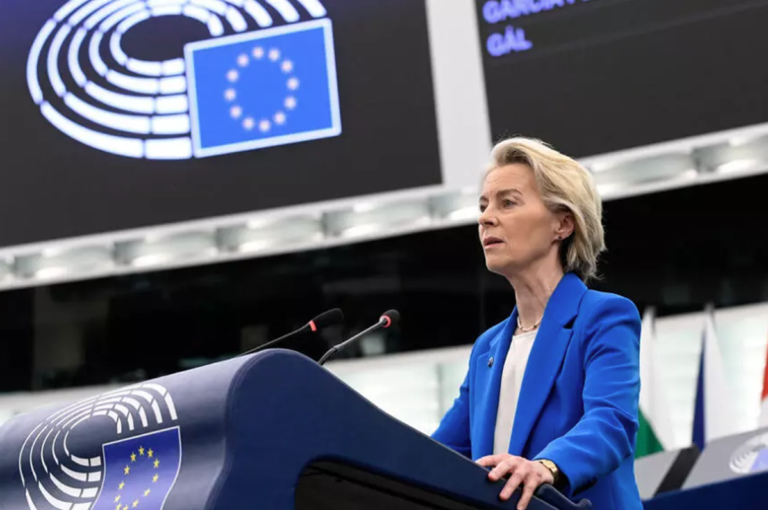
Germany and France positioned themselves as the principal advocates of a stronger European pillar. Chancellor Merz explicitly rejected “national go-it-alone approaches”. Others, faced with reduced confidence in US commitments and long lead times before a European alternative can mature, placed their own defence or internal policy requirements ahead of joint commitments, thus opting out of specific initiatives. Czechia declined to contribute to the €70 billion package for Ukraine. Prime Minister Babiš cited the need to meet its own spending target, although it did join the separate PURL scheme financing US-made weapons for Kyiv. Italy reportedly sought to soften the language of the 2027 commitment, citing both fiscal constraints ahead of national elections and a wish to preserve room for a negotiated settlement. Balancing national defence and political priorities with common initiatives will define the pace of the creation of a European pillar of NATO 3.0 in the coming years.
What Ankara delivered for Ukraine
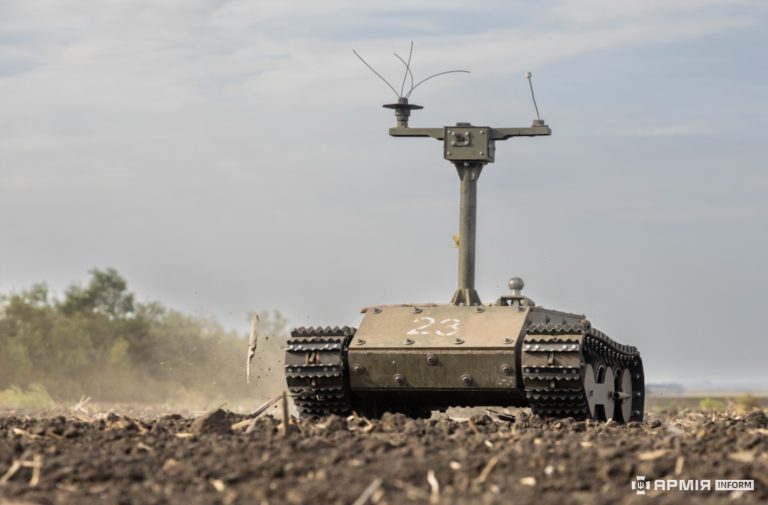
For Ukraine, the summit yielded results in expanding its role in regional security through defence-industrial cooperation and in securing external financing for the next two years. Three “Drone Deal” framework agreements—with Estonia, the Netherlands and Denmark—provided for joint production, technology transfer and structured exports. Ukraine became a founding member of the Defence, Security and Resilience Bank, and Canada announced a package of over $900 million. The declaration confirmed €70 billion in military support for 2026, with a commitment to sustain “at least equivalent levels” in 2027, alongside the EU’s Ukraine Support Loan, although the entire sum is to be provided by European allies and Canada, with no US financial contribution.
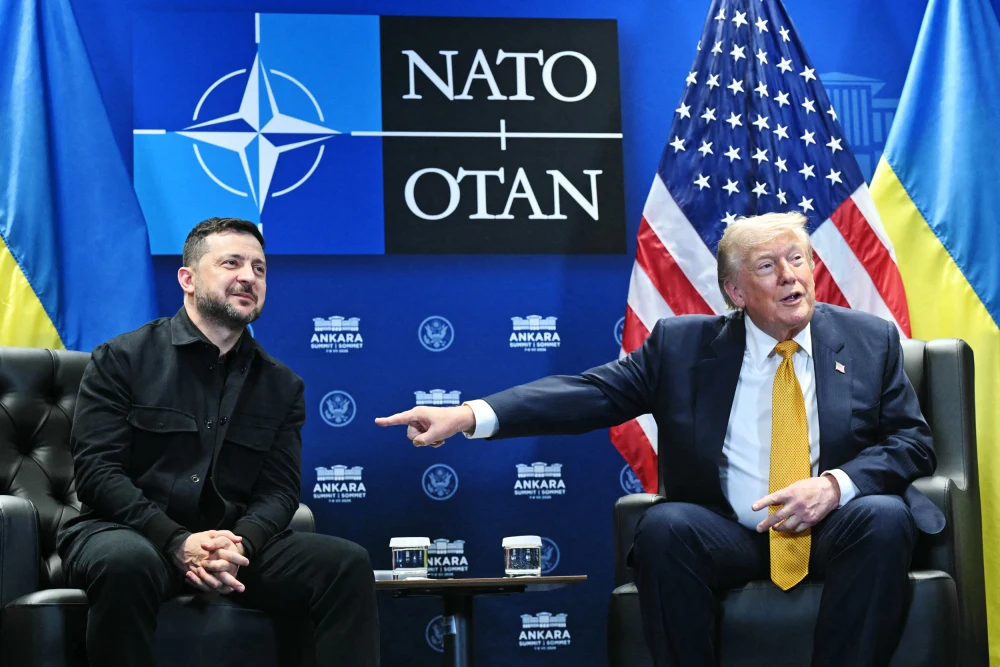
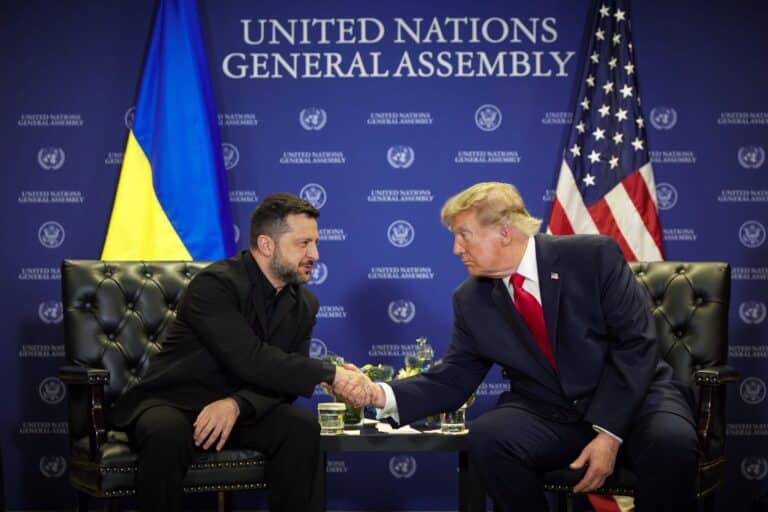
Nonetheless, the bilateral Trump-Zelenskyy meeting marked an unusual convergence. In the most visible public alignment between Kyiv, Washington and the European allies in two years, Trump publicly endorsed Ukraine’s deep strikes on Russian territory as pressure that could bring the war closer to an end. Trump still framed that pressure as the route to a settlement he expects to broker himself and, having spoken with Putin on the eve of the summit, repeated that both sides want a deal—a reading that others treat with caution. The one substantive US commitment—an offer to license Ukrainian production of Patriot systems—remains at an early stage, thus far made verbally without any signed agreement. Co-production is in any case a multi-year undertaking that does nothing about the immediate shortage of interceptors.
Indeed, Ukraine’s most urgent request was for additional Patriot interceptors. Several allies responded: Germany funded PAC-3 interceptors, the UK included air-defence missiles in its package, a group of states—Germany, Denmark, Norway and Canada—placed a joint order directly with the US manufacturer, and the NATO Support and Procurement Agency announced a purchase of 700 PAC-2 and 200 PAC-3 missiles. The binding constraint, however, is the United States’ own needs and production capacity, which renewed hostilities with Iran will further strain. European funding is no substitute for US production capacities or divergent geopolitical priorities.
Politically, the summit produced only small advances. The declaration again omitted any membership language, as at The Hague in 2025 and in contrast to the “irreversible path” formula of the 2024 Washington summit. It did, however, describe Ukraine as contributing to transatlantic security—the language Article 10 uses for prospective members, which Kyiv can read as tacit acknowledgement of its qualification for membership, even as the pathway itself remains absent.