Categories
Trending Searches
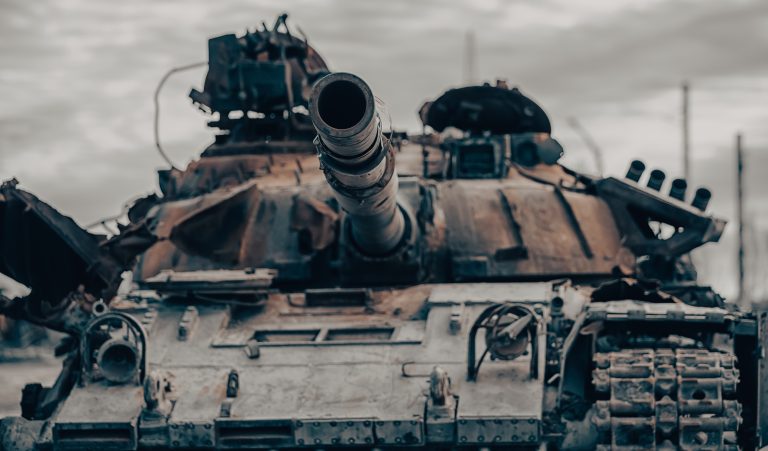

The plateauing of Russia’s military strategy in Ukraine
Russia’s battlefield strategy in Ukraine has plateaued and, if nothing radically changes, Russia cannot expect any significant progress on the battlefield in 2026.

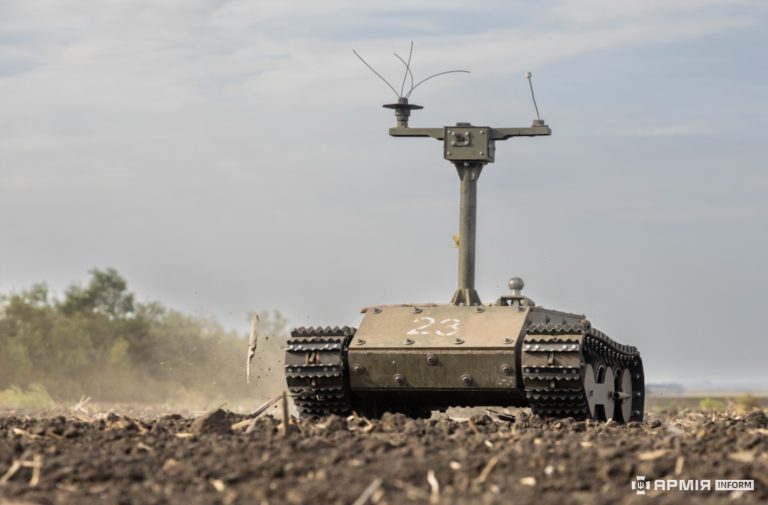
Robots take the risk: Ukraine’s UGV ecosystem and what Europe should learn from it
Ukraine has systematically removed humans from roles that don’t require human judgment, letting machines absorb the danger soldiers would otherwise face. What UGVs can and can’t do, and what lessons European institutions can draw from Ukraine’s experience.

The day after: Six post-war challenges for Ukraine
A ceasefire is nowhere in sight. Putin sees no interest in ending his war. Even so, the EU should start preparing for the many post-war challenges Ukraine will face.




Team members


No Results Found
Illusions of a ceasefire in Ukraine
Russia’s aggression against Ukraine might end with a Russian victory or a Ukrainian victory, but the war ending with a negotiated ceasefire appears a remote possibility.

Gustav C. Gressel
6 May 2026
6 min read
Drop of Light, Shutterstock
Text size:
Following Russia’s full-scale invasion of Ukraine, a bitter debate erupted about war aims or the aims of the western coalition supporting Ukraine. How should the end-state of the war look and what was achievable? Olaf Scholz was publicly unwilling to aim for a Ukrainian victory: “Ukraine must not lose” – but how would an end-state look where Kyiv does not lose but does not win either? Friedrich Merz has suggested that Ukraine should give up territories in a possible peace agreement. These snippets from the German debate are symptomatic of a belief in the West that a ceasefire is the only thing that Ukraine could achieve or should seek from the war.
Reclaiming the territories conquered by Russia appears unrealistic because the war is at a stalemate. Fear of nuclear escalation has also dampened the appetite for victory, particularly in Washington. Hence, we witnessed a confused narrative after 2022 in which so-called defensive weapons, such as air-defence systems, were delivered to Ukraine without hesitation while the delivery of perceived “offensive weapons” ignited cascades of debate completely detached from reality. For example, the possible delivery of Taurus cruise missiles was portrayed as a “new” or “dangerous” “escalation” even as the Russian Air Force continued to bomb Ukrainian cities with cruise missiles around the clock.
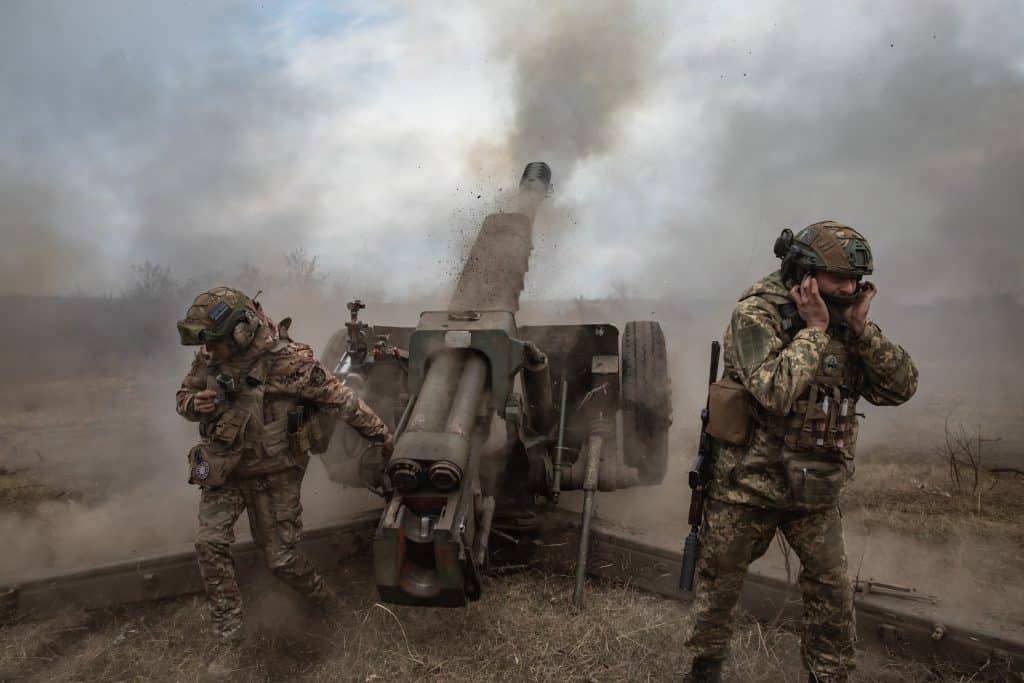
The implicit assumption that Russia would run out of steam and agree to a ceasefire has not materialised. Ukraine has been battering Russian offensives for more than four years now. The exhaustion of resources or diminishing return on offensive operations has not forced Moscow to rethink its original war aim of subjugating Ukraine. At the peak of Russia’s mechanized assault operations in 2024, Russia supplied around 1,500 main battle tanks and 2,500 infantry fighting vehicles or armoured personal carriers to the war effort. Most of these vehicles came from Soviet-era stockpiles. Even under best conditions in 2023, Ukraine received less than one-third of this number from the West. Even so, Russia could not convert its materiel superiority into operational let alone strategic results. Russia had to change tactics in 2025, switching to infantry assault and infiltration tactics, because losses of armoured fighting vehicles were unsustainably high and could not be replenished. Instead of a ceasefire, however, Russia opted for tactical adaptation.
The Russian armed forces switched to infantry infiltration combined with drone-based interdiction of reserves and rotations. In essence, these tactics are built on the attrition of people as the last resource. The Kremlin still regards its personnel as expendable. Moscow needs to mobilize roughly 30,000 men per month to maintain its fighting force. Moscow is still on the offensive but the marginal utility of offensive action is diminishing. Net gain of territory has declined steadily since the summer of 2025 while the costs of achieving such gains have increased. Ukrainian forces have adapted to Russian tactics, both technically and tactically. Interceptor drones degrade Russia’s reconnaissance and UGV-reinforced thinned out defensive lines. Tactically, better synchronisation of electronic warfare, drones and conventional manoeuvre capabilities allows Ukrainian forces to iron out infiltrators. Russia’s overall fighting force is diminishing and its offensive power plateauing. On top of the human attrition, Ukrainian mid-range strike adds expensive air defence systems, electronic warfare systems and long-range sensors to the toll. The Ukrainian deep strike campaign on Russia’s oil and defence industry has increased the economic cost of a continuous war.
Russia is still not interested in a ceasefire, however, even if this were just a pause in the fighting. On the contrary, the US distraction with Iran is seen as a welcome pause in the “peace negotiations”. The Trump administration wants to implement a ceasefire at almost any cost, and this provides Moscow with a lot of cards to play. Washington is unwilling to provide any meaningful security guarantee to Ukraine. The resulting political uncertainty in a post-war Ukraine would spook investors, attention in the West would fade, while mobilised soldiers would demobilise and join their families abroad. A ceasefire as conceived by the Trump administration would provide favourable conditions for Moscow to continue the war at a later date in more favourable circumstances. Nonetheless, each time the Kremlin insists on conditions that it knows Ukraine could never accept in order to continue fighting. (Demanding a withdrawal from Donetsk Oblast is chief among these.)
It is astonishing how little effort the Kremlin puts into achieving such a ceasefire. The Russian armed forces could use a break to recreate, restore, reorganize and retry; to catch up on drone warfare and field more and better trained drone units; to relocate and diversify strategic industry away from the west of Russia into the east; to train soldiers to a higher standard, as the low quality of Russian infantry is a limiting factor on Russia’s infiltration tactics; and to contract additional soldiers to replenish battered formations. Trump is eager to lift sanctions on Russia and engage in deals for personal enrichment, which would instantly revive Russia’s cash flow, especially given current high oil prices, but even a pause in the war is not on the minds of the Kremlin.
Is Putin worried about the political consequences of a ceasefire? Or of people demanding answers on the costs of the war: Why has Russia sacrificed so much and achieved so little? For Russian nationalists, Donetsk or Luhansk are not sacred cities. Odesa or Kyiv would be a worthy prize, but they have not been conquered. Is he worried that the population might revolt without the constant threat of being sent to the front or of detention? To a certain extent, the war has indeed stabilised the regime. Is he afraid society might not be mobilisable for a rematch? That it might feel too comfortable with the new peace. Putin has put his reputation and legacy into one basket – the war against Ukraine – and seems unwilling to accept failure. And while the Kremlin invests little effort in negotiations, much effort is put into domestic repression and precaution. The latter causing speculation about renewed mobilisation in order to continue the war.
The so-called special military operation will therefore continue regardless of the state of the Russian armed forces. All hopes for a ceasefire caused by exhaustion reflect wishful thinking in the West rather than strategic calculation in Moscow. Of course, the Russian armed forces have no chance of achieving victory through a breakthrough, genius manoeuvre or deep operations. However, this has not been Putin’s theory of victory since April 2022. He is waging a war of attrition designed to exhaust Ukraine’s defenders. A static war of attrition will go on until either the Russian armed forces or the Ukrainian armed forces break and collapse.
Putin still believes he can attrit Ukraine faster than Ukraine can attrit his armed forces, but this belief might be misplaced. A lot of his thinking rests on the perceived weakness of the West and declining political and economic will to sustain Ukraine. Again, this may be misplaced. It is far from certain that Putin receives accurate assessments of the state of his armed forces, as rigged reports and optimistic assessments are as entrenched in Russian military culture as corruption. Without a precise idea of the state of his armed forces, continuing the war and increasing the pressure until the next election in the West, the next technological development or the expiry of the current financial package for Ukraine brings about the desired collapse of the enemy appears to be the rational choice for Putin. His disregard for human life and the sacrifices of his compatriots make this choice seem logical, until the Russian armed forces break, soldiers turn on their commanders and the system falls apart. Then, Ukraine wins and the disintegrated Russian armed forces can be expelled from the country.
So, after all, the war might end with a Russian victory or a Ukrainian victory, but the war ending with a negotiated ceasefire appears a remote possibility. For Europe, the security risks implied in a Russian victory are profound, especially since the United states has ceased to be an ally. Instead of chasing the pipe dream of a ceasefire, Europe needs to work towards the alternative outcome: a Ukrainian victory caused by the collapse of the Russian state.
Dr. Gustav Gressel is a Senior Lecturer and Researcher at the National Defence Academy of the Austrian Armed Forces.
Authors
Gustav C. Gressel



Thank you!
You will now receive EPIK’s latest analysis, publications, event invitations, and other updates directly in your inbox.
Thank you!
You will now receive EPIK’s latest analysis, publications, event invitations, and other updates directly in your inbox.
Go Home Page
Thank you!
The form has been successfully submitted. We value your time, so please expect a call or email from our manager shortly.
Go Home Page
Thank you!
You will now receive EPIK’s latest analysis, publications, event invitations, and other updates directly in your inbox.
Thank you!
You will now receive EPIK’s latest analysis, publications, event invitations, and other updates directly in your inbox.
Thank you for subscribing
You will now receive EPIK’s latest analysis, publications, and event updates directly in your email.
Go Home Page