Categories
Trending Searches


The plateauing of Russia’s military strategy in Ukraine
Russia’s battlefield strategy in Ukraine has plateaued and, if nothing radically changes, Russia cannot expect any significant progress on the battlefield in 2026.

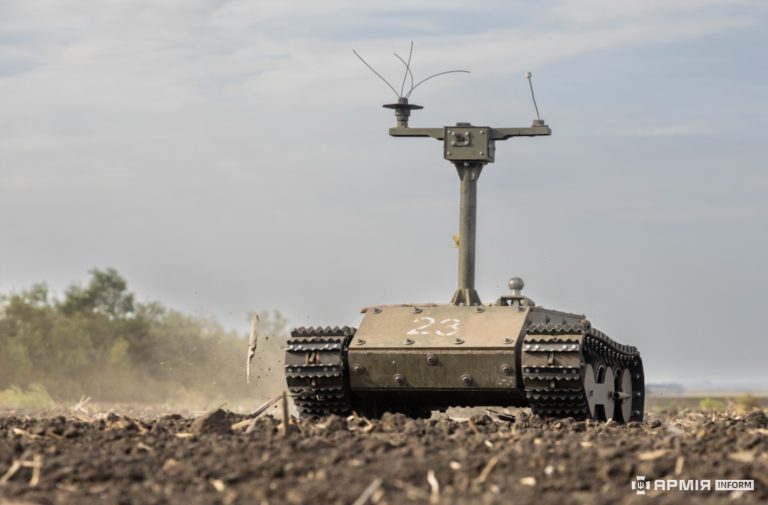
Robots take the risk: Ukraine’s UGV ecosystem and what Europe should learn from it
Ukraine has systematically removed humans from roles that don’t require human judgment, letting machines absorb the danger soldiers would otherwise face. What UGVs can and can’t do, and what lessons European institutions can draw from Ukraine’s experience.


The day after: Six post-war challenges for Ukraine
A ceasefire is nowhere in sight. Putin sees no interest in ending his war. Even so, the EU should start preparing for the many post-war challenges Ukraine will face.





Team members




No Results Found
Merz’s EU-Ukraine plan: Waiting room or entry bridge?
29 May 2026
8 minutes
EUS-Nachrichten, Shutterstock
Text size:
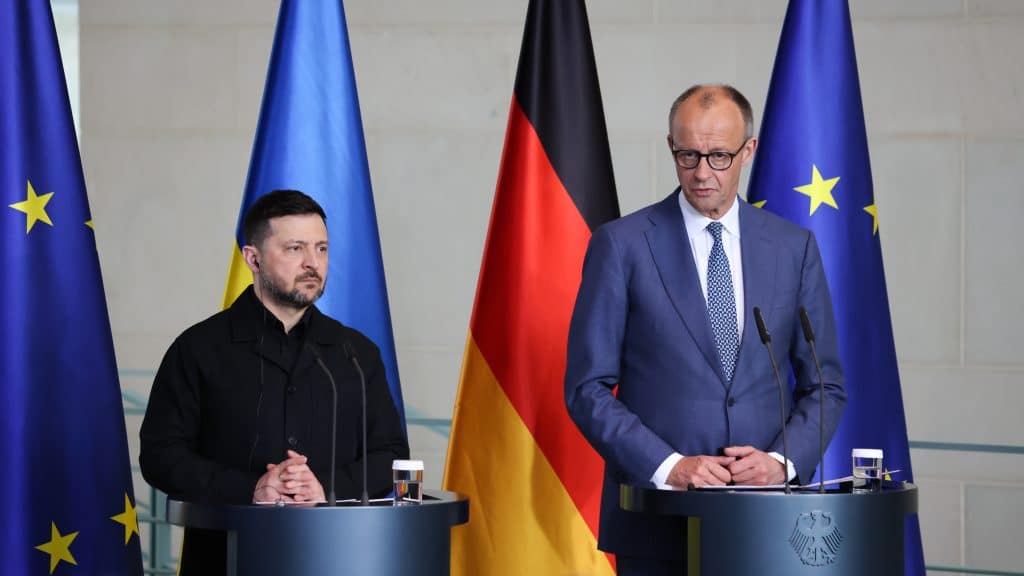
Since 2025, European policymakers have been exploring formulas for rapidly upgrading the EU’s official relationship with Ukraine in advance of its eventual full membership. The most recent initiative came from a leaked letter to key EU leaders from German Chancellor Friedrich Merz, proposing a quick associate membership for Ukraine. This novel interim status would allow Ukrainian representatives to participate in EU institutions and deliberations, albeit without voting rights.
The proposal drew – at least, at first – sceptical responses from Ukraine. Prominent commentators such as Serhiy Sydorenko of the reputed Ukrainian analytical web magazine European Pravda and Dr. Yevhen Mahda of Kyiv’s Institute of World Policy have criticized it as insufficient or a potential diversion. EPIK Policy Fellow Dr. Ivan Nagornyak has highlighted the official reasons for Kyiv’s caution. While Merz’s plan has clear benefits, Nagornyak wonders about the value or even possibility of an enhanced interim status not anchored in a signed accession treaty. Such reactions reflect broader suspicions among Ukrainian politicians, government officials, diplomats and analysts.
The Ukrainian scepticism towards Merz’s proposal is rooted in, among others, Ukraine’s recent historical experience. Since the early 1990s, Ukrainians have repeatedly encountered gaps between western political rhetoric and actual policy outcomes. The 1994 Budapest Memorandum, for example, provided – contrary to Kyiv’s proposal – only “security assurances” rather than binding guarantees in exchange for Ukraine’s nuclear disarmament. As is well known, this deficient arrangement failed to prevent Russia’s aggression in 2014 and 2022.
Despite making its aim of EU entry explicit in 1998, Ukraine could for many years not obtain a meaningful membership perspective, receiving instead a delayed Association Agreement that only entered into full force in 2017. Having been finally granted candidate status in 2022, EU-Ukraine negotiations are yet to open a single one of the 33 chapters that need to be agreed before accession. NATO’s 2008 Bucharest summit declaration, which offered Ukraine and Georgia eventual membership yet without a concrete pathway, also contributed to a perception of Western inconsistency. These and similar experiences have fostered mistrust among Ukrainian elites and society of intermediate or hybrid arrangements that could become substitutes for genuine Western integration.
Against this backdrop, Merz’s proposal raises legitimate concerns. Critics worry that it could function in three problematic ways: as a veiled attempt to indefinitely postpone membership, as a mechanism that might evolve into an alternative to accession or as a bureaucratic distraction from the existing enlargement process.
The first suspicion – that the proposal masks a strategic intention to keep Ukraine out of the EU – appears unlikely. Germany’s policy on Ukraine has undergone a marked shift since Russia’s full-scale invasion. The Zeitenwende (change of times) announced by former Chancellor Olaf Scholz signalled a departure from past Russia-oriented policies, a shift that has been reinforced under Merz. At the EU level, the German President of the European Commission, Ursula von der Leyen, has played a crucial role in making Ukraine an official EU candidate country and pushing for a reassessment of European security policy.
Strategically, Ukraine’s role has also changed. Whereas earlier EU engagement with Ukraine was driven largely by normative considerations, the war has underscored Ukraine’s growing importance as a provider – and not only seeker – of European security. The parallel rise of Ukrainian military resilience and Russian foreign aggressiveness have transformed Kyiv from a future burden into a strategic asset of the EU. In this context, it would be counterintuitive for Berlin to deliberately block Ukraine’s integration. Merz’s proposal instead reflects an attempt to adapt existing institutional frameworks to current European political realities.
A more plausible concern is that a Ukrainian associate status in the Union, even if initially conceived as temporary, could become permanent. Over time, it could be used by EU actors reluctant to accept Ukraine as a full member to stop the accession process. The fears surrounding such a dynamic are reminiscent of Ukrainian scepticism regarding earlier EU initiatives such as the Eastern Partnership or Association Agreement, which many suspected might be substitutes for enlargement rather than stepping stones to accession.
While this risk cannot be entirely dismissed, much would depend on how the associate status is designed and implemented. Crucially, Merz’s broader proposal includes opening accession negotiations across all 33 policy chapters. If pursued seriously, this process would maintain momentum towards full membership. In such a scenario, associate membership would coexist with rather than replace the formal accession track.
Moreover, Ukraine’s permanent presence in EU institutions – even without voting rights – could strengthen the accession process. Ukrainian representatives would gain experience of EU policymaking, build networks and facilitate successful closure of negotiation chapters, although achieving this goal would still primarily depend on the depth and speed of domestic reform in Ukraine. Supported by pro-enlargement actors within the EU, Ukraine’s permanent representatives in the EU could help to sustain political momentum for Ukraine’s full integration.
The third concern is procedural. Creating a novel associate membership framework might, such is a plausible suspicion, divert attention and resources away from accession negotiations. EU institutions and member states could become preoccupied with designing and implementing the new status, thereby slowing progress on the established enlargement pathway.
This risk also deserves consideration. However, it must be weighed against the recent dysfunction of the EU’senlargement process. The protracted accession of the states of the Western Balkans demonstrates that an exclusive focus on technical negotiations, without parallel schemes such as associate membership, is neither necessary nor sufficient to guarantee timely integration. Instead, political will, institutional innovation and strategic prioritization are decisive.
Moreover, Ukraine’s EU accession presents much larger complexities than those of other candidates. Its size, economic structure and ongoing conflict with Russia make Ukraine’s entry into the EU uniquely challenging. The geopolitical implications of Ukrainian membership exceed those of all other recent or current enlargements taken together. Expecting a rapid and linear integration process might therefore be unrealistic.
In this context, associate membership could serve not just as a pragmatic interim solution, but as an additional accession instrument. By embedding Ukrainian officials within EU institutions, it would facilitate deeper coordination, policy alignment and mutual understanding. This enhanced interaction could accelerate technical preparations for accession and build trust on both sides.
Symbolically, this step would also be important. A visible and permanent Ukrainian presence in Brussels, Luxembourg and Strasbourg would signal a political commitment to Ukraine’s European future both inside and outside the Union. It would communicate to EU nations and external actors, including Russia, that Ukraine is firmly anchored in the European project. If implemented with sufficient political backing, this signal could be conveyed rapidly, potentially as early as 2026.
Ultimately, the question is not whether Merz’s plan is perfect for Ukraine: it clearly is not. Rather, the issue is whether it can be shaped into a constructive instrument that supports, rather than endangers, Ukraine’s accession. If designed carefully, associate membership could complement the formal enlargement process by providing immediate benefits while maintaining the medium-term goal of full membership.
A categorical rejection of the proposal risks overlooking these potential advantages. At the same time, uncritical acceptance would be equally misguided. A calibrated approach is required that addresses Ukrainian concerns while leveraging the proposal’s strengths.
Berlin, Brussels and Kyiv should together refine the concept. Key elements would include explicit safeguards against the perpetuation of associate status, a clear linkage to the accession process and a commitment to advancing negotiations across all chapters. Transparency and political clarity will be essential to build trust.
For the period between the opening of chapter negotiations and full ratification of membership, the EU and Ukraine will require a structured interim framework. Associate membership, if properly designed, could fulfil this role. Its success would depend less on its formal designation than on how effectively it is used to advance integration.
In this sense, Merz’s initiative should be seen not as a “waiting room” that traps Ukraine outside the EU. Instead, it provides a bridge that can facilitate its entry. How well it will fulfil this function depends on political choices made in both Brussels and Kyiv.
Authors
Andreas Umland
Policy Fellow



Thank you!
You will now receive EPIK’s latest analysis, publications, event invitations, and other updates directly in your inbox.
Thank you!
You will now receive EPIK’s latest analysis, publications, event invitations, and other updates directly in your inbox.
Go Home Page
Thank you!
The form has been successfully submitted. We value your time, so please expect a call or email from our manager shortly.
Go Home Page
Thank you!
You will now receive EPIK’s latest analysis, publications, event invitations, and other updates directly in your inbox.
Thank you!
You will now receive EPIK’s latest analysis, publications, event invitations, and other updates directly in your inbox.
Thank you for subscribing
You will now receive EPIK’s latest analysis, publications, and event updates directly in your email.
Go Home Page