Categories
Trending Searches
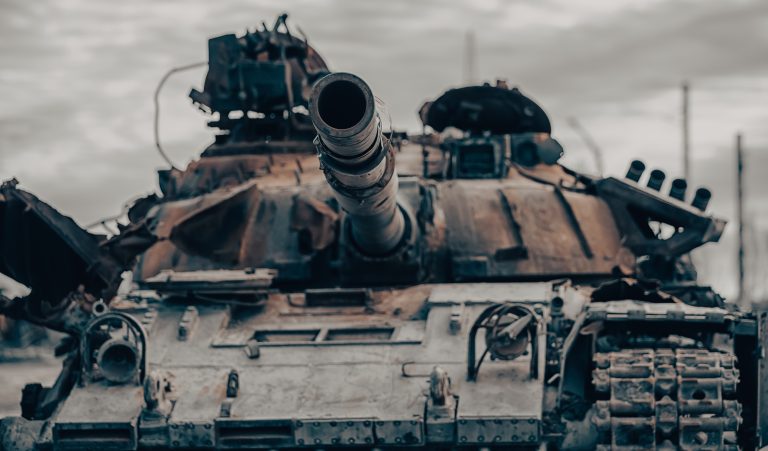

The plateauing of Russia’s military strategy in Ukraine
Russia’s battlefield strategy in Ukraine has plateaued and, if nothing radically changes, Russia cannot expect any significant progress on the battlefield in 2026.

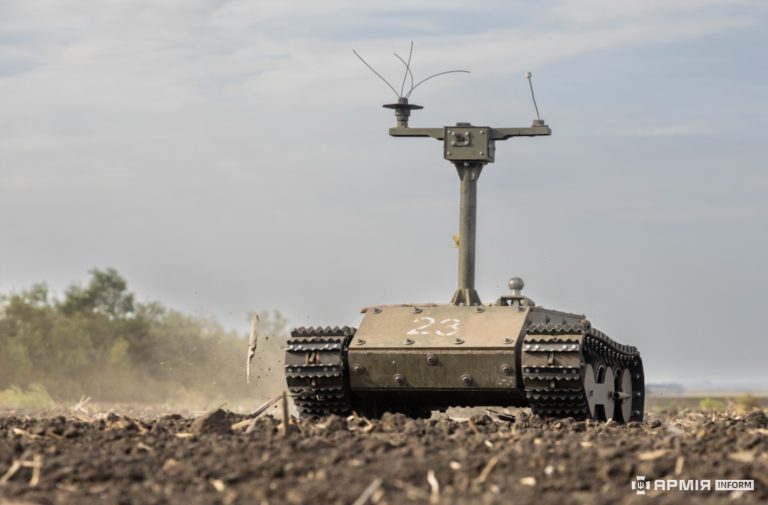
Robots take the risk: Ukraine’s UGV ecosystem and what Europe should learn from it
Ukraine has systematically removed humans from roles that don’t require human judgment, letting machines absorb the danger soldiers would otherwise face. What UGVs can and can’t do, and what lessons European institutions can draw from Ukraine’s experience.


The day after: Six post-war challenges for Ukraine
A ceasefire is nowhere in sight. Putin sees no interest in ending his war. Even so, the EU should start preparing for the many post-war challenges Ukraine will face.




Team members





No Results Found
Could nuclear Russia lose its war in Ukraine?
As long as the Kremlin believes that the summary costs of deploying weapons of mass destruction will exceed any possible gains from such an adventure, Moscow will not dare to break the post-World War II taboo on the use of atomic arms.
10 September 2026
5 minutes
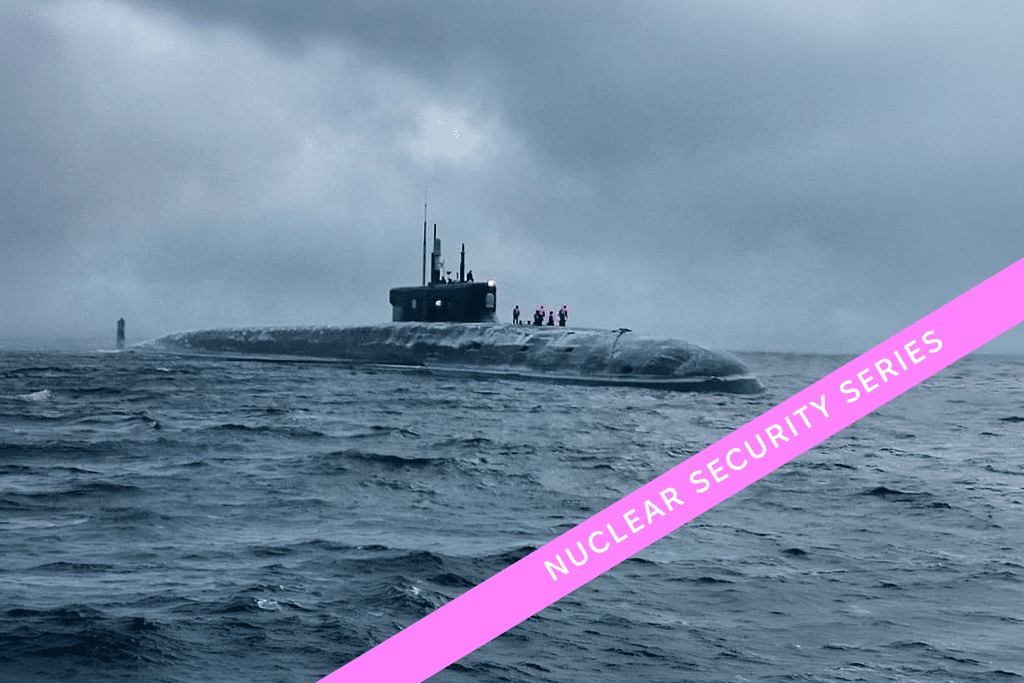
Photo: K-549 'Knyaz Vladimir' in sea trials in February 2019, HoteitH, Wikimedia Commons
Text size:
Popular opinion regarding the prospects for Russia’s attack on Ukraine has it that it cannot, will not and even should not be fully repulsed by Kyiv. Moscow’s possession of nuclear weapons, the argument goes, makes its military failure in Ukraine not only impossible, but actually undesirable. If threatened by defeat, Russia is supposedly ready to risk Armageddon through use of its nuclear arsenal. By contrast, with no weapons of mass destruction (WMD) of its own, Ukraine is doomed to succumb to Russia’s demands, according to this framing of the Russo-Ukrainian War.
A broad spectrum of academic and non-academic voices has explicitly or implicitly called on Ukraine to cease its self-defence in order to prevent the outbreak of nuclear war. A few days after the start of Russia’s full-scale invasion, MIT professor Barry Posen – who has explained Russia’s invasion of Ukraine as a pre-emptive war – predicted that: “If the Russian campaign starts to feel like it’s a military catastrophe, that’s where escalation to nuclear weapons comes into play.” More recently, the former lead singer of “Modern Talking,” Dieter Bohlen, gave voice to a widely held view when opining on German television in July 2026: “If Ukraine wins against Russia, we will get a world war.”
However, neither Kyiv nor the West has ever intended to inflict a “military catastrophe” on, or achieve a full Ukrainian victory over, Russia. Ukraine is merely seeking to liberate those parts of its territory that Russia recognised as Ukrainian before 2014 but then annexed and has illegally occupied for the past 12 years. In addition, President Volodymyr Zelenskyy is signalling a willingness not to push for a rapid victory in any sense.
Since 2025, Kyiv has explicitly stated that it would accept the current front line as the future line of contact in a ceasefire agreement. Ukraine would also agree to a partial ceasefire, such as a joint moratorium on all long-range strikes[3] and/or a mutual cessation of attacks on shipping in the Black Sea. In so doing, the Ukrainian leadership has conceded the possibility of a temporary loss of Ukrainian territory and sovereignty to Russia. Kyiv is not seeking a victory over Moscow. On the contrary, it would accept a partial Russian victory over Ukraine if this were to bring about peace.
Unsuccessful foreign military interventions by nuclear-armed states
Moreover, the history of international conflict between nuclear-armed states and nations without WMD speaks also against an apocalyptic scenario. Already an atomic-weapon state in the 1960s, France lost its colonial war in North Africa, leading to Algeria’s independence. Nor did the United States, China and Soviet Union achieve the aims of their military interventions in non-nuclear Vietnam or Afghanistan in the 1970s-1980s, respectively. Instead, the world’s three post-war military superpowers experienced humiliating defeats by much smaller enemies. The United States later repeated the Soviet Union’s embarrassing military disaster in Afghanistan.
Since World War II, nuclear arms and other WMD have undergone sophisticated development and some proliferation. Today, nine countries possess powerful atomic warheads. Why since 1945, when the United States bombed Hiroshima and Nagasaki, have the various nuclear-armed states neither used and nor even credibly threatened to deploy atomic weapons to achieve their war aims?
In parallel with the post-war proliferation of and advances in nuclear weapon technology, worldwide ethical, military, political, environmental and philosophical thinking has also evolved. As a result of intense international deliberation about the consequences of atomic war and nuclear winter, a worldwide informal taboo has emerged on the use of WMD in general and nuclear weapons in particular. Atomic arms still play a prominent role in the governmental planning and national security discourses of the official and unofficial nuclear-weapon states, as instruments of global deterrence and ultimate tools of national defence. At the same time, however, the futility and irresponsibility of using atomic warheads to conduct foreign interventions has been acknowledged, from both “Realist” and “Idealist” perspectives, as strategically and morally untenable.
The worldwide belief in the validity of this taboo became so forceful that non-nuclear-weapon states have even dared to militarily challenge nuclear-armed nations. In 1973, for instance, Egypt and Syria – neither of which possess nuclear weapons – attacked Israel even though it was known that Tel Aviv by then developed an unofficial but fully functional nuclear arsenal. In 1982, non-nuclear Argentina initiated a military confrontation with the nuclear-armed United Kingdom over the Falkland Islands.
How and why Kyiv ignores Moscow’s atomic sabre-rattling
The story of Ukraine’s disregard for Russia’s nuclear arsenal is in some ways similar but in other ways different. Russian officials have – in thinly disguised form – repeatedly threatened use of atomic weapons since Moscow’s annexation of Crimea in February 2014. This intimidation became more explicit at the start of the full-scale invasion in February 2022. Russia also changed its nuclear doctrine in 2024 to reduce the official threshold for the use of WMD.
Moscow’s rhetorical nuclear signalling in the past 12 years has been effective in Europe and the United States. While other factors have also determined the reaction of western countries to the war, the Kremlin’s coded but well-understood atomic threats have led to Western restraint and delay when providing military help to Ukraine. In Ukraine itself, however, the direct effects of Moscow’s many years of nuclear signalling have been close to zero.
For more than four years now, Kyiv has violated and continued to cross Russian putative “red lines.” Ukraine has bombed an increasing variety of more or less high-value targets in Russia, using mainly long-range drones and cruise missiles. Some of these attacks on Russia-occupied Ukrainian territory or on Russian state territory were conducted with Western weaponry, such as British Storm Shadow cruise missiles. In addition, in 2024–25, Ukrainian ground troops occupied part of Russia’s legitimate state territory for several months, in the Kursk region.
Kyiv has done and is doing all this is in spite of the fact that Putin announced in 2024 that Russia’s new nuclear doctrine “clearly sets the conditions for Russia to transition to use of nuclear weapons.” The Russian President threatened: “We will consider the possibility [of nuclear retaliation] when we receive reliable information about a massive launch of air and space attack assets and them crossing our state border.” Nonetheless, Kyiv continues to conduct increasingly large-scale and deep long-range drone and cruise missile operations inside Russia, paying little or no attention to the Kremlin’s doctrinal specifications and its propagandists’ apocalyptic warnings.
As Polina Sinovets and Muhammed Ali Alkış observe in their seminal paper, Deterrence, Compellence, or Credibility Fatigue? Russian Nuclear Threats in the War on Ukraine: “Russia failed to deter Ukraine, which continued military operations such as strikes on the Crimean Bridge, recapturing territories, and launching drone attacks on Moscow. […] Despite threats, Ukraine, supported by NATO arms, continued offensives in Crimea and Russian territory.”
Such Ukrainian behaviour is not hazardous but based more on rational calculation than widespread Western apprehension over Russian nuclear escalation. The more general strategic limitations of the use of nuclear weapons that became repeatedly obvious in earlier times and other regions now apply to Russia’s full-scale invasion of Ukraine too. To be sure, in view of its virulent Ukrainophobia, the Kremlin is unlikely to be constrained by the ethical considerations linked to a possible break of the nuclear taboo. Rather, there are practical risks for Moscow linked to a massive deployment of WMD to secure illegitimately captured foreign regions rather than defending its legitimate national territory. The full range of political, economic and social aftereffects of such an unprecedented violation of international law, rules, norms and customs would be difficult to foresee, including for Putin and his entourage. Such a step would also involve reputational damage as it could be seen as a sign of weakness, rather than the strength of a putatively great power that is unable to secure its interests vis-à-vis a non-nuclear middle power by conventional means.
The net sum of strategic gains and losses for Moscow from the explosion of one or more atomic warheads in or over Ukraine would be fuzzy, mixed and eventually unpredictable. Unless Kyiv fully capitulated in reaction to such a fateful move, Putin’s regime would be likely to lose more than it gained from such an escalation. A Ukraine that is winning rather than losing would probably not simply back down in reaction to a Russian nuclear escalation. Nor would the international community – including many non-Western countries – take a Russian break of the nuclear taboo lightly.
Imagined and realistic scenarios of nuclear escalation
Nonetheless, the mere threat of use of atomic weapons has proved to be a largely successful strategy for Moscow. Although the Ukrainian Armed Forces have not reacted to such threats, they have been indirectly hindered by Moscow’s nuclear signalling as a result of nervous Western reactions to it. The West’s anxiety has led, in particular, to prohibitions for, limitations on and postponement of its provision of and permission to use long-range weapons for Ukrainian self-defence.
For instance, the German-Swedish TAURUS (Target Adaptive Unitary and Dispenser Robotic Ubiquity System) cruise missile has been requested many times by Kyiv. Numerous German politicians, including Federal Chancellor Friedrich Merz, have publicly supported the legitimacy of Ukraine’s wish. Eventually, however, Berlin rejected Kyiv’s demand and seems likely to continue to do so in future. A major reason for the German government’s intransigence is that a majority of German citizens, as shown by various opinion polls, opposes delivering TAURUS to Ukraine, even though most Germans at the same time support providing military aid, including heavy weaponry, to Kyiv. Being a result of an intense Russian propaganda campaign, German fear of direct military confrontation and possible nuclear war with Russia is one – if not the main – determinant of Berlin’s lacking resolve.
Ironically, the course of a possible future nuclear escalation in the Russo-Ukrainian War might be the precise opposite of what most Europeans currently are afraid of. Two years ago, the leading US-Ukrainian expert on the issue, Mariana Budjeryn (Massachusetts Institute of Technology), argued in the pages of the reputed Bulletin of the Atomic Scientists that the Kremlin might feel encouraged to use nuclear weapons not to prevent defeat, but to complete an already foreseeable victory over Ukraine. Following the example of the victorious United States’ deployment of atomic bombs against an almost defeated Japan in 1945, Moscow could go nuclear to transform an already advantageous military situation into a rapid and total success.
Budjeryn admits that, in such a scenario,
“Russia would still likely incur international political costs for breaking the eight-decades-long taboo on nuclear use, but these costs could be better mitigated by a winning Russia than a losing Russia. The United States and NATO allies might not deliver on their threat to impose severe military costs in response to a Russian nuclear strike if Ukraine looks like a lost cause. Opprobrium from China will matter less to a Russia that won its war in Europe. Finally, Russia’s nuclear use is bound to make an impression in NATO capitals and allow Russia to shape the broader post-war settlement in Europe to its advantage.”
Conclusion
Both Western veneration of Russia as an atomic superpower and Western fear of a Russian nuclear response to Ukrainian military successes are misinformed. Nuclear-armed states have repeatedly lost interventionist wars and even been attacked by non-nuclear weapon countries in the past 80 years. Ukraine has repeatedly crossed seeming Russian “red lines” since 2022 – without Russia moving up the ladder of nuclear escalation. In contrast, the only historical example of deployment of atomic bombs was by the winning United States, which bombed a retreating Japan at the end of World War II.
The idea that a nuclear escalation is likely or even inevitable should Russia, as an official nuclear-weapon state under the Non-Proliferation Treaty, be unable to achieve its aims in Ukraine might appear plausible at first glance. Yet, according to such logic, weapons of mass destruction could or even should have been used earlier, during the Cold War and post-Cold War eras, including in Ukraine since 2022. Militarily cornered interventionist nuclear-armed states, however, have never used their atomic weapons against the victims of their invasions – even though these nations mostly did not possess similar arms and would not have been able to retaliate in kind.
Decisions about the level and types of support to or mechanisms for supporting Ukraine should not be guided by national angst and strategic myopia. They ought to be informed by concern for historical justice, the idea of solidarity among democratic nations and enlightened self-interest in the preservation of elementary international order. Moscow may not have any moral qualms about exploding a nuclear warhead in Ukraine but it will not do so as long as the Kremlin believes that the world’s reaction to such a digression will be resolute and have devastating consequences for Russia itself.
Mariana Budjeryn (Massachusetts Institute of Technology) and Polina Sinovets (Odesa Centre for Nonproliferation) kindly provided helpful comments on an earlier draft of this commentary but cannot be held responsible for any remaining inaccuracies. A different version of the commentary appeared on 25 August 2026 in the web version of the magazine “Foreign Policy.”
Authors
Andreas Umland
Policy Fellow at the European Policy Institute in Kyiv and Analyst at the Stockholm Centre for Eastern European Studies in the Swedish Institute of International Affairs (UI)



Thank you!
You will now receive EPIK’s latest analysis, publications, event invitations, and other updates directly in your inbox.
Thank you!
You will now receive EPIK’s latest analysis, publications, event invitations, and other updates directly in your inbox.
Go Home Page
Thank you!
The form has been successfully submitted. We value your time, so please expect a call or email from our manager shortly.
Go Home Page
Thank you!
You will now receive EPIK’s latest analysis, publications, event invitations, and other updates directly in your inbox.
Thank you!
You will now receive EPIK’s latest analysis, publications, event invitations, and other updates directly in your inbox.
Thank you for subscribing
You will now receive EPIK’s latest analysis, publications, and event updates directly in your email.
Go Home Page