Categories
Trending Searches


The plateauing of Russia’s military strategy in Ukraine
Russia’s battlefield strategy in Ukraine has plateaued and, if nothing radically changes, Russia cannot expect any significant progress on the battlefield in 2026.

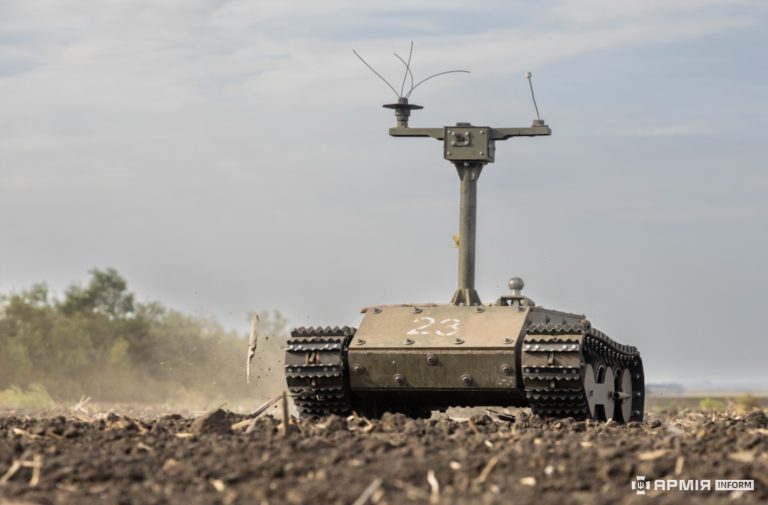
Robots take the risk: Ukraine’s UGV ecosystem and what Europe should learn from it
Ukraine has systematically removed humans from roles that don’t require human judgment, letting machines absorb the danger soldiers would otherwise face. What UGVs can and can’t do, and what lessons European institutions can draw from Ukraine’s experience.

The day after: Six post-war challenges for Ukraine
A ceasefire is nowhere in sight. Putin sees no interest in ending his war. Even so, the EU should start preparing for the many post-war challenges Ukraine will face.




Team members




No Results Found
Slicing the salami: Ukraine’s sectoral integration into the EU
23 March 2026
6 min read
Text size:
Executive summary
- For the past decade, Ukraine has been progressively aligning itself with EU rules on customs, energy, digital services and industrial standards under its Association Agreement. This sectoral integration promises mutual economic gains, helps to sustain reform momentum and anchors Ukraine more deeply in European political and economic structures.
- The logic of sectoral integration under the Association Agreement is based on gradual, technocratic convergence rather than politically prioritised integration under conditions of war and economic emergency. Without procedural adaptation, sectoral integration risks underperforming and failing to live up to expectations.
- One way to speed up implementation would be to prepare a special protocol on sectoral integration, containing clear timelines and involving simplified technical decision making, so that politically prioritised integration does not get lost in routine procedure.
Introduction
Since Ukraine became an EU candidate country in June 2022, the question of how to integrate such a large country has confronted policymakers throughout Europe. The normal accession process is clearly unsuitable. Russia’s ongoing war against Ukraine and blockages inside the EU underscore the need to look for creative solutions and workarounds.
Although domestic support for EU accession remains remarkably high, there is a real risk that this will wane over time if the process becomes blocked and Ukrainians see little benefit from EU accession in their daily lives. This has been the experience of the Western Balkans for the past decade.
The most obvious and pragmatic solution for Ukraine is sectoral integration that gradually integrates Ukraine into selected EU policies and market segments. Sectoral integration can provide early economic gains, help to sustain reform momentum and anchor Ukraine more deeply in European political and economic structures at a time of war and reconstruction.
For Ukraine, these gains are central to maintaining public support for the European path. Sectoral integration acknowledges the challenges inherent in the normal accession track while also showcasing the tangible benefits of EU integration. Under conditions of war and economic emergency, however, sectoral integration must be firmly prioritised to speed up implementation and deliver mutually beneficial results.
Sectoral integration matters
Sectoral integration is not a new concept or novel policy area for Ukraine; it is already under way. Much of what is now described as sectoral integration was outlined in the Association Agreement and the Deep and Comprehensive Free Trade Areas (DCFTA), which linked regulatory approximation to progressive access to the internal market. What were often missing were not legal pathways for deeper sectoral integration, but the political attention and procedural momentum required to make full use of new opportunities.
Industrial goods provide the clearest example. For many years, Ukraine has aligned its technical standards with those of the EU to prepare for an Agreement on Conformity Assessment and Acceptance (ACAA) of Industrial Products. Some legislation is still pending but, once concluded, this would eliminate the need for Ukrainian manufacturers to re-certify goods in the EU. Ukraine’s machinery and electrical equipment sectors, which made up about 8 per cent of the goods exported in 2024, stand to benefit most.
Agriculture and food safety tell a similar story. Under the new Sanitary and Phytosanitary (SPS) framework in the Association Agreement, Ukraine has secured EU equivalence for specific agri-food product groups and obtained individual export approvals for dozens of establishments. Behind each decision lies a rebuilt chain of laboratories, veterinary and phytosanitary controls, and traceability systems aligned with EU law.
Customs integration has advanced even further. Since Ukraine joined the Common Transit System in 2022, its border procedures with the EU have begun to resemble those between member states. The next milestone, mutual recognition of Authorised Economic Operators (AEO), would allow trusted Ukrainian exporters to move goods with minimal checks and delays. For industries that rely on just-in-time supply chains, the effects could be transformative, pulling Ukrainian firms more deeply into European production networks long before formal accession.
The energy story is remarkable. When Ukraine synchronised its grid with the European Network of Transmission System Operators for Electricity (ENTSO-E) in March 2022, the country was already under bombardment. Electricity trading has grown steadily and European firms now rely on Ukraine’s gas storage capacities to stabilise winter markets – despite Russia’s regular drone and missile attacks on the energy infrastructure.
The overall picture is therefore more mixed than might first appear. In some areas, integration has already moved far ahead; in others, Ukraine has done much of the technical work but the final step still depends on further legislation, secondary acts, technical assessments or formal EU decisions. Recognising this fact clarifies that acceleration is not about lowering standards, but about moving forward where the groundwork has already been laid while being more honest about where it has not.
The need for speed
Most sectoral integration initiatives still move not through the accession process, but through the institutional and procedural machinery of the EU-Ukraine Association Agreement. The scale of approximation already achieved under the Association Agreement is substantial. According to a Ukrainian governmental report, more than 84 per cent of obligations have been met. Approximation is highest in trade-related and security and defence (CSDP) areas, where implementation has been advancing for many years.
However, the logic of sectoral integration under the Association Agreement is based on gradual, technocratic convergence, rather than rapid, politically prioritised integration under conditions of war and economic emergency. EU decision making is fragmented across numerous committees and sub-committees. Progress depends on sequential legal acts, technical assessments and consensus among institutions and member states. Even where political support exists, procedures tend to prioritise risk avoidance and formal completeness over speed. As a result, sectoral integration advances incrementally and the concrete economic effects have limited visibility.
The gradual extension to Ukraine of the “Roam Like at Home” regime for mobile phone use illustrates this dynamic. Political support for integrating Ukraine into the EU roaming area was expressed soon after February 2022, and framed as a priority with immediate, tangible benefits for citizens and businesses. Even this politically prioritised initiative had to move through the EU’s existing legal and procedural architecture, however, rooted in the Association Agreement and regulatory approximation. Formal decisions stretched the process over several years before it became operational reality in January 2026.
From an institutional perspective, this timeline reflects established procedures functioning as intended. From a societal and political perspective, it highlights a deeper issue. Even highly visible, politically prioritised integration measures struggle to deliver quickly under current rules and procedures. The speed of the EU’s bureaucracy is no match for the caffeinated pace of today’s geopolitics – especially in wartime and given the need to demonstrate to Russia that Ukraine is European.
When sectoral integration is seen as delayed or marginal, rather than as delivering tangible improvements before full accession, it risks fuelling frustration in Ukrainian society. The case of roaming therefore exemplifies a growing disconnect between expectations and delivery.
The main bottleneck arguably lies in procedures that are poorly matched to the political and economic realities in which Ukraine’s accession is unfolding. Frameworks designed for gradual convergence among stable economies are now expected to deliver rapid economic effects in exceptional circumstances. Without procedural adaptation on the part of the EU, sectoral integration risks underperforming not because the idea is flawed, but because the tools are misaligned with the task.
Responsibility does not lie in Brussels alone. In Ukraine, the legislative and procedural tempo has not always matched the ambition for accelerated sectoral integration. Discussions about fast-tracking EU-related legislation began in June 2022 and draft amendments to parliamentary procedures were prepared to prioritise European integration bills. However, there has been no meaningful reform of the Verkhovna Rada’s procedures after more than three years of discussion.
Several of the legislative acts required to complete the ACAA negotiations, registered in late 2024 and early 2025, are still under parliamentary consideration in 2026. Such timelines weaken the credibility of Ukraine’s calls for an expedited process. Without internal procedural discipline, even the most favourable EU framework cannot deliver speed.
Conclusion
Sectoral integration with Ukraine is not starting from scratch. Many of the instruments already exist and some have already produced results. The question is whether they can be used with greater purpose and discipline in the years ahead. If not, the gap between political declarations and practical delivery will remain wider than it needs to be.
For the EU, Ukraine’s sectoral integration is not merely a question of enlargement, but one of competitiveness and geopolitics. Delays with integration impose costs on European value chains, energy security and regional resilience. Ukraine’s economy, even before full reconstruction is completed, can support European value chains in areas such as agriculture, defence, energy technology and information technology. Ukraine’s labour force, although diminished, is highly skilled and its defence industry is already integrating with European ecosystems.
The task is to ensure that this transformation proceeds with sufficient speed to match political commitments and practical needs.
Recommendations
The following steps could help shift the procedure of sectoral integration from declaratory commitments to speedy implementation.
Europe
- The European Commission and EU member states should prioritise the sectoral integration files with immediate economic impact, notably industrial products, customs facilitation and energy market access.
- One way to speed up decision making would be to develop a special protocol, or a similar fast-track arrangement, for sectoral files that could be available for Ukraine as a candidate country or are already advanced under the Association Agreement. Such a mechanism should not replace but build on the existing Priority Action Plans under the DCFTA. Its purpose would be to identify a limited number of priority files, set clearer timelines, clarify obligations on both sides and prevent technically mature initiatives from being buried under routine procedure. This document would also contain safeguards whereby accelerated access can be reversed in case of backsliding on reforms.
- Across Europe, sectoral integration should be framed as an issue of competitiveness and economic security, to help prevent political bottlenecks or enlargement scepticism from delaying technically mature initiatives.
Ukraine
- The Ukrainian government should concentrate political and administrative resources on a limited number of high-impact integration tracks, pairing regulatory alignment with credible enforcement, particularly in areas linked to market access and EU funding. Institutional capacities to work with EU funds on the ground should be prioritised, as well as improved control mechanisms for how EU-related reforms are implemented after the necessary legislation has been passed in parliament.
- The Verkhovna Rada should introduce accelerated procedures for EU-related legislation, ensuring that draft laws linked to sectoral integration and market access are prioritised and insulated from procedural delay. Without domestic fast-track mechanisms, calls for accelerated European integration risk losing credibility and becoming effectively academic.
- Adopting the EU acquis should be framed not as a tick box exercise to meet abstract criteria, but as concrete elements of Ukraine’s self-sufficiency and resilience. This should provide motivation to push through necessary legislation and prevent swings between reform surges and reform fatigue.
Authors

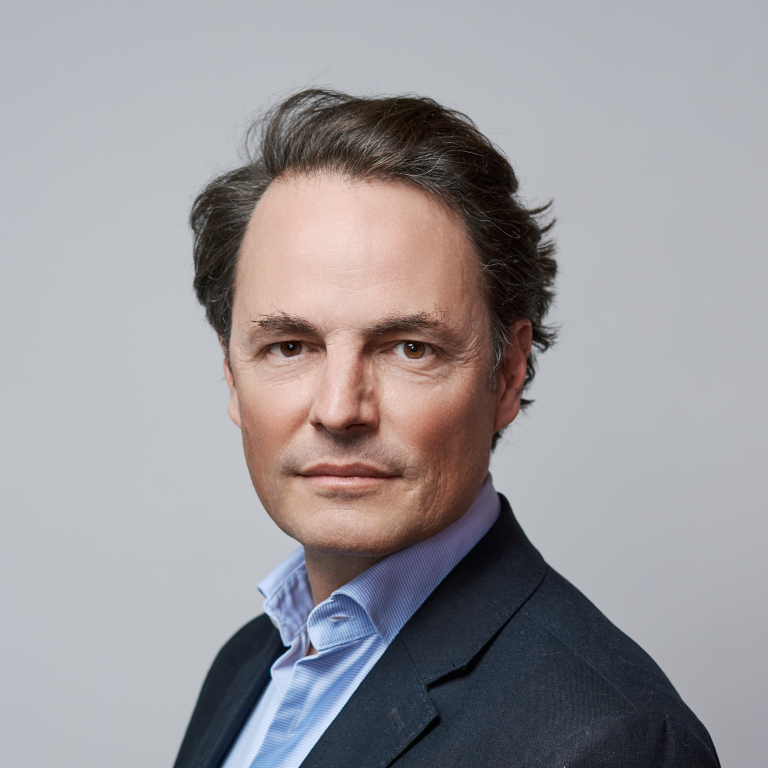
Ivan Nagornyak
Policy Fellow

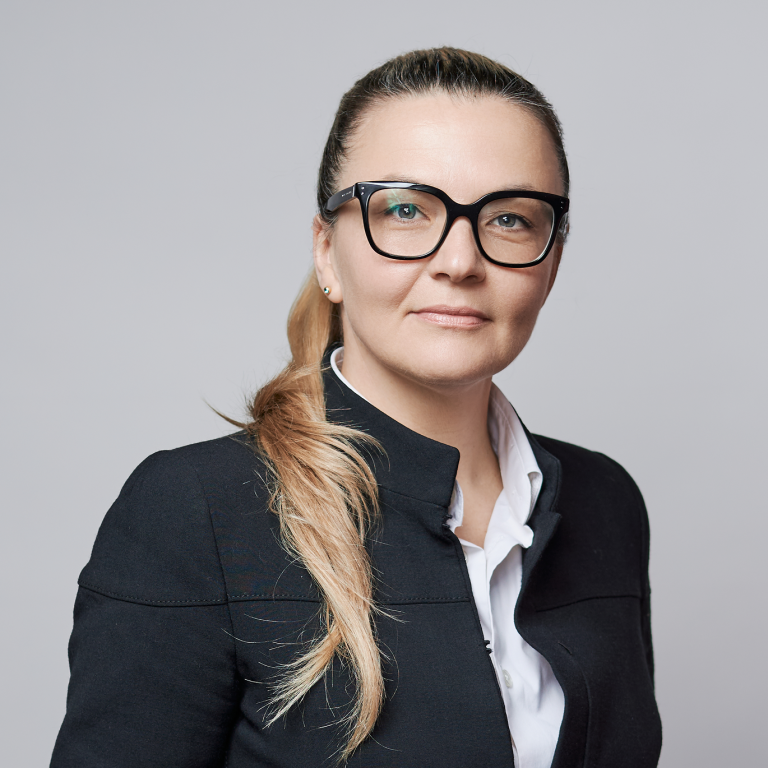
Klara Lindström
Analyst at the Stockholm Centre for Eastern European Studies (SCEEUS)

Thank you!
You will now receive EPIK’s latest analysis, publications, event invitations, and other updates directly in your inbox.
Thank you!
You will now receive EPIK’s latest analysis, publications, event invitations, and other updates directly in your inbox.
Go Home Page
Thank you!
The form has been successfully submitted. We value your time, so please expect a call or email from our manager shortly.
Go Home Page
Thank you!
You will now receive EPIK’s latest analysis, publications, event invitations, and other updates directly in your inbox.
Thank you!
You will now receive EPIK’s latest analysis, publications, event invitations, and other updates directly in your inbox.
Thank you for subscribing
You will now receive EPIK’s latest analysis, publications, and event updates directly in your email.
Go Home Page