Executive summary
The prospects for a truce between Ukraine and Russia seem more distant than at any time since US President Donald J. Trump began his peacemaking efforts.
Nonetheless, Europe should make plans to deal with the many considerable challenges Ukraine will face if peace breaks out. Since many of the tasks fall outside the reform paradigm, the European Union will need to look beyond the accession process. The purpose of this brief is to map the main challenges and provide a sense of their scale and urgency.
- Security will remain a major issue after a ceasefire. Even a stable truce would not signify a strategic shift in Moscow’s objectives. Russia might expand its hybrid operations against Ukraine while preparing to attack again.
- Economic recovery will be a massive challenge. War‑related damage exceeds $195 billion and reconstruction costs have been estimated at $588 billion.
- Domestic reform and EU accession will remain major tasks. Ukraine’s EU path will depend on its administrative capacity and political will, as well as continuing anti-corruption efforts, but also on the European Union’s readiness for internal reform.
- Accountability and transitional justice will be high on the agenda for many years if not decades to come. The judicial system will have to process more than 213,000 registered cases of war crimes and there are thousands of deported children and prisoners to be returned from Russia.
- Ukraine faces a severe demographic crisis linked to mass displacement, ultra‑low birth rates and rising mortality. Ukraine may need labour immigrants to replenish its workforce.
- Political cohesion will be tested when martial law ends. Elections, unresolved territorial questions and emerging social cleavages, including a large veteran constituency, will reshape domestic politics and create risks to stability.
A sustainable post‑war order will require integrated planning across all six domains, starting before a ceasefire is agreed.
Introduction
As of the spring of 2026, there is little reason to believe that the Russo-Ukrainian War will end any time soon. The Kremlin is not ready for a peace deal that does not hand Russia a partial victory, as a minimum. Nor is Moscow in a position to substantially change the situation on the battlefield to its advantage. The frontline is currently relatively stable. Russia’s army is making small territorial gains while Ukraine’s armed forces are occasionally able to liberate some settlements. The “kill zone” controlled by drones from both sides has led to a sort of equilibrium on the battlefield.
Nonetheless, peace is not impossible. Europe should begin to address the challenges that Ukraine and its partners would face should – unexpectedly and implausibly, so far – a ceasefire be concluded. What would be the consequences for Ukrainian domestic affairs? What are the overall dimensions and specific stumbling blocks of the various objectives that would emerge? How can the peace be “won” even after a bad ceasefire deal?
There are a minimum of six immediate and substantial challenges that should demand concurrent attention from the Ukrainian state and society, as well as their partners abroad:
- Protecting Ukraine from a new Russian attack
- Organising economic recovery and rejuvenation
- Advancing and completing accession to the EU
- Ensuring accountability and transitional justice
- Preserving and restoring Ukraine’s population
- Securing political cohesion in a fragmented society
There are, of course, many other challenges. This brief does not cover the full range of tasks facing a post-war Ukraine. For example, it does not tackle the enormous environmental damage done, reactivating the halted decentralisation reform, continuing judicial and administrative reform, or the need for constitutional reform.
The purpose of this paper is to map the main priorities and highlight their scale and scope. The key message is that Europe should be ready to help Ukraine deal with these challenges. Nonetheless, prudent advance planning should not take energy and resources away from the primary task of supporting Ukraine militarily today so that it can defend itself effectively from Russian aggression.
Challenge 1: Protecting Ukraine from new Russian attacks
In a similar way that the Minsk I and II accords of 2014–15 did not bring peace to Ukraine, another agreement between Kyiv and Moscow is unlikely either to fully end the armed conflict or to totally exclude the possibility of renewed high-intensity warfare. Many Western observers will interpret a ceasefire as a historic achievement and a unique chance for permanent peace in Eastern Europe. Even a significant reduction in the war’s intensity and scope, however, will not mean the disappearance or even moderation of Russia’s objectives in Ukraine and beyond.
Unless there is a fundamental and anti-imperial change of regime in Moscow, the Kremlin will understand a ceasefire as an interregnum in, rather than the end of, its imperial war against the Ukrainian nation. Russia’s means might change but not its aims. Even after the conclusion of a ceasefire, Moscow will remain intent on the complete subjugation and control of Ukraine.
The post-conflict reality will thus be determined less by the text of any possible agreement, but first and foremost by the final status and end result of the war itself. Whatever a possible treaty looks like, the situation on the ground will be crucial. Post-war stability will be largely defined by the military reality rather than political deliberations, diplomatic negotiations and contractual formulations.
Moscow might, as it did in 2015–2021 after the Minsk Accords, agree temporarily to move to a low-intensity conflict, perhaps, with continuing kinetic action here and there. In parallel, the Kremlin is likely to expand and intensify its non-kinetic, hybrid warfare against the Ukrainian government, society and economy, with the help of its government propagandists, intelligence services, paid saboteurs, local collaborators, political influencers and foreign sympathisers, among others. During the truce, Moscow will redirect its efforts to undermine the Ukrainian state on the battlefield to subverting Ukraine via social and mass media, cyberattacks, industrial sabotage and coercive diplomacy.
An especially dangerous situation would emerge if Ukraine were forced, as a result of a comprehensive peace deal, to give up or withdraw its armed forces from the north-western parts of Donetsk Oblast, including such cities as Kramatorsk, Kostyantynivka and Sloviansk which are still free of occupation. These and other settlements, as well as the areas around them, have been upgraded over the past decade to a so-called fortress belt.The Russian army has been trying to break through this Eastern Ukrainian defence line for several years but been unable to do so. Should Kyiv be pressured to hand over or demilitarise its fortified areas in the Donbas, this would open Ukrainian land up to deeper military incursions by Russia. Such a situation would increase the temptation for the Kremlin to unfreeze the conflict and bring the Russian army deep into central Ukraine.
Whatever the truce will look like, both Kyiv and its foreign partners have to assume that the post-war period will turn out to be another pre-war period. Security guarantees will be only a part of the solution to this problem. Unless Ukraine becomes a full NATO member, Western security guarantees will not by themselves deter a new Russian escalation. Moreover, given Washington’s erratic policies since 2025, it is uncertain to what degree the United States would make good on security guarantees for Ukraine, even if they have been codified in law.
The most important decisions on post-war security for the Coalition of the Willing will therefore be not what to put on paper, but what can be implemented quickly and effectively. This means, first and foremost, that much of the current foreign assistance for Ukraine’s military, as well as the cooperation with the Ukrainian military-industrial complex, would have to continue during a ceasefire.
Although in many ways Ukraine now has a more advanced army than most other countries of the world, Kyiv will continue to be dependent on Western assistance with the reform of its armed forces. This will signify completion of the Ukrainian Armed Forces’ transition from remaining Soviet-era regulations and practices to more modern approaches to recruitment, training and warfare – on the basis of Ukraine’s own war-time lessons from the past four years, as much as through implementation of NATO standards or as a result of applying advanced methods developed by other armies. Last but not least, the ongoing collaboration between Ukrainian and Western partners to reduce hybrid threats will have to grow significantly.
Once a ceasefire takes effect, various new forms of cooperation in the field of international security will become possible between Ukraine and the West, and need to commence rapidly. These should lead to a strengthening of Ukrainian security through stronger Western military engagement in, around and over Ukraine, including with Western combat units, be they infantry battalions or fighter squadrons. One of the most realistic and effective plans would be the integration of Ukraine’s air defence with NATO’s Eastern flank. This would mean deployment of Western interceptor planes in Ukraine’s airspace to protect Ukrainian cities and infrastructure (power plants, factories, ports, transportation lines, etc.), and make possible a restart of civilian aviation in Ukraine.
Moreover, the integration of Ukraine into an all-European security system should cut both ways and mean Ukrainian engagement in the protection of other Eastern European countries. One such project, in the event of a Russo-Ukrainian ceasefire, foresees an extension of Ukrainian security guarantees to Estonia, Latvia and Lithuania, which could become new targets for Russian expansionism. Against a backdrop of US disengagement from Europe, the Ukrainian Armed Forces’ military prowess, advanced technology and unique experience mean that a Ukrainian promise to assist the three Baltic states in case of an escalation of tensions with Russia would increase Eastern- and even pan-European security, and help make Ukraine one of the pillars of a new European Security Order.
Challenge 2: Organising economic recovery and rejuvenation
Due to the Russian onslaught, Ukraine’s gross domestic product (GDP) declined by more than 30% in 2022. It grew by 5.3% in 2023 thanks to macro-financial support and there was some growth in 2024, but the damage has been felt throughout all sectors of the economy. Despite an acute labour shortage and Russian strikes on energy infrastructure, Ukraine’s GDP grew by approximately 2% in 2025 and inflation fell to 7.4%.
While these are impressive achievements, the most recent Fifth Rapid Damage and Needs Assessment (RDNA5), covering the period to December 2025, estimates direct physical damage at over $195 billion. This destruction and the wider economic losses from the war have driven the total projected cost of recovery and reconstruction over the next decade to around $588 billion.
Raising, distributing and overseeing such an enormous amount will be a complicated task that demands close cooperation between Ukrainian and Western partners. Ukraine’s economy will need to be revived not through the restoration of pre-war structures, but by taking a “build back better” approach. The focus should be on securing human capital, decentralising infrastructure and institutional modernisation.
A study by the RAND Corporation highlights, among other investigations, that a coordinated investment approach will be needed rather than fragmented, ad hoc donor projects. Survival aid and early recovery should be underwritten by international budgetary support, using such tools as the EU’s €50 billion Ukraine Facility and G7 Extraordinary Revenue Acceleration (ERA) loans leveraged against frozen Russian assets. Sustainable economic restoration will be achieved when public seed funding catalyses foreign direct investment, but is also contingent on a stable security situation, competent administration, functioning graft and fraud prevention bodies and full integration into the European Single Market. Direct investment by foreign companies, at least in western and central Ukraine, should be encouraged and supported by governments now, through national and international insurance schemes, investor conferences and support for joint ventures, not the least in the military-industrial complex.
Ukraine’s demographic crisis (see below) will lead to bottlenecks in the rebuilding process. Thus, housing and labour policies should be designed to incentivise the return of millions of internally and externally displaced citizens. Moreover, Ukraine will have to start thinking about how to attract and integrate migrants into its labour force.
The restoration of heavy infrastructure will have to pivot away from vulnerable, centralised legacy systems towards a more decentralised structure with greater resilience. Capital must be directed into, among other things, widely spread green energy grids as well as robust export logistics to secure the operational continuity of Ukrainian business even if there is a new escalation. Rule of law and anti-corruption reforms, legally anchored by the conditions of the EU’s Ukraine Facility, will be necessary to derisk the environment and unlock the private capital essential for long-term modernisation.
Ukraine’s energy system has become particularly fragile and operates with a structural deficit exceeding 4 GW of operational generation capacity. Pre-winter preparations saw over 13 billion cubic metres of gas accumulated in storage and comprehensive concrete physical protection shelters applied to over 70% of Ukrenergo’s high-voltage transformers. Nonetheless, the system still sustained serious damage.
As a result, Ukraine has become heavily reliant on emergency assistance and maximum-capacity commercial electricity imports from the European ENTSO-E network. State-owned enterprises have been mandated to import at least 50% of their consumption to alleviate grid pressure. While all nine nuclear power units in government-controlled territory remain functionally operational, degraded capacity to transmit power between Ukraine’s western, central and eastern grids represents a primary bottleneck.
A new decentralised energy architecture could be achieved with support from a matrix of international and national governmental and non-governmental, regional and municipal financial initiatives. Ukraine’s 2026 State Budget has already allocated UAH1.9 billion (approx. €37.7 million) to a Decarbonisation and Energy Efficiency Transformation Fund. The Affordable Loans 5-7-9% programme is also being used to incentivise private sector businesses to install autonomous gas generation and solar storage systems. This approach should be supported from abroad.
The Energy Community’s Ukraine Energy Support Fund will remain a critical vehicle for procuring highly specialised high-voltage equipment. The World Bank should continue to underwrite grants targeting grid flexibility and the decarbonisation of Ukrhydroenergo’s hydroelectric cascade. Under the above-mentioned EU €50 billion Ukraine Facility, structural reforms will have to unbundle the market and improve corporate governance at state monopolies such as the state-owned atomic energy company, Energoatom.
The RDNA5 estimates the total cost of rebuilding and modernising the energy sector at $90.6 billion over a 10-year period. Approximately $4.9 billion is required for rapid, immediate recovery in 2026 to stabilise the heating, gas and electricity transmission sectors. Returning the Ukrainian energy sector to its pre-war configuration, however, is neither physically feasible nor strategically desirable.
Instead, Ukraine’s intention to undergo a decades-long transition to an integrated, European-standard green grid should be supported. Once active hostilities end, efforts should go beyond the current defensive engineering, localisation of micro-grids and import reliance. The full-scale structural modernisation required to fully phase out the destroyed Soviet-era centralised thermal power plants in favour of distributed renewables and industrial battery storage will need a minimum of 7 to 10 years of sustained peacetime investment.
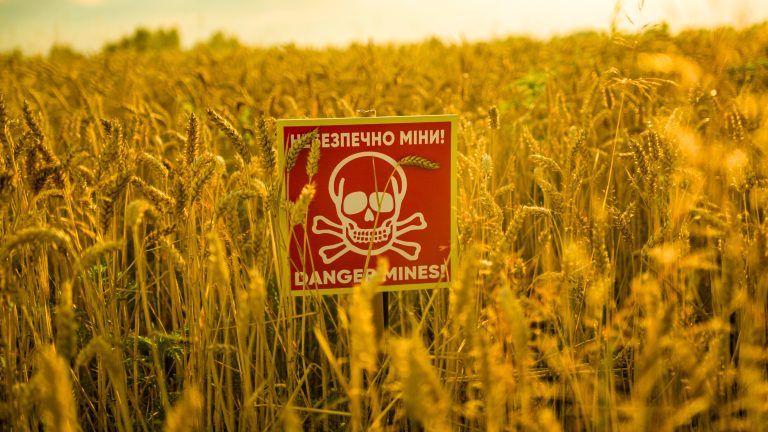
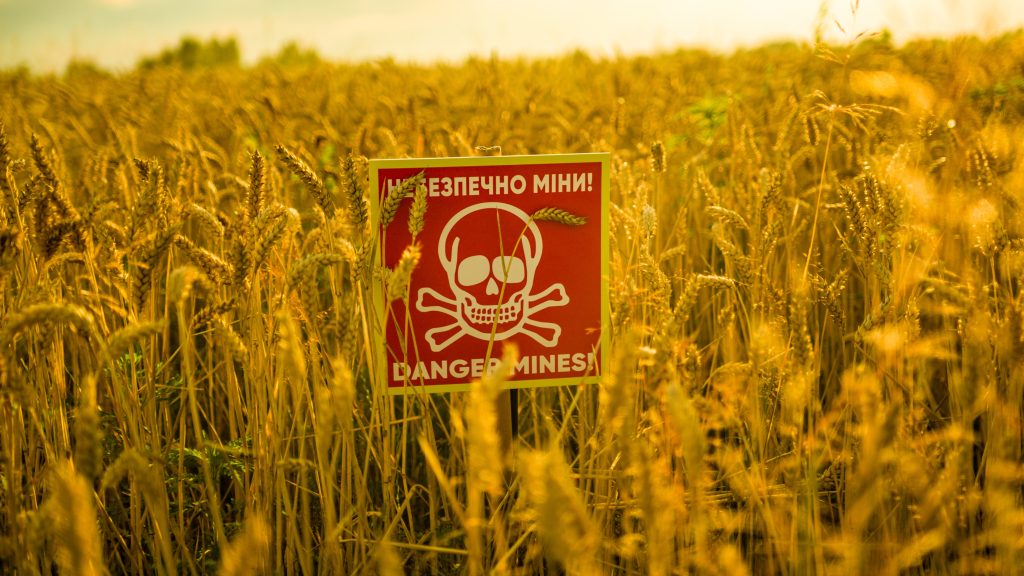
Concurrently, the Ministry of Environmental Protection and Natural Resources calculates the cumulative financial toll of direct ecological damage – encompassing soil degradation from heavy metals, widespread deforestation and the toxic contamination of groundwater aquifers – at over €60 billion. To mitigate this multi-generational crisis, the current localised demining and remediation initiatives must evolve into a heavily capitalised, highly mechanised international coalition. World Bank assessments calculate that comprehensive humanitarian demining alone will require $34.6 billion over the next decade. This will require structural funding mechanisms that treat ecological remediation and ordnance clearance not as secondary environmental issues, but as mandatory physical prerequisites for national survival and economic restoration.
The compound crises affecting Ukraine’s security situation, national economy, demography, environmental system and energy sector mean that the traditional paradigm of international assistance might be insufficient. Long-term macroeconomic blueprints and ten-year strategies for European-standard green grids are conceptually valuable, but they proceed from the premise of a stabilised, post-conflict environment that cannot be taken for granted.
In this regard, perhaps the most difficult geographical areas will be the war-torn frontline and liberated territories of eastern and southern Ukraine. While the regions and cities of central and western Ukraine are already able to develop and implement programmes to repair, rebuild and modernise damaged infrastructure and shattered communities, the complications and magnitude of these tasks is different in those areas directly affected by Russia’s land war and occupation regime. There, the magnitude of the problems, tasks and risks listed in this policy brief increases exponentially. Developing and implementing tailor-made strategies to secure the survival and revival of settlements that have been partly or even mostly destroyed, occupied and/or depopulated will be among the most demanding missions of the post-war period.
Challenge 3: Advancing and completing accession to the EU
Beyond the immediate political milestones of opening negotiation clusters, the fundamental reality of Ukraine’s European integration is that it will be an administrative and legislative marathon of unprecedented scale. The core requirement for entry as a full member mandates that Ukraine transpose around 100,000 pages of complex European Union law into its national framework across 35 distinct policy chapters. This represents a colossal bureaucratic and legal undertaking for any nation in peacetime, but it is even more challenging under conditions of war.
One of the main obstacles to Ukraine’s European integration is corruption in public administration, higher education, social services and other spheres of society. In 2025, corruption scandals included an abortive attempt to limit the independence of anti-corruption organs and the disclosure of a kick-back scheme within Energoatom. At the same time, however, “the perception of corruption prevalence in Ukraine, which rose in 2023–2024, decreased in 2025, paralleling a decline in the perceived corruption growth rate”. Disclosures of graft and theft in early 2026, in such spheres as drone delivery, grain shipments, and demining activity, indicate both the continuing prevalence of corruption and the increasing effectiveness of Ukraine’s new anti-corruption organs.
Reforms following the 2014 Revolution of Dignity led to the establishment of an elaborate and largely independent institutional structure to prevent, fight and prosecute corruption. This involves the National Anti-Corruption Bureau (NABU), the Specialised Anti-Corruption Prosecutor’s Office (SAPO), the High Anti-Corruption Court (HACC) and the National Agency on Corruption Prevention (NACP). These state organs are supported by, among other foreign actors, the EU Anti-Corruption Initiative (EUACI) and a group of Ukrainian anti-bribery NGOs that closely interact with international donors to Ukraine.
As the gruelling, multi-year accession process unfolds, sustaining domestic support for European integration will be a huge political challenge. If the road to membership is plagued by prolonged sectoral disputes or political vetoes, wartime enthusiasm for EU membership risks souring into reform fatigue and Euroscepticism. To prevent this, the EU and Ukraine should anchor the accession pathway to a strategy of continuous deliverables. Rather than demanding a decade of sacrifices for a distant promise, the process should yield tangible interim milestones such as phased EU Single Market inclusion that demonstrate immediate, practical benefits to citizens and reinforce societal resilience.
Today, Ukraine must execute this structural overhaul while fighting a war of national survival, managing severe human capital depletion and reforming an economy historically burdened by monopolisation. The true obstacle to integration is not securing diplomatic goodwill in Brussels and other European capitals, but the granular, exhaustive and generation-defining task of rebuilding the institutional architecture of the Ukrainian state – from ensuring judicial independence to enforcing rigorous EU Single Market standards – while operating under a relentless existential threat.
Ukraine is navigating a particularly complex trajectory for EU integration. The traditional binary model of accession is not suitable for its geopolitical situation and more creative thinking is needed about membership lite or gradual integration. When exactly Ukraine’s full entry into the EU will happen, and whether gradual integration can also mean partial membership status before full accession are issues being discussed in both Ukraine and the EU, as well as between them. Volodymyr Zelensky noted in early 2026, however, “We say: name the date. Why a specific date? Because Ukraine, Europe, the US, and Russia will sign up to it [in a peace agreement]”. In February 2026, Deputy Head of the Office of the President Ihor Zhovkva was clear: “We do not need ersatz membership. When we hear about membership lite, the answer is definitely – no”.
According to the European Commission’s 2025 Enlargement Package, while Ukraine has already demonstrated progress in preparing for negotiations on Cluster 1 (Fundamentals), Cluster 2 (internal market) and Cluster 6 (external relations), full institutional accession remains a distant prospect. To mitigate the economic risks of prolonged transition, the Ukrainian Centre for European Policy (UCEP), among other think tanks, advocates sector-by-sector integration into the EU Single Market . A strategic decoupling of economic access from political integration that prioritises early inclusion in European transport, digital, energy and other networks could be a way to sustain Ukraine’s macro-economic survival and export capacity while formal bureaucratic negotiations run their course. This strategy has, in some respects, been followed for the past 12 years by implementation of the EU-Ukraine Association Agreement and the Deep and Comprehensive Free Trade Area. It is already the main pathway for Ukrainian reform regardless of when or how a ceasefire is concluded.
While Ukraine’s step-wise incorporation into various EU internal structures and mechanisms is an apt approach, the pace of integration remains – rightly – tethered to conditionalities. It is further slowed by depleted administrative capacity. The operationalisation, for instance, of the €50 billion Ukraine Facility links macro-financial support to execution of the “Ukraine Plan”, which establishes a binding matrix of anti-corruption, judicial and public administration reforms.
The obvious weakness of this approach is the shortage of specialised Ukrainian human capital necessary to swiftly transpose thousands of pages of the EU acquis into national law, bureaucratic action, on-the-ground practice and real-life effects. Sustainable integration requires moving beyond centralised legislation in Kyiv, and more involvement of civil society and municipal officials to ensure that reforms are functionally implemented at the local level rather than merely passed on paper to satisfy donor requirements. The pool of Ukrainians with substantive expertise and practical know-how could decrease further once martial law is removed if many male Ukrainians, including the highly qualified, leave the country to join their families abroad – rather than the other way around. Low salaries for civil servants only exacerbate this problem.
Furthermore, the post-war success of Ukraine’s accession is contingent on the EU’s internal institutional reforms. The political dynamics within the EU regarding Ukraine’s accession are poised to shift following any formal ceasefire. As the geopolitical urgency of the conflict subsides, the “honeymoon period” of political solidarity will inevitably fade, to be displaced by transactional national interests. Member states will increasingly view Ukraine less as a vital security bulwark and more as an economic and political competitor. Without the unifying catalyst of war, the accession process risks becoming bureaucratised and vulnerable to domestically driven political manoeuvring across European capitals.
The current EU architecture, which relies on unanimity to opening and close negotiation clusters, leaves Ukraine’s progress susceptible to intra-Union bargaining, bilateral extortion and vetoes by individual member states. Integrating a geographically large and agriculturally rich nation like Ukraine will challenge the traditional functioning of the EU’s Common Agricultural Policy and cohesion funds, among others. A realistic perspective on Ukraine’s post-war pathway to full membership demands that the EU either adapt the Lisbon Treaty or, in a new treaty, undertake a systemic reform as a result of which the Council moves to qualified majority voting.
Challenge 4: Ensuring accountability and transitional justice
In the context of post-1945 Europe, the scale of atrocities committed during the Russo-Ukrainian War is enormous and places an unprecedented burden on Ukraine’s administrative and legal infrastructure. According to Taras Semkiv, the Head of the Department for Combating Crimes Committed in Armed Conflict in the Prosecutor General’s Office, as of March 2026, around 213,000 instances of suspected war crimes committed by Russia had been recorded. This is only the tip of the iceberg since it does not account for the atrocities committed in the occupied territories.
Only a small fraction of the various crimes will ever be investigated and prosecuted by Ukrainian law enforcement. According to a representative of the General Procuracy of Ukraine in March 2026: “Since the start of the full-scale invasion, we are talking about 1,127 suspects, 809 defendants and 242 convicted individuals. Of these, 30 suspects are prisoners of war, 27 of whom have already been charged […], and 22 of them have been convicted”.
The volume of unpunished war crimes makes a traditional, individualised prosecutorial model mathematically and logistically impossible. In addition, the vast majority of perpetrators remain shielded in the Russian Federation and may never be arrested. Accountability must therefore be sought in different ways and might have to be “stratified”.
At the apex, the establishment in 2025 of the Special Tribunal for the Crime of Aggression – coordinated through the Council of Europe – serves as the main mechanism – theoretically at least – for piercing the sovereign immunity of Russia’s top political and military leadership for the Crime of Aggression. A number of other actors are already or will be playing important roles in supporting accountability efforts, from international institutions, such as the International Criminal Court, to the national courts of the EU member states. Ukrainian civil society and international NGOs, such as The Reckoning Project or the Centre for Civil Liberties, are also playing an important role in efforts to ensure accountability.
The vast majority of rank-and-file soldiers or other Russian agents who have committed war crimes will likely never face physical extradition and court proceedings. For these cases, Ukraine may have to rely on trials in absentia to at least create a permanent historical and legal record of the atrocities or a form of memorialisation that shows future generations what Russia did in Ukraine. Most trials will probably not result in the physical incarceration of the guilty.
Internally, the most complex societal challenge of transitional justice lies in navigating the “grey zone” between treason and duplicity. For instance, law enforcement agencies recorded 1,714 criminal offences related to collaboration in 2025 alone. During 2025, 719 people were notified of suspicion, 523 indictments were sent to court and 1,115 individuals were convicted by the courts for collaboration.
Current legislation often struggles to differentiate between active, ideologically motivated treason, such as directing Russia’s occupying security forces or organising illegal referendums, and the actions of civilians forced to cooperate with occupation authorities merely to survive, maintain basic utilities or provide medical care. According to Alona Lunova, advocacy director at the ZMINA Human Rights Centre, “People who remain under occupation often have no real choice. Punishing them simply for holding a position or being in the occupied territory is unfair”. She stresses the need for legislation that allows a clear distinction between crimes committed without pressure and actions taken under duress. This should exclude from criminal liability people under occupation who ensured the functioning of communities and helped others survive, particularly in the areas of housing and communal or social services.
Applying a maximalist, purely punitive approach to all forms of cooperation would not only overwhelm the domestic court system, but also alienate populations in de-occupied territories. To prevent structural collapse and foster genuine reintegration, the state is therefore likely to use non-judicial mechanisms for lower-tier offences and implement targeted lustration policies, such as barring individuals from holding public office, establishing truth-telling commissions and offering conditional amnesties for non-violent compliance.
For the tens of thousands of crimes that are unlikely ever to end up in a courtroom, the concept of accountability will have to be decoupled from the ideal of full punishment, such as physical imprisonment, of all perpetrators. For political and social reasons, moreover, the most sustainable post-war strategy for implementing transitional justice will be to follow a victim-centric approach. Where criminal convictions are impossible, the state and the international community must fill the void through alternative ways to satisfy the victims, such as robust, easily accessible reparation funds, professional counselling, official invalidation of documents forced on citizens by occupation regimes and comprehensive state-sponsored memorialisation. By shifting the policy focus from exclusively punishing absent perpetrators to actively restoring the dignity and livelihood of the survivor, Ukraine can deliver a tangible form of justice even when criminals remain beyond the reach of the law.
Challenge 5: Preserving, protecting and restoring Ukraine’s population
Ukraine is currently facing a profound demographic crisis, characterised by a rapid contraction of its population and structural imbalances that have been severely exacerbated by the full-scale invasion. The Ptoukha Institute for Demography and Social Studies at the National Academy of Sciences of Ukraine estimates that the population in government-controlled territories has plummeted to approximately 31.5 million – a catastrophic loss of human capital compared to the pre-2022 figure of roughly 42 million. Ukraine’s war-related loss of citizens is not only collateral damage from the high-intensity fighting since 2022 but, to a significant degree, the intended results of the Russian assault since 2014.
Depopulation has been driven not only by the loss of territories and their populations, but by an unprecedented exodus of citizens. According to recent data from the United Nations High Commissioner for Refugees (UNHCR) and the Centre for Economic Strategy (CES), over 6 million Ukrainians are living abroad as refugees, the vast majority of whom are working-age women or children. The International Organisation for Migration (IOM) tracks approximately 3.7 million internally displaced persons (IDPs) whose livelihoods and housing have been disrupted. These and other developments have fundamentally distorted Ukraine’s demographic pyramid, heavily skewing the remaining population towards older demographics and drastically reducing the active labour force required for economic resilience and growth.
Compounding the crisis of physical displacement is the deterioration in natural demographic indicators, which have reached historically low thresholds. The fertility rate has collapsed to less than one child per woman – well below the European average of 1.4 and the replacement level of 2.1. These trends are driven by pervasive security risks in daily life, economic instability and prolonged family separation.
Mortality rates have surged; not just due to direct combat casualties among military personnel. Heightened civilian mortality stems from chronic stress, degraded healthcare access and an aging population left in frontline areas or otherwise austere conditions. This dynamic has widened the already pronounced gender gap in life expectancy and higher premature mortality rate among working-age men. In sum, Ukraine is experiencing acute population aging and a shrinking reproductive base. This means that population replacement will be virtually impossible in the short to medium term without comprehensive, state-led interventions.
The most immediate task under conditions of a ceasefire will be to end or reverse as many as possible of the Russian violations of Ukrainians’ human rights that are likely to persist despite the end of the fighting. This would involve, among other things, the repatriation to Ukraine’s government-controlled territory of at least 20,000 displaced or deported Ukrainian children, the return from Russia and the occupied areas of thousands of imprisoned Ukrainian soldiers and civilians, and counteracting various other infringements of the rights of Ukrainians on the territories
The prisoner of war exchanges of the past provide a model for the release of the remaining captured Ukrainian soldiers. In contrast, there are no established mechanisms for the return of Ukrainian civilians. A number of informal practices have emerged over the past four years for the repatriation of children to Ukraine – with the help of third countries, NGOs, Melania Trump and other mediators. There is no known mechanism, however, for how to liberate the thousands of adult Ukrainian civilians who have been imprisoned and often tortured by Russia since 2014. In many cases, even elementary information about the fate and location of these detainees is absent.
In the event of a stable ceasefire, Ukraine’s demographic landscape will experience highly complex and somewhat paradoxical migratory shifts. While the cessation of hostilities is a prerequisite for the return of refugees, longitudinal surveys by the UNHCR indicate a decline in intentions to return the longer the war continues, as families integrate into European host societies. At the end of 2025, 43% of externally displaced persons planned to return, 36% were not planning to return and 20% were undecided. In addition, a peace deal and the subsequent lifting of martial law, including border restrictions, are expected to trigger a significant new wave of outward migration – specifically, a “male wave” – as men who are currently restricted from leaving the country travel to reunite with their families settled in EU member states and other countries.
To counterbalance this loss of working-age population and the resulting acute labour shortages during the reconstruction phase, experts suggest that Ukraine will have to become an immigration-destination country. Economic restoration will necessitate a deliberate state policy to attract hundreds of thousands of migrant workers from third countries, which will fundamentally alter the ethno-demographic composition of the Ukrainian labour market.
Conversely, if a peace deal or formal ceasefire is not achieved for several more years, leading to a protracted conflict, the demographic trajectory could shift from severe crisis to structural collapse. A prolonged war of attrition will solidify the permanent loss of the refugee diaspora. As children complete their education in European schools and parents secure long-term employment and housing, the likelihood of their repatriation will decline further.
Continuous military operations would sustain high mortality rates among men of reproductive age and keep birth rates suppressed at crisis levels. Under this protracted war scenario, modelled by Ella Libanova from the Ptoukha Institute, an international economic think tank, Ukraine’s population could irrecoverably shrink to 25–28 million by 2050. Such a drastic and permanent hollowing out of the working-age population would critically undermine future economic self-sufficiency, rendering traditional post-war reconstruction models almost impossible to execute due to the lack of human capital.
Challenge 6: Securing political cohesion in a fragmented society
Wartime Ukraine’s domestic politics has, since 2022, been circumscribed by martial law and the rallying-around-the-flag effect in response to Russia’s full-scale invasion. Once a ceasefire takes hold, this will revitalise political competition and bring out into the open various currently subdued internal issues, tensions and conflicts.
Not atypically for a transition state, social strains were already high in Ukraine in the pre-war period before 2014. These have been rising further since Russia’s full-scale invasion. New cleavages have emerged between those who have left and those who have stayed in wartime Ukraine; those who have suffered heavily from the war and those who have been less affected by the fighting; and those who have served in the armed forces and those who have continued their civilian jobs and lives with relatively modest adaptation.
Immediately after the agreement of a ceasefire, the key domestic political question for Ukraine will be about the timing and sequence of various elections (presidential, parliamentary, local), and of a possible referendum on the peace deal – and what the different trajectories would mean for Ukrainian political cohesion. The choice between this or that procedure could stabilise domestic power but fail to deliver a stable ceasefire or, conversely, stabilise a ceasefire but alter the balance of the political system. Claims that presidential and parliamentary elections can be held soon after – or, worse, even before – the start of a ceasefire are misleading. An array of organisational challenges, including incomplete voter registries, insufficient foreign polling infrastructure, and other issues must be taken care of before meaningful national campaigning, inclusive voting and reliable counting can take place.
As of March 2026, most Ukrainians were eager and ready to vote. According to a poll commissioned by Kyiv’s Razumkov Centre, in different regions of Ukraine, 66–70% of those with voting rights are ready to take part in elections after a ceasefire is finalised. However, a future cleavage in Ukraine’s society is indicated by the poll’s finding that 71–76% of Ukrainians, depending on the region, believe that those who left Ukraine during the war and have not returned since should not be permitted to take part in the first post-war elections.
Moreover, if unresolved, territorial questions will remain open after a ceasefire, continue to be hotly debated and create long-term tensions within Ukrainian society. The question of how and when to restore Ukraine’s state borders may become a topic in the national electoral campaigns of political parties. Articles 2, 17 and 157 of the Ukrainian Constitution state that Ukraine’s territorial integrity is inalienable, that its defence is the state’s task and that amendments that undermine it are prohibited. For these reasons, even a successful referendum on a peace plan is unlikely to lead to a Ukrainian recognition of permanent border changes and the disappearance of the topic from Ukraine’s internal discourse.
One post-ceasefire scenario is that martial law will be lifted and national elections take place, after which a new leadership conducts further peace negotiations. A new Ukrainian president and government might then take a different approach to Russia. Even a hypothetically more dovish leadership would not agree to a permanent ceding of Ukrainian territories to Russia, however, which means that the conflict over them will remain frozen.
In an alternative scenario, elections could be paired with a referendum on a comprehensive peace plan. Declining resistance to territorial compromises and increasing wartime fatigue might create the conditions in which a referendum – held alongside elections – could legitimise a comprehensive agreement with Russia. A combined elections-and-referendum model would, moreover, allow Zelenskyy’s administration to frame the electoral contest as a choice between war and peace, marginalise opponents and transform the elections into a plebiscite on the end of high-intensity warfare. However, if a majority of the voters in a referendum rejected a Russo-Ukrainian agreement, the negotiations with Russia would be reset to zero. This would both hurt political incumbents and possibly re-escalate the conflict towards high-intensity warfare.
Whether Volodymyr Zelenskyy will seek to continue to serve as president after the war is unclear. It is not known whether Zelenskyy will run again in presidential elections, as his popularity in Ukraine is lower than in many Western countries. Zelenskyy came first in a December 2025 poll by the Ukrainian polling agency SOCIS, in a hypothetical first round, with 30.5% of the vote, ahead of his main putative competitor, former commander of the Armed Forces of Ukraine Valeriy Zaluzhnyy, with 29.6.%. In a hypothetical second round run-off, however, Zaluzhnyy would have beaten Zelenskyy by a landslide, with 64.2% of the vote against 35.8%.
It is still possible that an incumbent president with remaining social support, a functioning political machine and electoral experience is more likely to win an election than a newcomer to politics without her or his own party, like Zaluzhnyy. However, such a scenario might not apply to post-Soviet Ukraine. Thus far, Ukrainians have only once re-elected a sitting president – Leonid Kuchma in 1999 – but his opponent in the run-off second round was Ukraine’s Communist Party leader.
Corruption scandals in 2025 damaged Zelenskyy’s reputation not only outside, but also in Ukraine. There are older wartime issues too, such as the relative lack of preparedness in Ukraine for Russia’s full-scale invasion in February 2022. These may haunt Zelenskyy should he decide to stay in politics after the start of a ceasefire. In a national electoral campaign he would be attacked from many sides. These and other factors could mean that Zelenskyy would lose the presidential election should he decide to stand again.
Whatever scenario eventually unfolds, Ukraine’s post-war political evolution is likely to see:
- a new elite restructuring – not the first, but probably deeper than those after the Orange Revolution of 2005, the Euromaidan Uprising of 2014 or Zelenskyy’s victory in 2019, even though the oligarch economic and political elite may be able to partly regain power through personalised election projects;
- a return of coalition-based governance by two or more parties and the re-emergence of conflict between parliament and government, which was typical until 2019; and
- the emergence of a powerful veteran constituency that than the one that emerged after the start of the war in 2014.
War veterans and active service personnel might, for the foreseeable future, constitute the social group whose presence, experience, problems and interests will, for better or worse, dominate political life. In fact, the integration of veterans is not a purely post-war issue. The reintegration of over 800,000 veterans into civilian life is one of Ukraine’s most pressing social challenges already today. Many returning soldiers, whether men or women, have been wounded or traumatised or both. Their rehabilitation and reincorporation into the economy will be one of the main tasks for the Ukrainian state and civil society for at least the next decade.
That said, the Stockholm Centre for Eastern European Studies argues that, “Ukraine’s veterans can become a cornerstone of Ukraine’s national resilience and of Europe’s stability. These men and women are not just fighters – they are organisers, logisticians, engineers and leaders who have forged networks of solidarity and command public support. Properly integrated, veterans could drive reconstruction in war-damaged regions, lead local administrations and anchor Ukraine’s democratic development”.
Conclusion: Three strategies for rebuilding Ukraine
After the high-intensity fighting ends, the restoration of Ukraine’s economy and infrastructure, and normalisation of social and political life, all in parallel, will be an enormous management task. Sustainable solutions will demand not only financial resources, but also adequate political conceptualisation, understandable explanation and public communication in order to secure long-term national and international support. Moreover, new risks will emerge from the liberalisation of the economy and society once the fiscal, political, movement and other controls of martial law have been removed, and various currently subdued social tensions come out into the open.
In parallel, after the end of large-scale kinetic war, Ukrainian government and society are likely to face a rapid increase in hybrid threats from Russia. The relaunch of Ukraine’s democratic polity, including electoral as well as, perhaps, other political and even constitutional reform, will start a period of state fragility. At the same time, Ukraine’s collaboration with the EU and other international organisations, members of the Coalition of the Willing and numerous foreign companies, foundations and NGOs will intensify once the recovery process goes full speed and European integration advances.
The post-war fate of Ukraine will have wider implications for European security in general and the development of the EU and NATO in particular. A Ukraine that is successfully stabilised and reborn after a ceasefire would function, both symbolically and materially, as a bulwark against new Russian revisionist adventures in Europe. Such a development would radiate beyond Europe and help to keep international law, organisation and solidarity functioning. The failure of Ukraine’s recovery, conversely, could mean a belated symbolic and material victory for Russia, and would strengthen authoritarianism and revisionism in Europe and beyond.
This international dimension of Ukraine’s post-war situation is especially pertinent to the European project. Since signing a far-reaching Association Agreement with the EU in 2014 and becoming an official candidate country in 2022, Ukraine has arguably evolved into the crucial case of integration in EU history since 1951. The fate of Ukraine will determine the EU’s future. A successful or unsuccessful post-war recovery will have implications for the political legitimacy, economic growth, social stability and organisational coherence of the EU, as well as the EU’s place in the world order.
The simultaneity, gravity and complexity of the multiple challenges Ukraine will face after a ceasefire suggest that planning by Kyiv and its partners should develop in three ways.
First and foremost, thinking in the EU about the “day after” should not divert attention from the immediate task of supporting Ukraine’s war effort. Foreign donor mechanisms and Ukrainian state planning should prioritise current necessities that proceed from a worst-case scenario of continued high-intensity warfare rather than from hopes for a ceasefire and recovery in peaceful conditions. The main priority should be to continue and ramp up Western military and military-industrial support for Ukraine.
In the civilian sphere, the focus should be on issues such as supporting decentralized energy generation to survive Russia’s ongoing airstrikes, providing immediate financial liquidity to retain Ukraine’s remaining labour force and securing the physical and institutional prerequisites for normal life. In this context, widely used concepts such as “reconstruction” can mislead as they do not reveal the existential nature of the war. The recovery and rebuilding of Ukraine as well as the implementation of EU accession requirements will only be possible to the extent that the Ukrainian state maintains structural capacity and Ukraine’s society continues to function normally.
The second priority for Ukraine and the West is to start rebuilding the country’s physical and economic infrastructure today, and halt the haemorrhaging of human capital. Waiting for a stable ceasefire in order to start restoration would be counterproductive. The scale of attrition means that treating reconstruction as a carefully planned and sequentially phased post-war process risks leaving the state too hollowed out to be successfully rebuilt. Much of today’s social, cultural and economic life in the settlements of central and western Ukraine has continued to function reasonably well during the war. In regions sufficiently far from the Russo-Ukrainian border and current frontline, economic, infrastructural, political, social, cultural and psychological recovery can start now, and in part has already.
The EU, moreover, can support a rebirth of Ukraine during and despite the war not only by providing material, financial and technical help. Ukraine’s EU candidacy provides an opportunity for Brussels and the EU’s current member states to create a vision for Ukrainians of a nation that will be fully integrated into the EU as an equal partner of Europe’s peoples. In this regard, the EU’s public communication concerning Ukraine’s accession and its openness to gradually including Ukrainian companies, goods, products, resources, projects and citizens in the daily functioning of EU institutions and markets can play an important psychological and material role.
The third and final strategy for governmental and non-governmental planning and research would be to prepare Kyiv and its partners for “the day after”. How will Ukraine and the Coalition of the Willing manage the many challenges and use the new opportunities that will emerge once the fighting ends? For which peculiar peacetime risks should Ukraine’s partners be bracing themselves now? Which novel priorities and sequences of action, after a ceasefire sets in, can be identified and operationalised today? What original ideas, projects and initiatives can be prepared now to help post-war Ukraine become quickly and fully reborn?
Some of the possible new approaches by post-war Ukraine are indicated in this brief. Based on these and similar outlines of imminent challenges, Ukraine needs many novel solutions and imaginative innovations to successfully survive today and fully reconstruct itself once a truce takes hold.
Oleksandr Kraiev, Programme Director at the Foreign Policy Council “Ukrainian Prism” in Kyiv
Andreas Umland, Policy Fellow at EPIK