The Donbas death trap
Why unilaterally surrendering Donetsk region equals strategic and military suicide for Ukraine
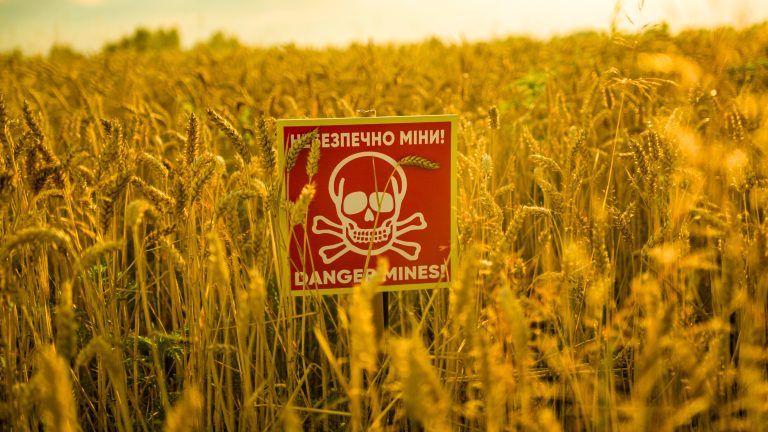
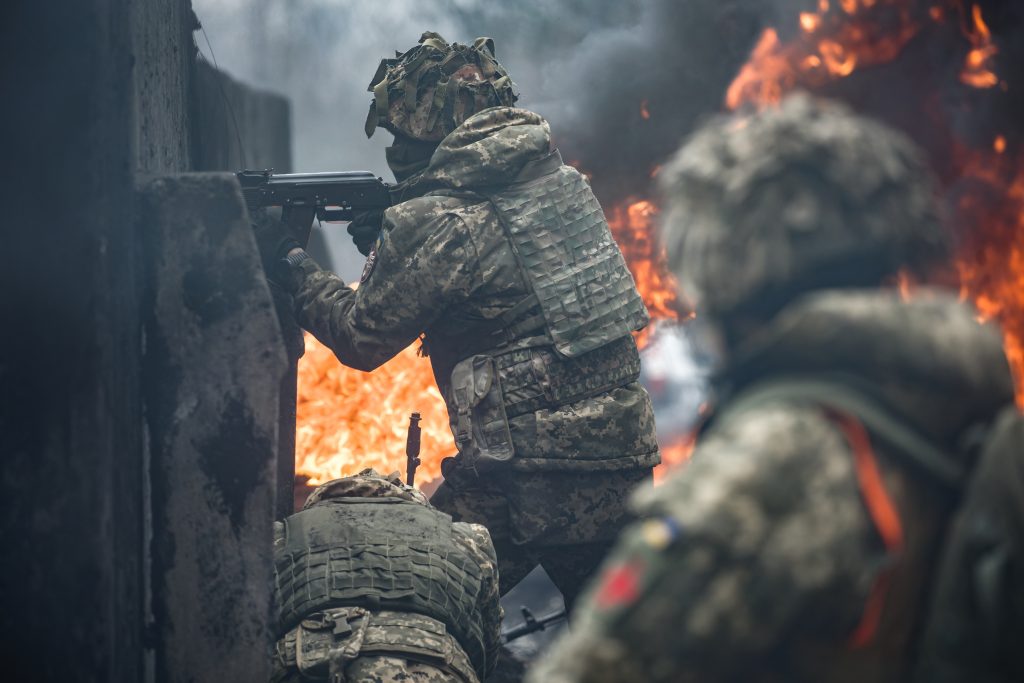
Credit: Dmytro Larin, Shutterstock
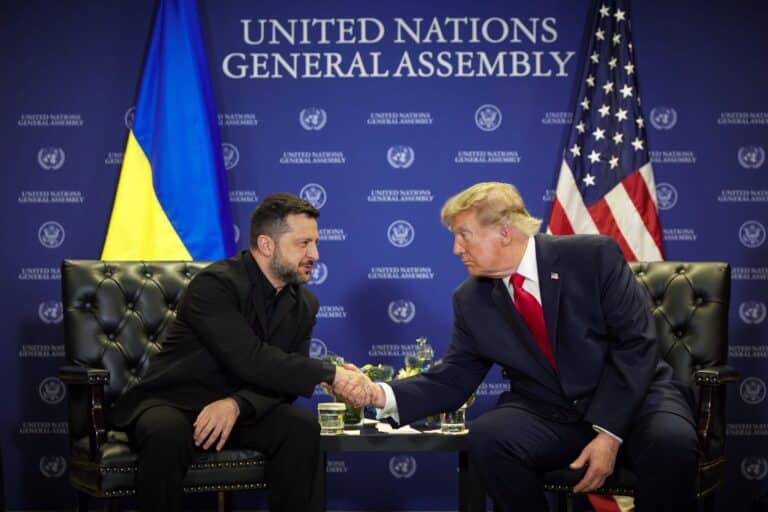
As the Trump peace process in the Ukraine–Russia war evolved throughout 2025, the Kremlin introduced the idea that a unilateral withdrawal by Ukrainian forces from the north-west of the Donetsk region was a key prerequisite for a ceasefire and settlement. The issue was framed by the Kremlin as a relatively minor concession, worthy of the noble goal of ending hostilities. Donald Trump largely swallowed this Russian bait and US pressure on Ukraine to make such a concession intensified at the end of the year. The success of Moscow’s strategy can be seen in how Volodymyr Zelensky’s consistent defence of Ukraine’s national interests has been cast by the White House as a major obstacle to peace. The ease with which Vladimir Putin managed to manipulate Trump and his special envoy, Steve Witkoff, might be explained by their background as real estate developers, where deals are ultimately about land and assets.
Since Russia already occupies approximately 110,000 square kilometres of Ukraine, surrendering approximately 4,500 square kilometres of the Donetsk region does not appear to be a major concession for peace. Whether to withdraw from Donetsk is a fundamental question, however, with potentially far-reaching consequences for the future of Ukraine.
The contest for the Donetsk region began in 2014, when Russia invaded eastern Ukraine but was unable to fully conquer the region. Russia’s failure undermined its pretence to great military power status. Complete control of Donetsk has been one of Putin’s primary objectives in Ukraine ever since. His failure to secure the entire region by military means underpins his efforts to secure it through diplomacy.
Zelensky has rejected all such demands. The Ukrainian president has simply no legal authority to cede Ukrainian territory. Moreover, politically, it would be a highly controversial idea. According to the most recent Kyiv International Institute for Sociology survey, 68% of Ukrainians were not ready to surrender the north-west of the Donetsk region when told that related US security commitments might be vague at best. Thus, concessions would not only constitute a major violation of the Constitution but also pave the way for domestic political instability. Unable to forcefully rebuff the US proposals in public, Zelenskyy has suggested the establishment of a demilitarised zone in the north-west of the Donetsk region through mutual withdrawal of Ukraine and Russian troops and the deployment of third-party troops to ensure Russian observance of any agreement.
In addition to the political risks to internal cohesion in Ukraine, persuasive military and strategic considerations argue against unilateral surrender of the Donetsk region. Today, the fortified Sloviansk-Kramatorsk agglomeration forms the core of Ukraine’s system of defence. Five Ukrainian corps (the 3rd, 11th and 19th of the Land Forces, the 1st of the National Guard and the 7th Paratroopers) defend a front that stretches from the outskirts of Lyman to the outskirts of Pokrovsk. Troops from the Ukrainian Engineers are constantly reinforcing these territories with fortifications and obstacles. If Ukraine were to withdraw from the area, this would leave the nearby Kharkiv and Dnipropetrovsk regions extremely vulnerable, as there are no comparable major urban areas nearby on which to anchor Ukrainian defences. In military terms, the nearby flatlands and minor towns would be more vulnerable to the infiltration tactics practiced by Russia.
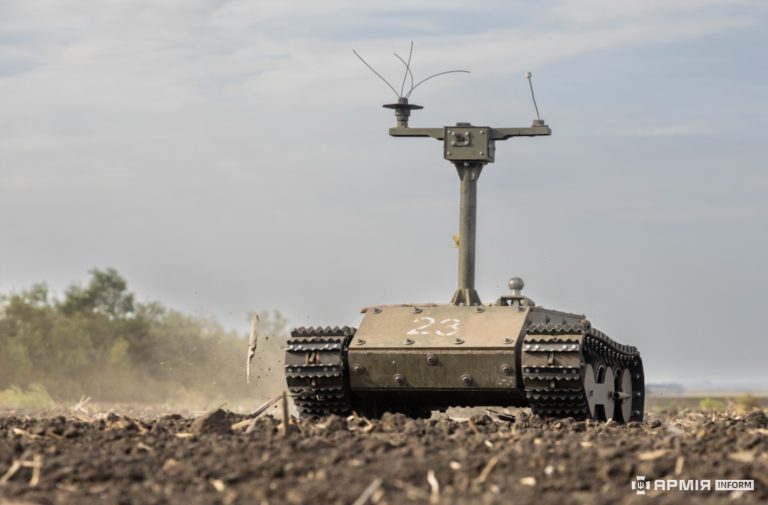
The area of the Donetsk region under Ukrainian control cannot be easily bypassed or outflanked by Russian forces. This forces Russia to pursue a costly attritional campaign, giving Ukraine the upper hand as the ongoing war favours defensive modes of operation. The battlefield is saturated with reconnaissance and strike UAVs to such an extent that it forces Russia to rely on dispersed infantry using infiltration tactics. This means that classic deep offensive operations involving rapid penetration and exploitation are as far away now as they were in 2024–25. Reliance on dispersed infantry using infiltration tactics imposes severe limits on the tempo and scale of operations. In 2025, Russia managed to occupy less than 5,000 square kilometres of Ukraine. Moreover, both around Kupiansk in December 2025 and in the Dnipropetrovsk region in February 2026, Ukraine’s defence forces demonstrated an ability to successfully counterattack Russian forces before their positions could be consolidated, using local interdiction and assault forces. If this experience can be repeated, then Russian advances will be even more limited in 2026. At the same time, Ukraine has improved its prowess at middle-strike campaigns (at a range of 20–120 km from ground zero), as demonstrated by intensified destruction of electronic warfare systems, diverse air defences, locomotives and UAV operators’ bases. An improved Ukrainian middle strike campaign will impose additional costs on Russian forces as the 2026 campaign intensifies.
All the above does not mean that there will not be any Russian advances in 2026 at all. Frontline dynamics will probably involve “neither major Russian breakthrough nor full stabilization”. Ukraine will probably continue its strategy of “trading space for maximum Russian losses”, as it did in 2024–25. The essence of such a strategy is to slowly withdraw, as existing forces cannot fully stabilize the front, while imposing maximum losses on the enemy in the hope of exhausting the enemy’s offensive. According to this logic, it is better to inflict maximum damage on Russia’s grouping of forces while it attempts to advance around Sloviansk-Kramatorsk than to unilaterally withdraw. The likelihood that Ukraine might eventually lose the north-western part of the Donetsk region through intense combat does not warrant immediate surrender of these territories. It has been calculated that using current technologies, tactics and manpower, it would take Russia until the end of 2027 to fully occupy the north-west of the Donetsk region, with a bloody bill attached. Russia is currently losing an average of approximately 30,000 dead or seriously wounded every month. Surrendering territory without a fight before Russian forces have been permanently exhausted would just be an invitation for further Russian advances, while Ukrainian defences would be based in less advantageous positions.
Strategic history provides good examples of how to respond to demands for the surrender of sovereign territory by a bully intent on imperial expansion. In 1939, the Soviet Union issued an ultimatum to Finland: either unilaterally surrender the Karelian Isthmus, which protected Helsinki through the Mannerheim line, or face the prospect of war with a much larger neighbour. Despite intense pressure that resulted first in the Winter War (1939–40) and then in the Continuation War (1941–44), Finland did not back down. Finland eventually lost the Karelian Isthmus – first after a February–March 1940 offensive and then after a June–August 1944 offensive, after it was temporarily recovered and fortified in 1941. With staunch resistance, however, Finland managed to inflict staggering losses involving hundreds of thousands of dead or wounded Soviet troops, leading the Soviet Union eventually to conclude that it was much better to live with a free Finland than try to conquer and subjugate it. If Finland had surrendered the Karelian Isthmus without a fight back in 1939, the whole country might eventually have been occupied and turned into a Soviet republic like the Baltic states were in 1940. Finland’s lesson teaches Ukraine that it is better to lose territories through combat than to make unilateral concessions that undermine your system of defence, as Czechoslovakia did in 1938.
Russian demands to unilaterally surrender the north-west of the Donetsk region are just another example of the Kremlin masking its combat ineptitude while trying to take one step closer to the goal of Ukrainian subjugation. Russia’s claim that Ukraine should make territorial concessions now because Russia will eventually conquer it overlooks the nuances described above. Along with deep strikes targeting Russia’s oil processing and military industrial complex, and actions against the Russian shadow fleet, staunch active defence of the north-west of the Donetsk region by Ukraine’s defence forces is an integral part of the Ukrainian strategy to inflict maximum damage, pose new dilemmas for Russian decision making and create the conditions for a durable peace.
Mykola Bielieskov is research fellow at the National Institute for Strategic Studies and a senior analyst at Ukrainian NGO “Come Back Alive”