Categories
Trending Searches


The plateauing of Russia’s military strategy in Ukraine
Russia’s battlefield strategy in Ukraine has plateaued and, if nothing radically changes, Russia cannot expect any significant progress on the battlefield in 2026.

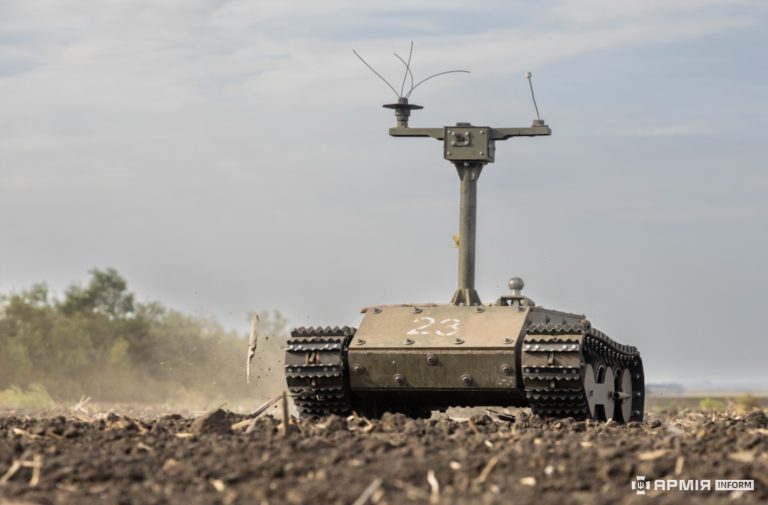
Robots take the risk: Ukraine’s UGV ecosystem and what Europe should learn from it
Ukraine has systematically removed humans from roles that don’t require human judgment, letting machines absorb the danger soldiers would otherwise face. What UGVs can and can’t do, and what lessons European institutions can draw from Ukraine’s experience.

The day after: Six post-war challenges for Ukraine
A ceasefire is nowhere in sight. Putin sees no interest in ending his war. Even so, the EU should start preparing for the many post-war challenges Ukraine will face.





Team members




No Results Found
Desiring without hope: EU offers of limbo status for Ukraine
Why Zelenskyy rejects proposals on associate membership status for Ukraine
6 May 2026
10 min read
Text size:
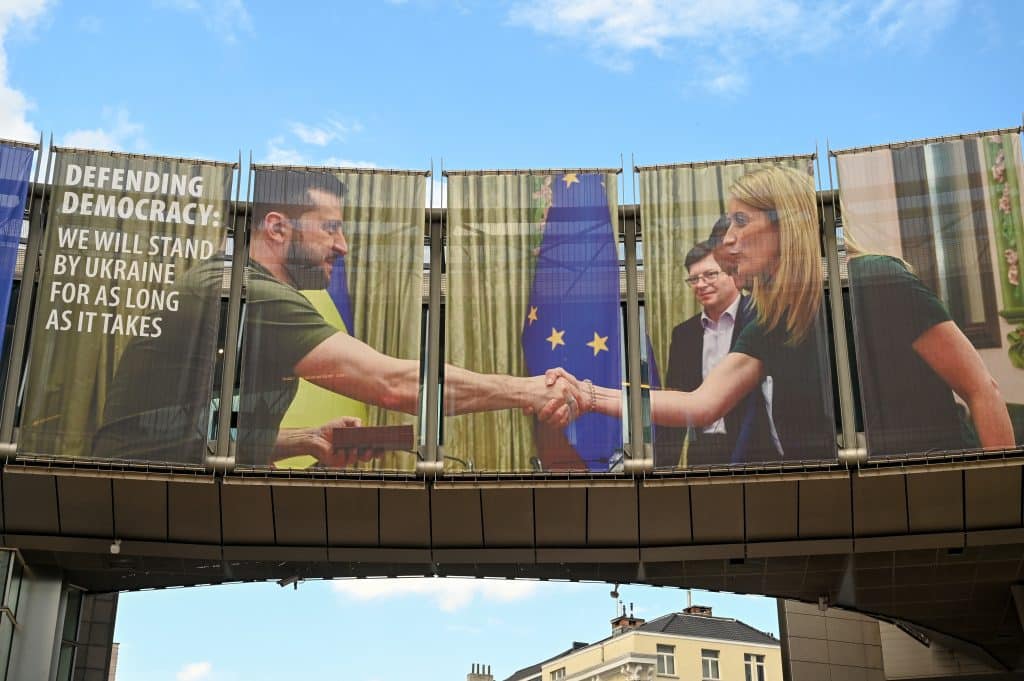
At the informal European summit in Cyprus in April 2026, Volodymyr Zelenskyy put Ukraine’s position on EU membership in deliberately plain terms. Ukraine does not need symbolic membership. It does not need another political formula confirming that it “belongs” to Europe. It needs the accession process to move forward. The message came after European leaders approved a €90 billion loan for Ukraine while remaining cautious about opening accession negotiations in substance and rejecting “shortcuts” for Kyiv.
This caution is understandable. Ukraine is large, at war, institutionally demanding and economically consequential for the EU. Its accession will have implications for agriculture, cohesion policy, decision making, defence industrial cooperation and, more generally, the EU modus operandi. These concerns are real and should not be dismissed. The problem is that the political response emerging in parts of Europe is not to make accession more credible, conditional and operational, but to invent a new vocabulary for postponement.
“Associate membership”, “integrated state status”, privileged partnership, phased political participation without voting rights: the labels differ, but the underlying logic is similar. The fear in Kyiv is that Ukraine will be brought closer to the EU, but not placed on an irreversible track to membership. It would receive visibility without full agency, access without full rights and reassurance without the legal consequences of accession.
This is the wrong answer to the right problem. The problem is not gradual integration. Gradual integration is necessary. No serious Ukrainian policymaker expects the entire acquis, full budgetary participation and complete institutional integration to be absorbed overnight. The real problem is gradual integration detached from a legally anchored accession trajectory. If interim arrangements are designed as instruments of accession, they can accelerate membership. If they are designed as substitutes for accession, they become a waiting room.
Ukraine has good reasons to reject that waiting room
For Ukraine, EU membership is not primarily a matter of market access. It is an existential question of national survival and sovereign identity. Russia’s full-scale war against Ukraine is not being conducted for territorial gain in the narrow sense. It represents an effort to eliminate Ukrainian statehood as a distinct political reality – to reverse the civilisational choice made by millions of Ukrainians since the Maidan and reassert Moscow’s sphere of influence over a country it has never fully accepted as genuinely independent.
EU membership is the one European instrument that can structurally close that grey zone. It would place Ukraine inside the EU’s legal order, single market, institutions and mutual assistance framework. It would make Ukraine’s European trajectory much harder to reverse. No declaration of “associate membership” can achieve the same effect. A political status that can be granted by declaration can also be weakened, reinterpreted or withdrawn by political decision. Moscow understands these distinctions perfectly.
This is why Ukraine’s position should not be caricatured as impatience. It reflects a hard-learned lesson: strategic ambiguity around Ukraine’s place in Europe has never produced stability. It has produced vulnerability.
There is also a domestic reform dimension. EU accession is the legal and institutional endgame of Ukraine’s post-Soviet transition. It is the mechanism through which independent courts, anti-corruption institutions, transparent procurement, merit-based public administration and regulatory alignment with the acquis become locked into the state model.
A credible membership perspective gives Ukrainian reformers leverage. It turns politically painful changes into investments in a visible endpoint. It makes backsliding costly because benchmarks are public, conditionality is real and the destination is legally meaningful. An ambiguous interim status risks doing the opposite. It gives domestic actors enough European language to claim progress, but not enough pressure to complete the most difficult reforms.
None of this means the current enlargement methodology is suitable for today’s reality. It is not. The accession process was designed for a slower and less geopolitical era. It assumes that candidate countries gradually align with a relatively stable body of EU law while waiting for admission. This assumption no longer holds.
The EU acquis is a moving target. EU law evolves constantly across digital regulation, competition, energy, climate, financial supervision, industrial policy and security-related domains. Candidate countries are expected to implement rules they had no role in shaping. They absorb the domestic political cost of alignment without meaningful participation in the institutions where those rules are drafted, negotiated and amended.
Here, Europe does need innovation. Ukraine and other advanced candidates should be granted structured observer participation in relevant EU institutional formats. Ukrainian officials, experts and parliamentarians should be closer to the regulatory and legislative discussions that directly shape their reform obligations. This would improve implementation, build trust and reduce the democratic deficit of accession.
Observer participation must be framed precisely. It is useful as a bridge to membership. It becomes dangerous as an alternative to membership. The same instrument can either accelerate accession or institutionalise semi-membership. The difference lies in whether it is embedded in an Article 49 TEU trajectory with a defined endpoint, or packaged as a comfortable destination in itself.
This is the central flaw in the current debate on interim status. It treats the EU’s inability to make accession work politically as a reason to invent a new category. However, a formal intermediate status would not be a legal shortcut. In any serious version, it would either require treaty change or create such deep legal ambiguity that it would fail to provide the certainty Ukraine needs.
The EU treaties do not contain a third category between membership and non-membership. Article 49 TEU provides the accession route. A state is either a member of the Union or it is not. Creating a recognised intermediate category with stable institutional rights, partial obligations and durable political status would be an institutional project of major complexity. Treaty revision requires unanimity and national ratification, sometimes under difficult referendum politics. This is exactly the kind of political investment that proponents of interim statuses claim Europe cannot spend on enlargement. As a result, the EU would spend scarce political capital not on admitting Ukraine, but on designing a more sophisticated waiting room.
The geopolitical signal would be worse. A bespoke sub-membership status for Ukraine would be read in Moscow as managed exclusion; proof that the EU considers Ukraine too important to abandon but too difficult to admit. That is precisely the message Russia wants to hear. The strategic value of enlargement lies in the opposite signal – that Ukraine is on the same accession path as other candidates, assessed by the same criteria and moving towards the same endpoint.
The alternative is not to defend the old process unchanged: The alternative is a dynamic accession process under Article 49 TEU
The first step should be immediate and practical: the European Council should open all six negotiation clusters for Ukraine without delay, starting with the Fundamentals cluster and proceeding to the remaining clusters. This is not a new Ukrainian demand invented in response to the latest debate. In March 2026, the European Council text supported by 25 Heads of State or Government welcomed Ukraine’s progress and invited the Council to open the clusters without delay, starting with Fundamentals.
Delivering on that commitment would not be a shortcut. It would be implementation of the enlargement methodology. Opening clusters does not mean closing them. It does not remove conditionality. It creates the formal structure through which conditionality can operate. Keeping clusters closed after the technical work has advanced does not make the process more rigorous. It makes it more political, less transparent and less credible.
Second, the EU should replace sequential caution with parallel conditionality. Where Ukraine is technically prepared, work on clusters should proceed in parallel. Where reforms are incomplete, benchmarks should remain strict. Speed and conditionality are not opposites. A faster process can be a stricter process if benchmarks are clear, public and enforceable. The current weakness of enlargement is not excessive rigour, but excessive sequencing combined with political veto points.
Third, the EU could scale-up sectoral integration where Ukraine meets clear conditions. This could include deeper participation in selected parts of the single market, EU programmes, energy and transport networks, industrial policy platforms, customs cooperation, digital policy and defence industrial initiatives. The logic should be simple: where Ukraine is ready and the EU has a strategic interest, integration should not wait for the final day of ratification.
Fourth, institutional observer participation should be granted as part of the accession process. Ukraine should be closer to the EU committees, expert formats and regulatory discussions that shape the acquis it is implementing. Ukrainian parliamentarians should also be given structured access to relevant European Parliament work where this is procedurally possible (e.g. by updating Rule 13 of the European Parliament Rules of Procedure). This participation must be explicitly transitional. It should prepare Ukraine for membership, not become a substitute for it.
Fifth, once Ukraine has met sufficient conditions in the relevant areas of the acquis, the EU should open broad access to the Single Market without waiting for the final day of accession. The recent Association Agreement framework with Andorra and San Marino shows that deep internal market participation can be legally organised for non-member states under conditions of regulatory alignment, supervision and safeguards. Ukraine is not a microstate and the model cannot be copied mechanically, but the principle is relevant. Where a European partner accepts the acquis and enforcement obligations, access can precede membership. For Ukraine, this should be an accession accelerator, not a substitute for accession. It would deepen regulatory convergence, support reconstruction through integration rather than aid dependency, and create the conditions for a shorter final accession phase. Finland’s experience is instructive. Deep internal market integration through the EEA preceded full EU membership by roughly one year. The lesson is not automaticity, but compression. Once a candidate is economically and legally integrated, the final political step can move faster.
Finally, the EU must commit to its own readiness for enlargement. Ukraine is often told to prepare for the Union. The Union must also prepare for Ukraine. Budgetary adjustments, decision-making reform, institutional weighting and the future of cohesion and agricultural policy cannot remain abstract debates postponed until the next political cycle. If the EU wants candidate countries to treat accession as a hard reform deadline, it must also treat enlargement preparedness as a hard institutional deadline for itself.
The EU’s choice is therefore not between “fast-track membership” and “responsible caution”. That is a false distinction. The real choice is between accelerated accession with strict conditionality and an interim status that risks becoming a politically convenient substitute for the decision Europe has already promised to take.
The correct response is to make Article 49 work at the speed required by Europe’s security environment: open the clusters, front-load integration where conditions are met, allow Ukraine transitional institutional participation and access to the Single Market as soon as Ukraine is ready, preserve reversibility and prepare the EU for enlargement.
The June European Council should not be a debate about what new label can be attached to Ukraine. It should be a test of whether the EU is prepared to act on the commitment it made when it recognised that Ukraine’s future lies within the European Union.
Europe does not need a waiting room for Ukraine, or for any candidate country. It needs the political courage to reform its enlargement methodology in a credible and intelligent way – one that makes accelerated accession not only possible, but visible, conditional and irreversible.
Authors

Ivan Nagornyak
Policy Fellow



Thank you!
You will now receive EPIK’s latest analysis, publications, event invitations, and other updates directly in your inbox.
Thank you!
You will now receive EPIK’s latest analysis, publications, event invitations, and other updates directly in your inbox.
Go Home Page
Thank you!
The form has been successfully submitted. We value your time, so please expect a call or email from our manager shortly.
Go Home Page
Thank you!
You will now receive EPIK’s latest analysis, publications, event invitations, and other updates directly in your inbox.
Thank you!
You will now receive EPIK’s latest analysis, publications, event invitations, and other updates directly in your inbox.
Thank you for subscribing
You will now receive EPIK’s latest analysis, publications, and event updates directly in your email.
Go Home Page