Categories
Trending Searches
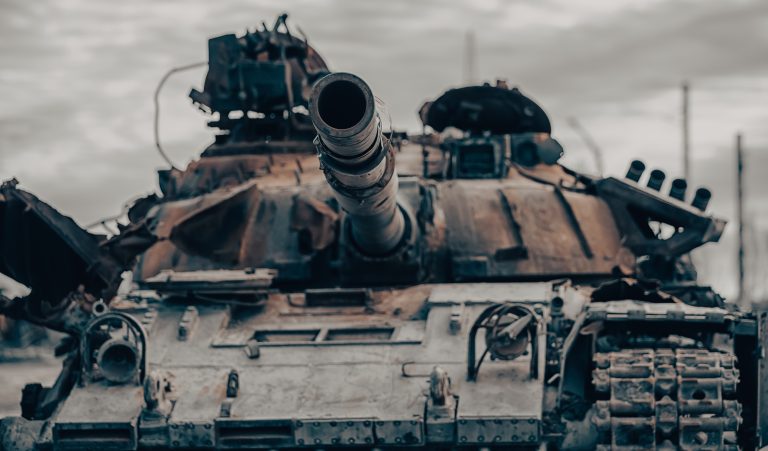

The plateauing of Russia’s military strategy in Ukraine
Russia’s battlefield strategy in Ukraine has plateaued and, if nothing radically changes, Russia cannot expect any significant progress on the battlefield in 2026.

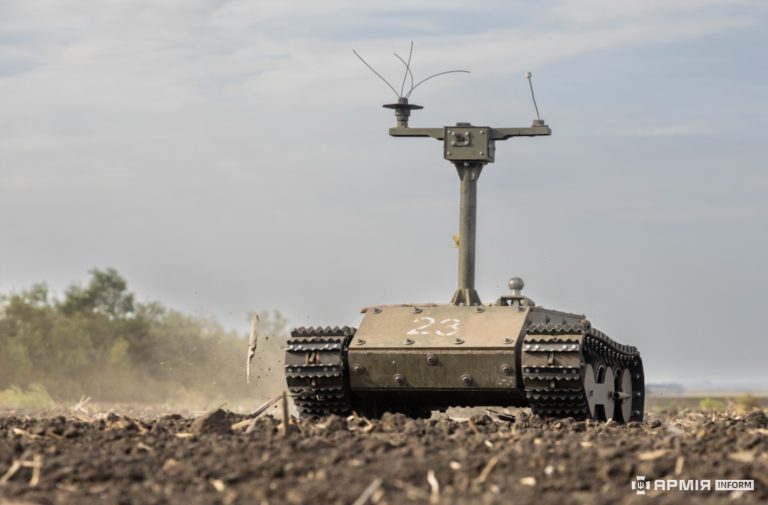
Robots take the risk: Ukraine’s UGV ecosystem and what Europe should learn from it
Ukraine has systematically removed humans from roles that don’t require human judgment, letting machines absorb the danger soldiers would otherwise face. What UGVs can and can’t do, and what lessons European institutions can draw from Ukraine’s experience.
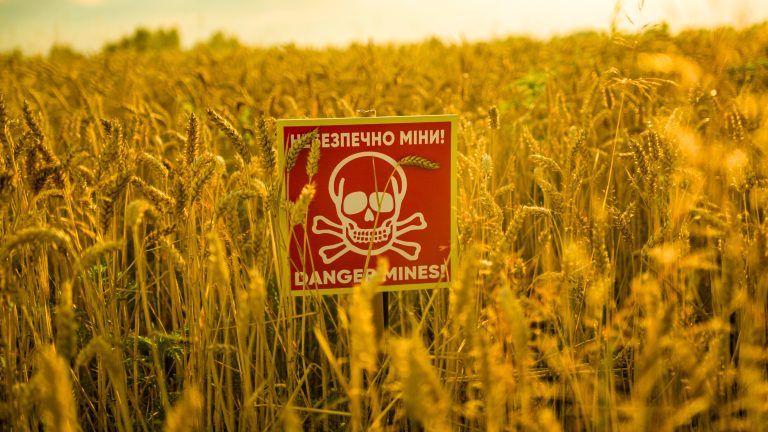
The day after: Six post-war challenges for Ukraine
A ceasefire is nowhere in sight. Putin sees no interest in ending his war. Even so, the EU should start preparing for the many post-war challenges Ukraine will face.





Team members




No Results Found
Winning elections is not enough to cut energy dependence on Russia
24 March 2026
6 min read
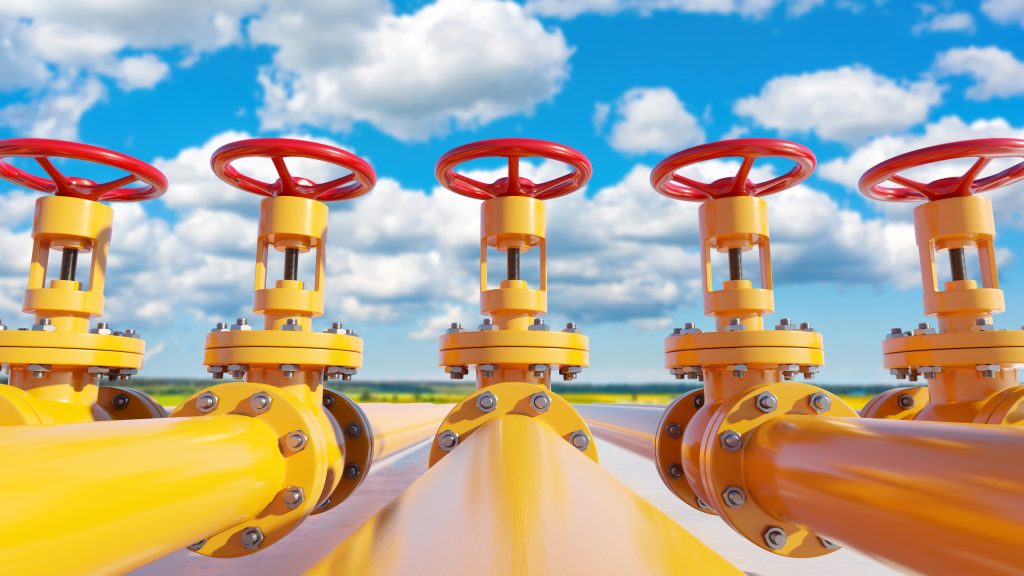
Photogrin, Shutterstock
Text size:
Péter Magyar’s victory in Hungary’s parliamentary election brought relief in Brussels and concern in Moscow. After 16 years, Viktor Orbán – one of most consistent obstacles to the European Union’s Russian sanctions and energy transition – has been voted out. Within days of the result, however, the incoming prime minister said he would not rule out buying energy from Russia in the coming years, citing geographical and contractual realities.
Russian energy influence in Eastern Europe does not depend on having the right politician in office. It relies on pipes in the ground, contracts on paper and populations facing real energy costs. Elections change governments. Only severing the pipelines and shredding the contracts will break Moscow’s grip. Until that happens, the revenues keep flowing, paid for by European consumers and businesses, funding the war Russia is waging against Ukraine.
Energy dependency is not solely a Hungarian story. Across Ukraine, Moldova and Hungary (with Slovakia sharing Druzhba pipeline vulnerabilities), the same political script has played out. Political actors present Russian gas and oil as cheaper and more rational than whatever Brussels is offering. The electorate is asked to choose between European integration and affordable gas and oil, as though these are mutually exclusive. Thus, Russia sells political debt to Eastern Europe packaged as affordable supply, delivered through Soviet-era pipelines and collected as political returns. In Asia, Russian oil found new buyers after 2022. Inside Europe, however, and on its eastern border, the dependency is older, deeper and deliberately engineered.
Ukraine set the example. For 30 years after the break-up of the Soviet Union, reliance on gas came with hidden costs. In the late 1990s, Kyiv cleared its gas debts by transferring nuclear-capable aircraft and nearly 1000 missiles to Moscow. Those weapons were used against Ukraine in 2022. From 2010 until it broke away from Russia, Ukraine overpaid Gazprom by between $16.8 and $28.8 billion. It was expensive Russian gas with a side order of strategic blackmail.
The manipulation was most evident during the 2019 election campaign. Viktor Medvedchuk and Yuriy Boyko, leaders of the main pro-Russian party, travelled to Moscow to negotiate lower gas prices. This happened five years into Russia’s war against Ukraine and four years after Kyiv had stopped buying Russian gas directly. They framed the trip as advocating for consumers, claiming that European gas was expensive and ideologically driven while Russian gas was affordable and sensible. It was an electoral move with ties to Moscow. However, the expected collapse did not happen. By late 2024, Ukraine was covering all of its domestic gas needs through its own production.
Moldova, in contrast, has not yet gained such independence. The country imports all of its fuel. The Cuciurgan power plant in Transnistria, a Russia-backed breakaway region outside Moldovan government control, once supplied up to 70 percent of Moldova’s electricity needs. Gazprom owns 50 percent of MoldovaGaz, the company that manages gas supplies to the country. When Ukraine halted transit in January 2025, Russia cut supplies to Moldova at the same time. A crisis arose immediately, which Russian propaganda blamed on Sandu’s pro-European government.
Ilan Shor, a Moldovan oligarch convicted of fraud, living in exile under US and EU sanctions for Kremlin-linked destabilisation, turned to cheap-energy populism for electoral purposes. He distributed cash and promises of cheap energy to rural voters and Gagauzia communities. Media investigations traced the funding pipeline directly to Russian state companies and the FSB. One senior Russian official even offered a favourable gas deal as a clear political reward. Unlike in Ukraine or Hungary, nothing has yet halted this operation.
The Hungarian case differs in nature if not in reasoning. Orbán was not a Kremlin asset like Medvedchuk or Shor; he was an elected leader who decided to increase Hungary’s dependence on Russian energy instead of decreasing it. Cheap Russian gas helped to keep household energy bills low, and this gave Orbán a domestic argument about protecting Hungarian families from the costs of a Brussels-driven energy transition. The same dependency served him with the EU institutions. Because Hungary relied on Russian energy more than any other member state, Orbán could block EU sanctions on Russian oil and gas while presenting this not as pro-Kremlin obstruction, but as a legitimate defence of Hungarian economic interests.
This reasoning hit its peak during the recent election campaign. Orbán accused Ukraine of deliberately messing up repairs on the Druzhba pipeline. He also blocked a €90 billion EU loan to Kyiv, using the dispute as an excuse. In addition, he seized a Ukrainian bank convoy carrying $82 million in cash and gold to use as leverage. The political motives behind his actions became obvious just days after his defeat. Oil flows through the Druzhba pipeline resumed on April 22, and the €90 billion EU loan for Ukraine, blocked since December, was approved the following day.
Much, however, did not change on election night. The pipes are still in the ground and the contracts are still in force. Hungary still has its EU exemption that allows it to continue to import Russian oil through the Druzhba pipeline. Magyar has pledged to end that dependency by 2035 – already eight years behind the EU’s own 2027 phase-out target – and has been clear that he will not halt Russian energy purchases immediately. Ukraine – a non-EU member state that has been fighting a full-scale war since 2022 – achieved full gas decoupling in late 2024. Some EU member states, with access to the bloc’s full financial and institutional resources, have failed to match that.
Orbán’s lasting achievement is physical and contractual infrastructure that now constrains his successor. That is the Kremlin’s most durable investment in this area; not the politicians it cultivates, who are expendable as Hungary just proved, but the dependency those politicians institutionalise.
In April 2026, Claudio Descalzi, the CEO of Italy’s Eni, called on the EU to reassess its plan to phase out Russian gas. He argued the need for flexibility in times of market turbulence. In Eastern Europe, the same argument has been made with ballot boxes in mind. The difference matters, but the result for Moscow is similar.
This is why the policy response cannot be left to individual member states or candidate countries alone. Three key steps are required:
First, neutralise the “cheap gas” message with numbers. Russian supplies only feel cheaper if you ignore the missiles they fund in Ukraine. The EU’s message on energy transition costs should reach the household, the small town and the local TV channel.
Second, the EU has the instruments – from sanctions to foreign-agent registration and tightening transparency rules for political financing – to treat gas-linked electoral interference as a hybrid threat.
Third, accelerate physical alternatives. Countries cannot diversify without infrastructure (access to liquefied natural gas and grid integration) that does not yet exist at sufficient scale.
Authors

Lesia Bidochko
Policy Fellow



Thank you!
You will now receive EPIK’s latest analysis, publications, event invitations, and other updates directly in your inbox.
Thank you!
You will now receive EPIK’s latest analysis, publications, event invitations, and other updates directly in your inbox.
Go Home Page
Thank you!
The form has been successfully submitted. We value your time, so please expect a call or email from our manager shortly.
Go Home Page
Thank you!
You will now receive EPIK’s latest analysis, publications, event invitations, and other updates directly in your inbox.
Thank you!
You will now receive EPIK’s latest analysis, publications, event invitations, and other updates directly in your inbox.
Thank you for subscribing
You will now receive EPIK’s latest analysis, publications, and event updates directly in your email.
Go Home Page