Executive summary
- Ukraine’s expanding mid- and long-range strike campaign into Russia and the occupied territories is transforming the character of the Russo-Ukrainian War. Rather than seeking decisive territorial breakthroughs, Kyiv is increasingly targeting the economic, logistical and technical infrastructure that sustains Russia’s offensive capacity. Its strike architecture now extends from the battlefield rear to Russia’s strategic hinterland, over 2,000 km inside Russia. This shift creates continuous pressure across Russia’s entire war-support system, and imposes growing material and social costs on Moscow, forcing it to disperse scarce air-defence assets, protect critical infrastructure across vast territory and absorb mounting economic disruption.
- The Kremlin’s emerging reaction could develop along three pathways: First, a new equilibrium sought through ad hoc adaptation to the new situation via temporary absorption of hardship, rationing of resources and substitution of domestic production with imports. Currently, this is Moscow’s major approach. Second, a moderation strategy would mean a scaling-down of warfare intensity and negotiation demands once Moscow realises that the country needs at least a temporary ceasefire – a threshold that has not yet been reached. Third, an escalatory response would mean increased terror tactics against Ukrainian cities, hybrid attacks on Europe and nuclear signalling. This reaction is already manifest, among other things, in the mass bombardment of Kyiv in early July 2026. These three scenarios are not necessarily ‘either-or’; they could be pursued sequentially or even in parallel. The Duma elections in September 2026 will influence the timing of the Kremlin’s domestic reaction. Softer methods might be used before the pseudo-vote, followed by austerity measures, increased repression and mass conscription after.
- Four new policy imperatives for Ukraine and its western partners follow from this new phase of the Russo-Ukrainian War. First, an ill-defined, rushed ceasefire would be premature as it would allow Moscow to simply repair or restore the capabilities the Armed Forces of Ukraine are currently degrading, simply to re-escalate once this has been done to a sufficient degree. It would likely be temporary and even counterproductive. Second, there should be more targeted preparations for and responses to the various repercussions of Ukraine’s successful “long-term sanctions”, as the deep strikes are jokingly called. For instance, a weakening Russia might seek to compensate for failure in Ukraine with intensified hybrid coercion against Europe. Third, western strategies should be built on expert analysis of Russian capacity, not on assessments of the latest Kremlin rhetoric. Fourth, Russia’s internal information blockade and external propaganda strategies should be met with increased resources in order make the fuel supply shortages and other domestic setbacks caused by Ukraine’s new strategy common knowledge among ordinary Russians and Moscow’s foreign partners.
Introduction
The drone and missile attacks on Kyiv on the nights of 1–2 and 5–6 July were the most severe against civilian infrastructure in the Ukrainian capital to date. Nonetheless, these acts by the Kremlin have done little to change the overall picture of the war. In contrast, the recent Ukrainian strikes on Russian energy facilities in St Petersburg, Moscow and elsewhere have altered global perceptions of the Russo–Ukrainian War.
This is especially true among ordinary Russians and observers outside Europe, where until now there had been little doubt about Russia’s supposed overwhelming superiority. The images of spectacular strikes by Ukrainian long-range drones and cruise missiles on Russian oil and gas processing facilities, as well as other sites are an embarrassment for the Kremlin. The growing number of videos showing explosions and fires in the European part of the country have shaken Russia’s previously dominant international and self-image as one of the greatest military powers in the world or even in history.
More important than Moscow’s PR disaster, however, are the material results of these successes. Until June 2026, the rationale for and results of Ukraine’s new long-range attack strategy against Russia’s energy and other economic infrastructure were unclear. For several months, there had been visual documentation of ever deeper and more precise Ukrainian strikes on military and industrial objectives in the Russian hinterland. However, the dominant assumption had then been that, even if visually impressive, such Ukrainian successes constituted mere pinpricks for Russia. In view of the size, spread, solidity, repairability and redundancy of the huge Russian fuel refinery, transportation, and storage sector, received wisdom had it that Ukraine’s long-range strikes would have few if any implications. This narrative has been clearly falsified in recent weeks.
In some (but not all) ways, Kyiv is now implementing in Russia what Moscow has been trying to accomplish in Ukraine since the annexation of Crimea in February 2014. Kyiv aims to achieve political aims not at the front, but through a systemic rupture at the rear, which has been Moscow’s strategy in Ukraine for more than 12 years. The principal difference is, of course, that Ukraine’s current mid-range and deep strikes, as well as other actions beyond the battlefield have defensive purposes. The aim of Russian long-range warfare is to undermine Ukrainian resilience in order to achieve Russia’s territorial expansion and Ukraine’s political subjugation.
Much of the fighting between 2022 and 2025 was about territorial control, gain and defence, above all in eastern and southern Ukraine. The current phase of the Russo–Ukrainian War, particularly from a Ukrainian perspective, is focused on systemic degradation of the enemy. Rather than defeating Russian forces formation by formation, Ukraine is seeking to reduce the Russian state’s capacity to sustain its so-called special military operation. Ukraine’s main military aim has shifted from attrition of frontline troops to subversion of Russia’s military supply lines, as well as of social, economic and political stability.
Against this backdrop, the central strategic question is no longer about the quantity and quality of Russia’s military resources – the number and type of troops and weapons deployed at the front. Instead, the key issue is now whether or how Moscow will manage to withstand Ukraine’s purposeful assault on the Russian hinterland. How will Moscow react and adapt to Kyiv’s attempt to erode the Russian state’s industrial, logistical and social base, and thereby its war-making capacity?
Russia’s response might involve: (a) a recalibration of the socio-economic situation; (b) a moderation of its war aims and negotiating tactics; and, conversely, (c) an escalation of the war aimed at decisively defeating Ukraine. Although re-establishing equilibrium is still the Kremlin’s most obvious short-term strategy, there are already signs that Moscow is considering and testing both moderating and escalation strategies. Which of these approaches prevails will depend on the success or otherwise of Ukraine’s degradation of Russia’s war-making capacity, and the domestic political impulses or constraints that might result.
From territorial warfare to systemic attrition
Since late 2025, Ukrainian forces have slowed the Russian army’s advance using large numbers of first-person view (FPV) drones and widened “kill zones” on the front. Since June 2026, daily visual and audio evidence has indicated that the effects of Ukrainian deep strikes on Russia’s hinterland are increasing rapidly. Drones and cruise missiles are disrupting, damaging or destroying military-industrial, transport and energy infrastructure. According to Robert “Magyar” Brovdi, commander of Ukraine’s Unmanned Systems Forces, the destruction has increased by 1,150 percent since the beginning of 2026. Ukraine’s frontline strikes now reach up to 150 km, mid-range strikes (so-called midstrikes) to approximately 300 km, and deep strikes up to or even over 2000 km.
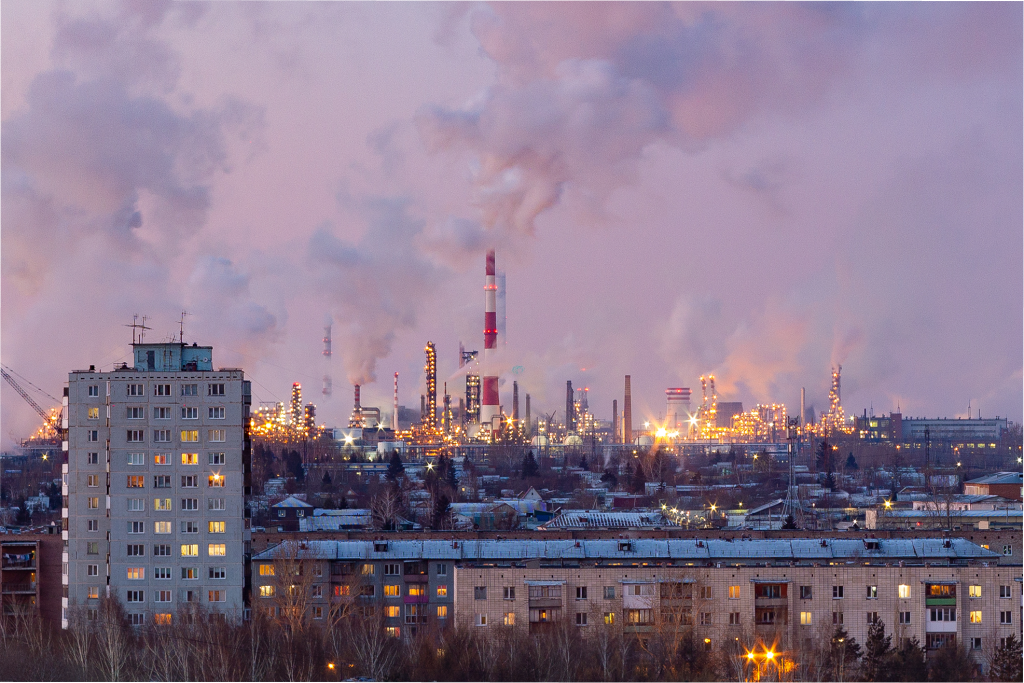
Among the primary targets of Ukrainian drones, glide bombs and missiles are railway junctions, oil pumping stations, depots, ports, airfields and transport hubs. As a result, Moscow has restricted access to petrol and diesel in 60 of the 83 of Russian regions, causing commensurate fuel price increases. Even information about petrol availability is rationed. For instance, in several Russian regions the state-controlled messenger service ‘Maks’ is blocking public chats where drivers exchange information on fuel supplies and queues. This picture is magnified in Crimea, where the supply of fuel, water, electricity and food is a major problem, and normal economic life has largely come to a halt.
This is driving Russia into a broader socio-economic crisis. In the words of the Germany-based historian of contemporary Russia, Nikolay Mitrokhin:
[Ukraine’s] seizure of superiority in the most advantageous domain—right now, the air—and the subsequent destruction of [Russian] military and civilian infrastructure at the operational and strategic levels, the creation of an entirely new reality for Russia’s deep rear, and the containment of the Russian army at operational depth without the need to breach specific positions at the tactical level – all of this resembles either the sudden onset of war or its swift conclusion.
Russia’s inadequate drone interceptors
Little of this Ukrainian success would be possible if Russia had effective anti-drone interceptors, which highlights fundamental Russian equipment inadequacies. For instance, the most widely used Russian anti-aircraft system, Pantsir-S1, is designed to hit large radar-reflective targets, such as cruise missiles, but is largely ineffective against low-signature drones made of plastic and plywood.
Unlike Ukraine, Russia has only just begun to develop interceptor drones. Its new Yolka and Lys-2 anti-drone UAVs exist so far only as prototypes. Russia lacks the integrated radar-and-software ecosystem that allows Ukrainian interceptor operators to act on real-time targeting data across an assigned sector.
Even in the event that Russia were to rapidly increase the protection capacity of its anti-drone and anti-missile systems, there remains an important geometric difference. Ukraine must only defend the interior of an arc. In contrast, Russia must secure its outer edge, plus the Black Sea, the Azov Sea and approaches to the Caucasus. It must therefore cover a first-echelon perimeter of roughly 2,000 kilometres, whereas Ukraine’s defence line is only approximately 1,100 kilometres.
Defending thousands of square kilometres of critical infrastructure requires vastly more resources than attacking selected high-value targets. Every improvement in Ukrainian strike capability therefore expands Russia’s defensive burden disproportionately. As a result, according to military experts, Russia cannot match Ukraine’s current level of air-defence effectiveness. Contrary to Russian propaganda narratives, interception rates against Ukrainian mid- and long-strike drones will remain low for the foreseeable future.
The Crimean bottleneck
Crimea has been not only the crown jewel of Putin’s expansionism but, since 2022, also Russia’s major logistics hub for military operations in the Ukrainian south. The geographically determined strategic function of Crimea, as Russia’s de facto aircraft carrier in the northern Black Sea, is now more of a problem than an asset. Crimea is linked and close to the Ukrainian mainland but relatively far away from Russia. It is therefore particularly vulnerable to Ukraine’s new weaponry and modern approach to warfare.
Fuel supplies to the peninsula have been disrupted not only – and not so much – due to refinery damage, but because transport routes from Russia to Crimea are under constant attack. This applies to rail and road connections from Russia via occupied southern Ukrainian land to Crimea, the Kerch bridge and the Black Sea ferries. The physical disconnect between Russia and Crimea makes it increasingly difficult for Moscow to sustain troop rotation, ammunition stocks and equipment maintenance on the peninsula.
Economic pressure
According to Mitrokhin, commenting on 27 June 2026:
Military warehouses and defence plants, warships and air defence systems, oil refineries and depots, power substations and gas compressor stations – the number of major targets struck by the Ukrainian Armed Forces and the SBU’s drone units has reached at least 40 per day. In addition, there are dozens of smaller targets, thanks to which, for example, freight transport has come to a near standstill in at least three occupied regions (Zaporizhzhia, Kherson, and Donetsk), while in two other occupied regions [Crimea and Luhansk] and a group of border regions, it is fraught with enormous risks.
Moscow cannot fully compensate for, repair or replace the facilities and stocks that Ukrainian UAVs and cruise missiles have cut-off, damaged or destroyed. According to Mitrokhin, “Ukrainian strike drones control the Russian airspace at least as far as the Urals, the Russian air defence system has shrunk to a few points desperately defended by the last remaining ‘Pantsir’ missiles, and the Ukrainian Armed Forces now have the ability […] to take out virtually any targets”.
The accumulating disruption of Russia’s fuel sector coincides with declining Russian energy export revenues. Falling global oil prices have reduced budget income far more than previously anticipated, forcing Moscow to revise its budgets. Should this trend continue, this will change the overall context of the war. This is turning from a short-term, minor hindrance into a major problem for the functioning of Russia’s daily economic and social life. In Mitrokhin’s words, “perhaps this abyss has a bottom. But it isn’t visible yet. And Russia is hurtling toward it at an ever-increasing speed.”
The growing mid-range strike challenge for Russia’s frontline troops
The deep strikes into Russia’s hinterland are not Moscow’s only problem. More and more midstrikes on areas behind frontline troops complicate the Russian army’s supply chains even when sufficient fuel and physical kit is available. Ukrainian attempts to disrupt Russia’s logistical networks connecting fuel plants and storage to Russian fighting troops are aided by the deployment of a new generation of FPV drones optimised for short- and medium-range logistics strikes. These are currently achieving an operational depth of 40–44 km and being designed to operate with a reach of up to 100 km.
As in other areas, Moscow is scrambling to develop countermeasures. Its anti-drone electronic warfare (EW) is well-developed, but often ineffective against mid-range strikes. Ukrainian drones routinely hit Russian vehicles carrying onboard EW systems. Moreover, Ukrainian manufacturers are currently transitioning to new communication systems and next-generation models. Ukraine’s goal is to lead on every innovation cycle, thereby ensuring that Russia is perpetually adapting to yesterday’s threat.
In June 2026, Russia’s Ministry of Defence reported proudly that it had intercepted 8,849 Ukrainian drones in May 2026. That would seem to indicate considerable success compared to the 3,676 interceptions in January 2026 and 2,504 in May the previous year. Some military analysts, however, doubt the accuracy of the Russian government’s data and suspect that the reported interception rates are overstated. Either way, these Russian figures indicate that the pace of Ukrainian attacks has been increasing. Drones deployed by Ukraine are now saturating Russian air defences.
In response, Moscow has pulled air-defence units from the front to protect strategic objectives and the two major Russian cities. As a result, Russia’s formerly structured and layered air-protection system has become scattered and patchy. Each air defence system protecting an oil refinery or supply convoy is one less servicing frontline troops. Ukraine has increased not only the number of destroyed assets, but also the costs and risks for the troops operating at the front.
The factor of political time: The upcoming Duma vote
In this complicated military and economic context, Moscow now faces a critical political constraint. September 2026 will see the regular national election to the lower house of the Russian Parliament, the State Duma, in a procedure widely viewed internationally as deeply flawed. Although rigged, the vote nonetheless plays a role in the functioning of the Russian political system. Given accumulating societal grievances, magnified by Ukraine’s actions inside Russia, the 2026 Duma elections could demand even more than the usual amount of manipulation to secure the inevitable victory for the governing United Russia party.
The Duma “refresh” will not determine Russian strategy, but it might shape its timing. Before September, Putin’s administration is likely to attempt to navigate the fuel crisis with softer measures such as rationing schedules that are presented as temporary. After September, once “legitimacy” has been renewed and Moscow has gained new domestic licence to implement harsher measures, more severe austerity measures and a renewed military conscription drive can be expected.
None of these pressures mechanically determines a certain type of Russian behaviour. Authoritarian regimes can absorb economic losses that would be politically unacceptable in democracies. The question is not whether pressure exists, but how the Kremlin chooses to respond. Three obvious strategic pathways can be distinguished that are not mutually exclusive, but could appear in combination.
Scenario one: Re-equilibration
Implicitly or explicitly, many commentators on Russia’s growing economic, social and logistical problems assume that they are temporary or moderate – that even if these issues look grave now, the Russian regime can adapt and preserve all-important political stability in a new socio-legal equilibrium. The Kremlin will successfully neutralise social discontent with political repression or financial compensation to the degree that it can still be provided.
The rationing of fuel, electricity, food and water that is already partly happening in the occupied territories can be portrayed temporarily as a patriotic sacrifice. In this scenario, Moscow will find a way – at least partly – to restore supply, transportation and distribution lines. It is, for instance, already importing petrol from Belarus and Central Asia. Thus, fuel and other shortages will be temporary or manageable. Military needs will continue to be met as they supersede civilian welfare. The production of drones, missiles and other key weaponry continues, perhaps backed by enhanced Chinese support.
The reduction in living standards will be insufficient to spark major protests, constraints on foreign adventurism or political change. Implementing this scenario is the Russian regime’s preferred strategy and would lead to a new equilibrium that can be reached quickly and sustained permanently.
Scenario two: Moderation
The moderation scenario assumes that Moscow’s current socio-economic challenges, exacerbated by Ukraine’s deep strikes on Russian infrastructure and parallel foreign challenges such as lower oil prices, will get worse. A cascade effect from further air-defence fragmentation, refinery damage, supply deficits and logistics bottlenecks leads to a fundamental structural shift in Russian society’s political outlook. Recognising this, the Russian leadership – with or without Putin – relaxes its maximalist war aims and softens its negotiation position, at least temporarily.
The recently prevailing theatrical peace talks will eventually shift to a more serious consultation process, as Moscow sees advantages in pausing the conflict. Social hardship alone will not force an accommodative course of action as long as the Kremlin can bear the political costs and deprioritise civilian needs. However, facing growing societal pressure, the Kremlin might pursue a temporary de-escalation and reduce the intensity of hostilities to allow for the repair and rebuilding of damaged infrastructure.
Moderation would not necessarily mean a Russian ideological reorientation. It could just be the result of a military and economic recalculation and postponement of expansionist plans. Any serious search for genuine compromise and a lasting ceasefire will occur only when Moscow concludes that the war cannot be won.
Scenario three: Escalation
However, mounting military and economic pressure could also motivate and is already prompting the Kremlin to escalate rather than moderate. Russian escalation can have both political-psychological and military-material purposes. It is designed to scare and/or bomb Ukraine and its western partners into capitulation, or at least an acceptance of Russia’s terms for a ceasefire – an operational approach sometimes labelled “escalate to de-escalate.”
The goal of escalation might be to restore Russia’s initiative on the battlefield, decapitate the leadership of the Ukrainian state, disrupt Ukraine’s long-range drone development and production, and dismantle the supply logistics of Ukrainian frontline troops. In fact, this scenario has already begun to materialise with the heavy bombardment of Kyiv using drones, and ballistic and cruise missiles on the nights of 1–2 and 5–6 July 2026.
While this is the Kremlin’s preferred course of action in response to Ukraine’s attacks on Russian infrastructure, Moscow’s options for escalation are now more limited than at the start of the 2022 full-scale invasion. Ukraine’s enhanced defensive capabilities and Kyiv’s increased international support over the past four years diminish the strategic justification for escalation. Each successful Ukrainian strike further weakens the rationale for escalating Russia’s response.
Retaliatory strikes against Ukrainian settlements might provide emotional relief for the Russian political leadership and parts of society, but revenge will not help to undo the weekly increase in material damage from Ukrainian deep strikes. To repair the damage and prevent future attacks on targets such as Russian oil refineries, a strategy of moderation – rather than escalation – will be necessary.
The more Ukraine hits Russia where it hurts, the more Moscow needs an interruption of the war, and in particular an interregnum in Ukraine’s deep strikes, as well as a lifting of sanctions. The ongoing tit-for-tat will only deepen Russia’s economic dislocation. Intensified strikes on Ukrainian metropolitan areas – despite the joy they might generate in the Kremlin – will hardly resolve Russia’s core problems. Instead, Russia needs to recover from the recent damage and eventually ‘out-innovate’ Ukraine to make real progress.
Moscow may not be assessing the situation in rational terms, however, and thus think that it has a number of options for escalation at its disposal. This could also mean large-scale conscription and an increase in domestic repression. In addition to increasing its terror attacks against Ukrainian civilians, the Kremlin might try to force Belarus to become involved. Even the threat of such a broadening of the war would force Ukraine to divert air defence and ground forces from the frontline. Moscow might also try to further expand its hybrid measures, such as cyberattacks, sabotage activity in Europe, and nuclear signalling to the West.
Conclusions
Instead of focusing on immediate territorial defence and gains, Kyiv is now targeting material and social structures in Russia’s heartland that enable its ability to conduct war in Ukraine. This shift has created a new strategic constellation in which defence rather than offence dominates. Nonetheless, Russia is still able to assemble troops at the front and mobilise industrial resources.
Ukraine’s rapidly growing deep- and mid-strike capabilities require Russia to spread its limited air-defence assets more sparsely across its vast territory. Defending critical infrastructure along thousands of kilometres, as it must, is harder than attacking Ukraine’s vulnerabilities. The cost of Russian defence is starting to increase more rapidly than the cost of offence.
Ukrainian successes in striking Russian energy infrastructure and its military-industrial complex will not, by themselves, produce a Russian military collapse. In principle, authoritarian regimes such as Russia can withstand, ignore or neutralise the discontent emerging from civilian hardship while preserving military capacity. The decisive variable is not the economic pain in itself but whether Ukraine’s strikes with its new long-range weapons can progressively reduce Russia’s ability to sustain and generate combat power faster than Moscow can adapt.
For Europe, the challenge is larger than helping Ukraine to prevail. Not the least in view of these new developments since June 2026, it is time to fully recognise that the future character of war and structure of European security are being written in Ukraine today. Against this backdrop, the EU must ensure that the institutions and policies for preserving the sovereignty of its member states and the European project as a whole evolve as rapidly as the changes on the Ukrainian battlefield demand.
Policy recommendations for Ukraine’s Western partners
- Do not trade leverage for dialogue. Russia will only seriously negotiate – as opposed to staging diplomatic theatre – when the military balance leaves it no better alternative. A premature ceasefire, ill-prepared armistice or politically motivated pause would merely provide Moscow with an opportunity to restore precisely the logistics chains, energy infrastructure and military capacity that Ukraine is now degrading, and to later resume high-intensity fighting. Diplomacy should build on and consolidate military pressure, not be a substitute for it.
- Prepare for strategic success, not only strategic stalemate or failure. European planning remains heavily oriented towards preventing Ukrainian defeat but should now consider different scenarios. Moreover, Ukraine’s advantage could motivate Moscow to increase its hybrid pressure on Europe. As Russia’s rear becomes progressively less secure, Europe might see increased cyber operations, sabotage, disinformation campaigns, coercive energy measures and nuclear signalling as compensation for Russia’s declining conventional advantage on the battlefield.
- Base policy planning on Russian capacity and actions, not on Moscow statements. Western policy often focuses on Kremlin rhetoric or stated escalation thresholds. If measurable indicators of Russia’s ability to sustain offensive operations (refinery output, logistics throughput, air-defence redistribution, transport bottlenecks, interceptor production and industrial repair rates) signal capacity erosion, such developments should inform strategic decision making more than Moscow’s political statements.
- Pierce Russia’s internal information blockade and international disinformation campaign. Moscow’s suppression of news and chatter about its fuel crisis and its socio-economic repercussions shows where the Kremlin feels exposed. Supporting the flow of verified, local, non-political information on prices, queues, rationing, deficits, and so on, can help to turn this new scarcity into domestic discontent and undermine Russia’s image among its foreign supporters. Such an effect can be achieved with relatively little investment, but would help Ukraine greatly in its battle for its existence.